 The Duck Curve
Canada's budget would extend clean power tax credits to 2040
Budget 2026 also proposes C$518.5 million for nuclear, C$587 million to renew the federal EV charger program, and a loosening of the Clean Electricity Regulations that names natural gas among its examples.
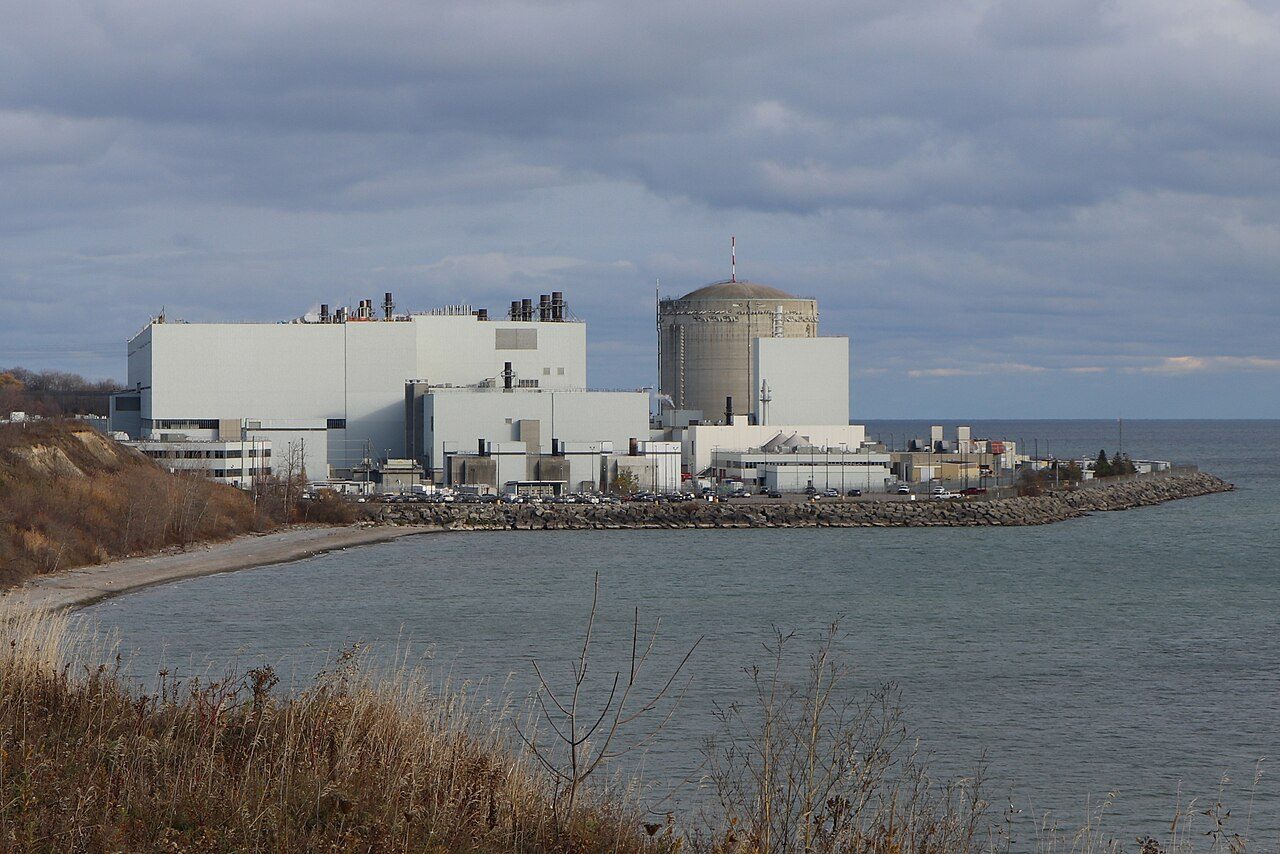
Canada's federal government wants its two clean-power investment tax credits to run six years longer. Budget 2026, tabled in the House of Commons on November 5, 2026, proposes extending the Clean Electricity and Clean Technology investment tax credits to property that becomes available for use before 2041, rather than before 2035, and opening the Clean Electricity credit to each province's highest-voltage transmission lines. It also proposes C$518.5 million over five years for the Nuclear Energy Strategy and C$587 million over five years to renew the Zero-Emission Vehicle Infrastructure Program (ZEVIP).
The two credit changes together are expected to cost C$2.4 billion from 2027-28 to 2030-31 and C$36.1 billion from 2031-32 to 2041-42, the budget says. Every item is still a proposal: the tax measures come as notices of ways and means motions to amend the Income Tax Act, and the nuclear and charging money starts in the 2027-28 fiscal year.
Credits for transmission inside a province
The Clean Electricity credit is a refundable credit of up to 15% on investments in low-emitting generation, electricity storage, and transmission between provinces and territories. The Clean Technology credit pays up to 30% on generation, storage, low-carbon heating, and non-road zero-emission vehicles with related charging and refuelling equipment, falling to 15% for property that becomes available for use in 2034. The budget would move that step-down to 2040, the credit's final year. Full rates require meeting prevailing wage and apprenticeship conditions.
The transmission change brings lines inside a province into a credit that has covered lines between provinces and territories. The threshold is the highest voltage each province already uses for transmission: 735 kV in Quebec and Newfoundland and Labrador; 500 kV in Ontario, Manitoba, British Columbia and Alberta; 345 kV in Nova Scotia and New Brunswick; 230 kV in Saskatchewan; and 138 kV in Prince Edward Island. The territories get a flat floor instead: lines at or above 69 kV. A 230 kV line would qualify in Saskatchewan and would not in Ontario. Eligible property includes cables, towers, lattices and transformers, and excludes buildings, distribution equipment and certain property used for international transmission. The measure would apply to property acquired on or after Budget Day, with further details "at a later date".
The government will also consult for 60 days on the scope and parameters of a domestic content bonus of up to 10 percentage points on the Clean Technology credit and up to 5 points on the Clean Electricity credit.
Nuclear and chargers
The nuclear money implements the Nuclear Energy Strategy the government presented in June 2026: C$518.5 million over five years starting in 2027-28, plus C$18.1 million ongoing. Natural Resources Canada gets C$261 million for supply chains, research and research reactor capacity; Atomic Energy of Canada Limited C$127 million; the Canadian Nuclear Safety Commission (CNSC) C$131.1 million "to prepare for new nuclear projects and become the sole federal regulator for nuclear energy projects"; Global Affairs Canada C$14.4 million for export promotion; and Health Canada C$3.3 million. Those lines add to C$536.8 million, by our arithmetic. The budget says C$18.3 million of the CNSC amount would be cost-recovered, which is the difference.
The budget also recaps earlier nuclear financing: up to C$2 billion from the Canada Growth Fund for the Darlington Nuclear Project, C$970 million in low-interest financing from the Canada Infrastructure Bank, and access to the refundable Clean Electricity credit.
On charging, C$587 million over five years from 2027-28 would go to Environment and Climate Change Canada to renew ZEVIP and support the installation of over 55,000 additional EV chargers. With C$45 million for charging research at Natural Resources Canada and C$2.2 million for the federal fleet, the three lines total C$634.2 million by our arithmetic; the Department of Finance's key measures list puts the charging package at just over C$634 million.
The current program runs to March 31, 2027, and the renewal picks it up from 2027-28 under Environment and Climate Change Canada rather than Natural Resources Canada, which has run ZEVIP so far. Natural Resources Canada's ZEVIP page puts the earlier rounds at C$280 million from Budget 2019 and the 2020 Fall Economic Statement, then C$400 million from Budget 2022, which extended the program to March 31, 2027. The budget counts 58,874 federally supported chargers in operation or planned by 2028-29 under existing ZEVIP funding.
Buyers already have a federal incentive in the Electric Vehicle Affordability Program, which the budget lists among the measures Canadians are benefiting from. Homes get the National Heat Pump Rebate announced October 8, which the budget folds in as a proposal of its own.
The rest of the electricity chapter
Natural gas gets a near-term opening in the same chapter that stretches the clean credits to 2040. The government intends to update the Clean Electricity Regulations to let existing facilities operate longer, "including where needed to maintain reliability"; to give planned generation investments more certainty and more flexibility, with natural gas in the near term, hybrid energy systems and distributed renewables named as examples; and to let producers offset more of their emissions through verified reductions elsewhere. It says any changes would keep the net-zero-by-2050 goal and would be subject to consultation, and it proposes C$22.9 million over five years for Environment and Climate Change Canada to update the regulations and develop equivalency agreements with provinces and territories where appropriate.
The rest of the electricity money comes in big, broadly described lines. The budget proposes nearly C$4 billion over 10 years from 2027-28 for electricity infrastructure expansion, renewable energy and priority projects, including new funding for the Smart Renewables and Electrification Pathways Program. It also proposes C$6 billion over six years from 2028-29 "earmarked to support the deployment of emerging electricity generation technologies." Its worked example of such a technology is the solid oxide fuel cell, pitched at data centres and other energy-intensive industries.
Smaller lines are more specific. The budget proposes C$37 million in 2027-28 for cost-benefit analysis of proposed interties across provincial and territorial borders, and C$1.6 billion over 10 years for northern energy reliability, which it says will support Yukon's Mayo Hydro Facility and the Atlin Hydro Expansion, which would bring hydroelectricity from northern British Columbia to Yukon.
Sources
Primary
- Budget 2026: Masters of our destiny · Department of Finance Canada
Supporting
- Zero Emission Vehicle Infrastructure Program · Natural Resources Canada
- Budget 2026: Key Measures · Department of Finance Canada
Copies of cited sources are retained where available. If a link no longer resolves, request a copy at contact@theduckcurve.com.