 The Duck Curve
Canada announces C$2 billion heat pump rebate worth up to C$10,000
Eligible below-median-income households would get up to C$10,000 and other eligible households C$2,000, with approval promised within 24 hours; the government has given no date to apply.
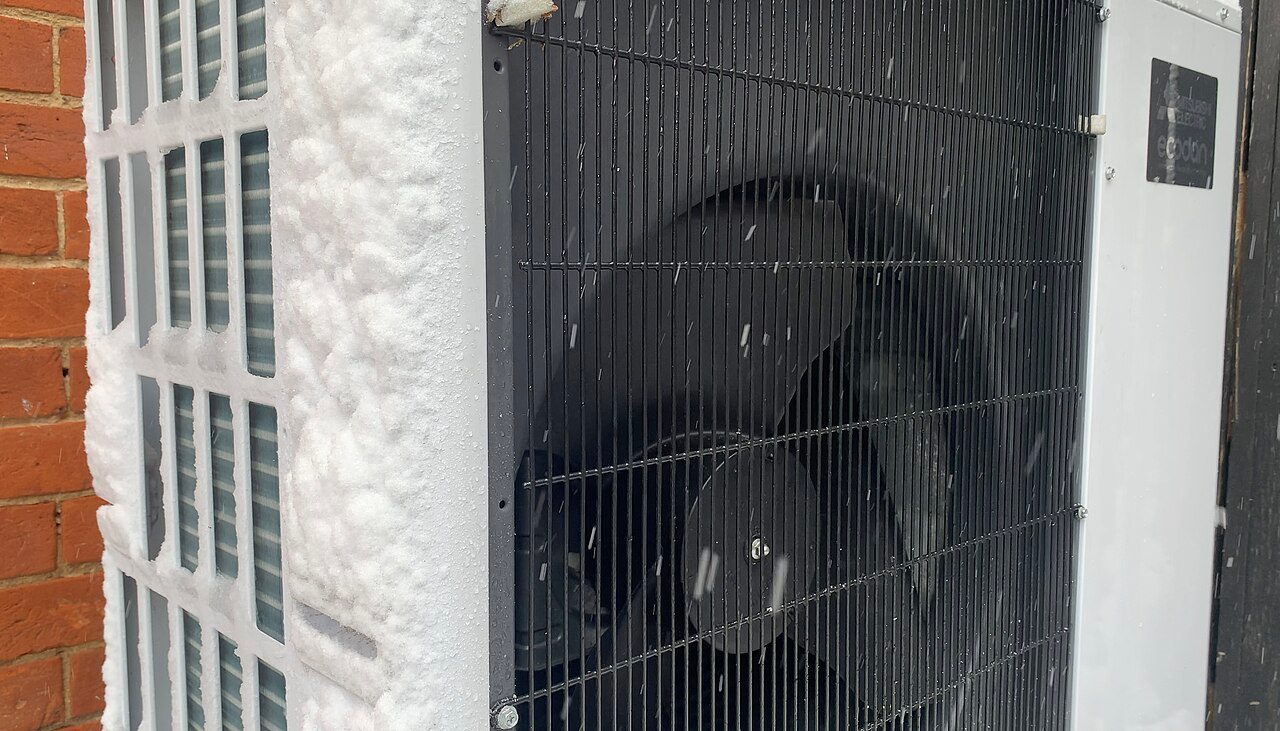
Canada will pay up to C$10,000 toward an electric heat pump for households below the median income, and C$2,000 for other eligible households, under a C$2 billion National Heat Pump Rebate that Prime Minister Mark Carney announced in Sherbrooke, Quebec on October 8, 2026. The rebate is meant to help up to 820,000 households make the switch, the release says, and both amounts can be combined with existing provincial programs.
The rebate is the larger half of a package the government bills as one million home retrofits. The rest is apartment financing: the Canada Mortgage and Housing Corporation (CMHC) and the Canada Infrastructure Bank (CIB) are to help building owners retrofit 280,000 units over the next eight years. The parts add up to 1.1 million, by our arithmetic, against a headline of one million, and the two largest are stated as ceilings ("up to"). "Canada strong starts in a warm home," Carney said.
Built for the night the furnace dies
About one million Canadian homes replace their heating system every year, the release says, and more than 80% of the time it is because the old system broke down without warning. The program is designed around that moment: an online portal, no energy audit before or after installation, and a promise that "This new program will confirm approval within 24 hours, and a heat pump can be installed as quickly as a furnace."
Applying is meant to take minimal time, per the backgrounder from Environment and Climate Change Canada. Rebates go to up to 820,000 homeowners "installing eligible electric cold climate air source heat pumps," chosen from an Eligible Products List that the backgrounder puts at over 100,000 options. The application asks for basic personal information and details of the heat pump the homeowner wants to buy; after installation, the homeowner submits receipts through the portal and payment is approved within five days. Homeowners can also apply before a breakdown, as an old system approaches the end of its life. Only one rebate is issued per person, so a landlord who claims it for a property they own cannot claim it again for their own residence.
There is no date to apply yet. A campaign page published the same day invites Canadians to sign up for information about "launch dates, eligibility, rebate amounts, and how to apply for the National Heat Pump Rebate." The backgrounder says the government will work with HVAC installers on the rollout and that consultations with industry "will begin immediately following the program announcement."
Where the C$2 billion goes
The government uses the C$2 billion two ways. The release presents it, with no period attached, as the investment "to deliver one million home retrofits across Canada," and the backgrounder opens the same way, over eight years. The backgrounder's rebate section and the campaign page then attach the same C$2 billion over eight years to the heat pump rebate. If the whole sum goes to the rebate, as those two put it, 820,000 households would average about C$2,400 each by our arithmetic, before any administration costs, much nearer the C$2,000 tier than the C$10,000 one.
The apartment streams are designed to cost the treasury little. CMHC's Multi-Unit Mortgage Loan Insurance product helps rental housing providers borrow from private lenders on more favourable terms, and CMHC collects premiums and fees, "typically paid by borrowers, such that the product is delivered at no cost to taxpayers." CMHC is expected to support retrofits in up to 250,000 rental units over the next eight years; the release says the product has already supported over 140,000 energy-efficient units. The CIB's Building Retrofits Initiative will target up to an additional 30,000 units in multi-unit residential buildings from the bank's existing allocation, "meaning no new funding is required from the federal government." The backgrounder's one other spending figure is nearly C$110 million over three years, starting in 2027-28, to renew the Deep Retrofit Accelerator Initiative, which funds third-party accelerators that guide building owners through complex retrofits; it does not say whether that money sits inside the C$2 billion.
The government's case is the heating bill. The backgrounder claims average savings of more than C$1,400 a year for households heating with oil, propane and electric resistance; the release puts it at "an average of $1,400 a year for households currently heating with oil or electrical boards." Combined, the release says, the measures will reduce Canada's emissions by over 25 megatonnes, which it likens to taking nearly eight and a half million cars off the road for one year.
The program that came before
Ottawa's oil-to-heat-pump grant has already closed to new applicants in five jurisdictions. For applicants in Alberta, Manitoba, the Northwest Territories, Quebec and Saskatchewan, the Oil to Heat Pump Affordability program took its last applications on July 31, 2026, and they have until January 31, 2027 to upload final receipts, its Natural Resources Canada page says. Residents of British Columbia, New Brunswick, Newfoundland and Labrador, Nova Scotia, Ontario, Prince Edward Island and Yukon are sent to a participating provinces and territories page, where details vary. The program is transitioning to Environment and Climate Change Canada, and the release says the new announcement builds on it and on the Canada Greener Homes Affordability program.
As that page describes it, the old program had the same C$10,000 ceiling behind narrower doors. It was for homeowners who heat with oil and whose household income is at or below the median household after-tax income, and where Ottawa delivered it directly, it paid by cheque after approval, in most cases before the homeowner had paid any costs. Its eligible costs ran past the heat pump to items including oil tank removal, electrical and mechanical upgrades, a supplemental electric heating system and outdoor piping loops for ground source heat pumps.
For the household, the new rebate reverses the order of the money. Under the backgrounder's design, the homeowner is pre-approved, buys and installs the heat pump, then submits receipts through the portal, and payment is approved within five days, rather than arriving as a cheque before costs. The hardware is cold climate air source heat pumps from the Eligible Products List. The backgrounder's eligibility rules name no heating fuel, and the release's own count of the market is the "Over seven million households in Canada" that "still heat their homes with oil, propane, diesel, electric baseboards, or outdated furnaces."
The Netherlands is aiming at the same moment by a different route: its cabinet plans a building rule that, from 2029, would in many cases make a smart hybrid heat pump (or a more efficient system) the standard when a gas boiler is replaced. Canada is trying a 24-hour approval instead.
Sources
Primary
- Prime Minister Carney announces landmark investment to retrofit one million homes, cutting energy costs and emissions · Office of the Prime Minister of Canada
Supporting
- Oil to Heat Pump Affordability program · Natural Resources Canada
- Backgrounder: Prime Minister Carney announces landmark investment to retrofit one million homes, cutting energy costs and emissions · Environment and Climate Change Canada
- One million home energy retrofits · Environment and Climate Change Canada
Copies of cited sources are retained where available. If a link no longer resolves, request a copy at contact@theduckcurve.com.