 The Duck Curve
England's bigger heat pump grant lifted installs 24%, study finds
Reported pre-grant installation costs fell about £827 as installers moved in, so households saved more than the £2,500 increase; roughly half the fall reflects changes in heat pump size and model mix, the paper says.
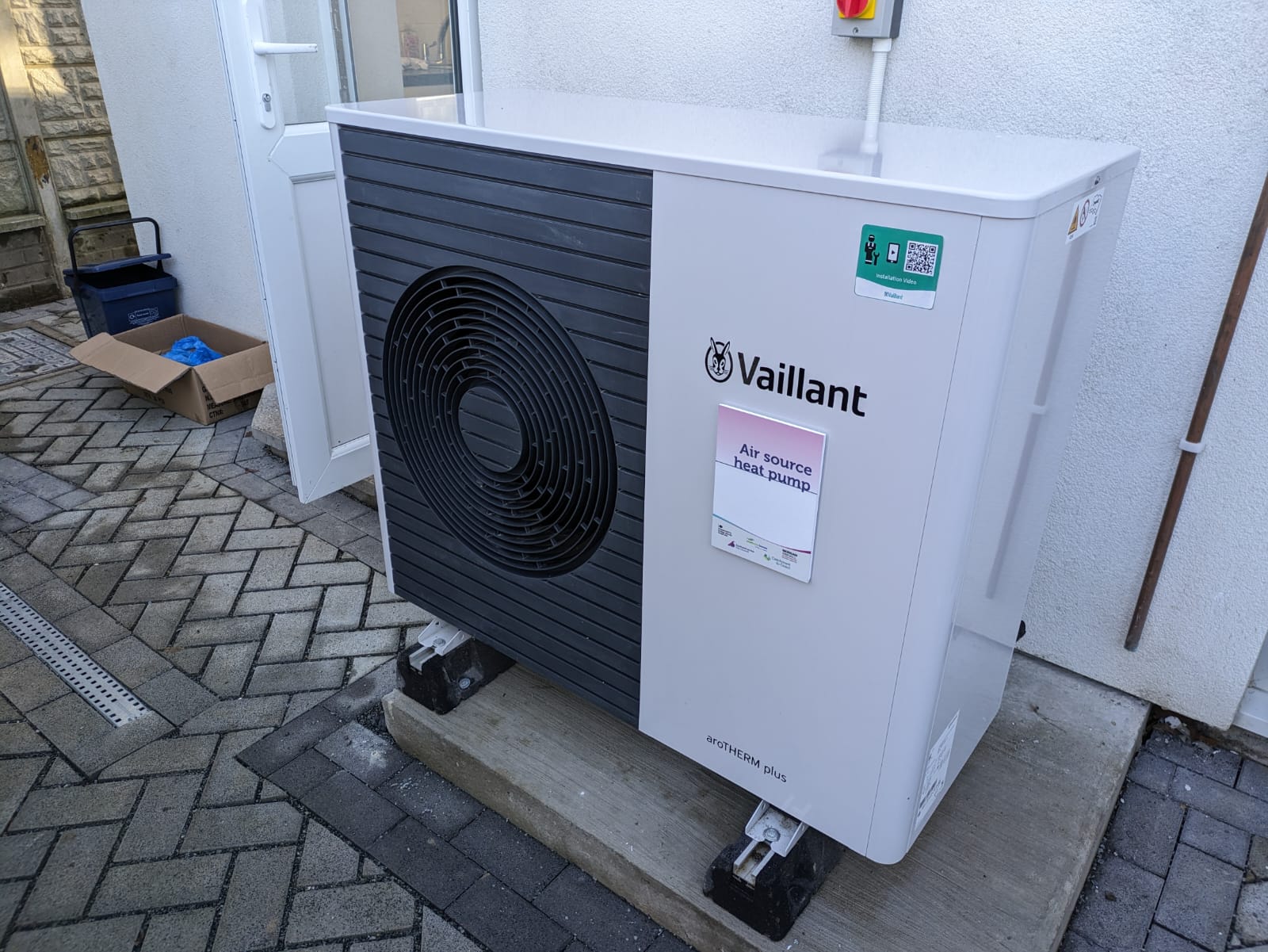
The October 2023 increase in the Boiler Upgrade Scheme grant for an air-source heat pump, from £5,000 to £7,500, raised monthly air-source installations in Northern England by 24% relative to Scotland and added roughly 7,200 units over the following 20 months, according to a discussion paper published on October 28, 2026 by the Centre for Economic Performance at the London School of Economics. The authors, Shefali Khanna, Ralf Martin, Florian Münch and Aurélien Saussay of LSE, Imperial College London and UCL, built the estimate from 260,000 certified installation records.
The more surprising number is the price. A bigger subsidy poured into a market with few installers is the textbook setup for installers to raise prices and keep the difference. Instead, reported installation costs before the grant fell by about £827, so the paper finds household out-of-pocket payments fell by the £2,500 increase plus that £827. "They got the full subsidy increase and a price cut on top," Martin, a professor of economics at Imperial Business School, said in LSE's release.
How the comparison works
The Boiler Upgrade Scheme applies only to England and Wales. Accredited installers apply for a fixed-value voucher on the household's behalf and deduct it from the invoice. On October 23, 2023 the air-source voucher rose from £5,000 to £7,500, and the ground-source voucher from £6,000 to £7,500. Heating policy is devolved, and Scotland's separate schemes did not change that October, which gave the researchers a border to compare across.
The comparison group was hardly ungenerous. Per the paper, the Home Energy Scotland scheme already offered a grant of up to £7,500 for domestic heat pumps, with an optional interest-free loan, so the reform moved the air-source grant in England and Wales to the figure Scotland already had as its ceiling.
The records cannot say who the extra buyers were. Microgeneration Certification Scheme data hold completed installations and reported invoices, not quote requests, voucher applications, waiting times or household demographics. They do cover virtually all subsidy-eligible domestic installations, the authors say, and the study reads them across a 57-month window that ends in June 2025. It focuses on air-source heat pumps, which make up 93% of the installations in its sample, and finds no differential pre-trends before the reform and a sustained increase across all 20 months after it.
Where the price cut came from
The extra demand drew installers in from elsewhere. After the increase, the number of active installers in a small English area in a given month rose by 19%, the count of active installers headquartered outside the local travel-to-work area rose by 45%, and the average distance from an installation to its installer's headquarters grew by about 30%, or 18 km.
Roughly half of the £827 is cheaper kit rather than a cheaper job. The paper puts £299 of the drop on smaller systems and £129 on a shift toward lower-cost models, £428 together. Another £192, net, comes from which installers did the work, mostly £174 from high-cost installers leaving local markets. Holding the installer, the exact model and the system capacity fixed, the pre-grant price still fell by £206, one quarter of the decline. The authors note that the net out-of-pocket drop therefore "overstates the pure price reduction for a fixed bundle," and that some of the invoice decline may be reporting noise if some installers mistakenly entered figures net of the grant. Systems also got smaller by 0.57 kW within installer, with higher rated seasonal efficiency.
Local competition shaped both results. Areas whose installer markets were less concentrated before the policy saw a larger jump in installations and a steeper cost fall, with the like-for-like price dropping by an additional £169 per standard deviation of pre-policy competition. The authors conclude that "consumer grants and local supply capacity are complements," and suggest that supply-side policies targeting vocational training and trade entry can raise the return on capital grants.
The value-for-money caveat
The extra £2,500 clears the government's carbon-cost bar only if the heat pumps perform as rated. The paper puts the marginal value of public funds for the increment at 2.12, at a public cost of £188 per tonne of CO2e abated, below the UK government's £265 appraisal carbon value. That figure uses the engineering ratings in the certification records. Substituting metered heat pump consumption from earlier research halves the lifetime abatement: the value falls to 1.46, still above one, but the cost rises to £416 per tonne, above the appraisal value. The authors say reconciling the rating plate and the meter would need certification records linked to household smart-meter data.
Installations have slipped since the study window closed. DESNZ's deployment statistics, published September 10, 2026, count 20,895 certified retrofit heat pump installations across the UK in the first half of 2026, a 22% fall from 26,768 in the same period of 2025, after a 2025 that ran 9% above 2024. The grant is still £7,500 for an air-source or ground-source heat pump, per GOV.UK's scheme page, with an extra £1,500 until March 2027 for homes heated by oil or LPG and without a mains gas connection. The government's Warm Homes Plan, published in January 2026, aims for 450,000 installations a year by 2030. The paper's data end in June 2025, so it says nothing about what drove the 2026 dip.
Saussay, an assistant professor at the Grantham Research Institute, said in the release that he hopes the paper informs decision makers "on why we must be rolling out more schemes like this, not reversing them." Another UK heat pump policy thread runs through the smart-appliance rulebook, where the government pushed its electric heating appliance rules to October 2028 at the earliest; abroad, Canada has announced a C$2 billion rebate worth up to C$10,000.
Sources
Primary
- Thin markets, thick subsidies: local competition and the incidence of heat pump grants (CEP Discussion Paper No. 2227) · Centre for Economic Performance, London School of Economics
Supporting
- Heat pump deployment statistics: June 2026 – summary · Department for Energy Security and Net Zero
- 2023 increase to heat pump grant raised installations by 24% a month, study finds · Grantham Research Institute on Climate Change and the Environment, LSE
- Apply for the Boiler Upgrade Scheme: What you can get · GOV.UK
Copies of cited sources are retained where available. If a link no longer resolves, request a copy at contact@theduckcurve.com.