 The Duck Curve
Rhode Island launches $32 million HOMES heat pump rebate for multifamily
The Office of Energy Resources says DOE approved the launch, announced September 23, 2026, with grants of up to $16,000 per housing unit for income-eligible buildings of five or more units; OER calls it New England's first HOMES launch.
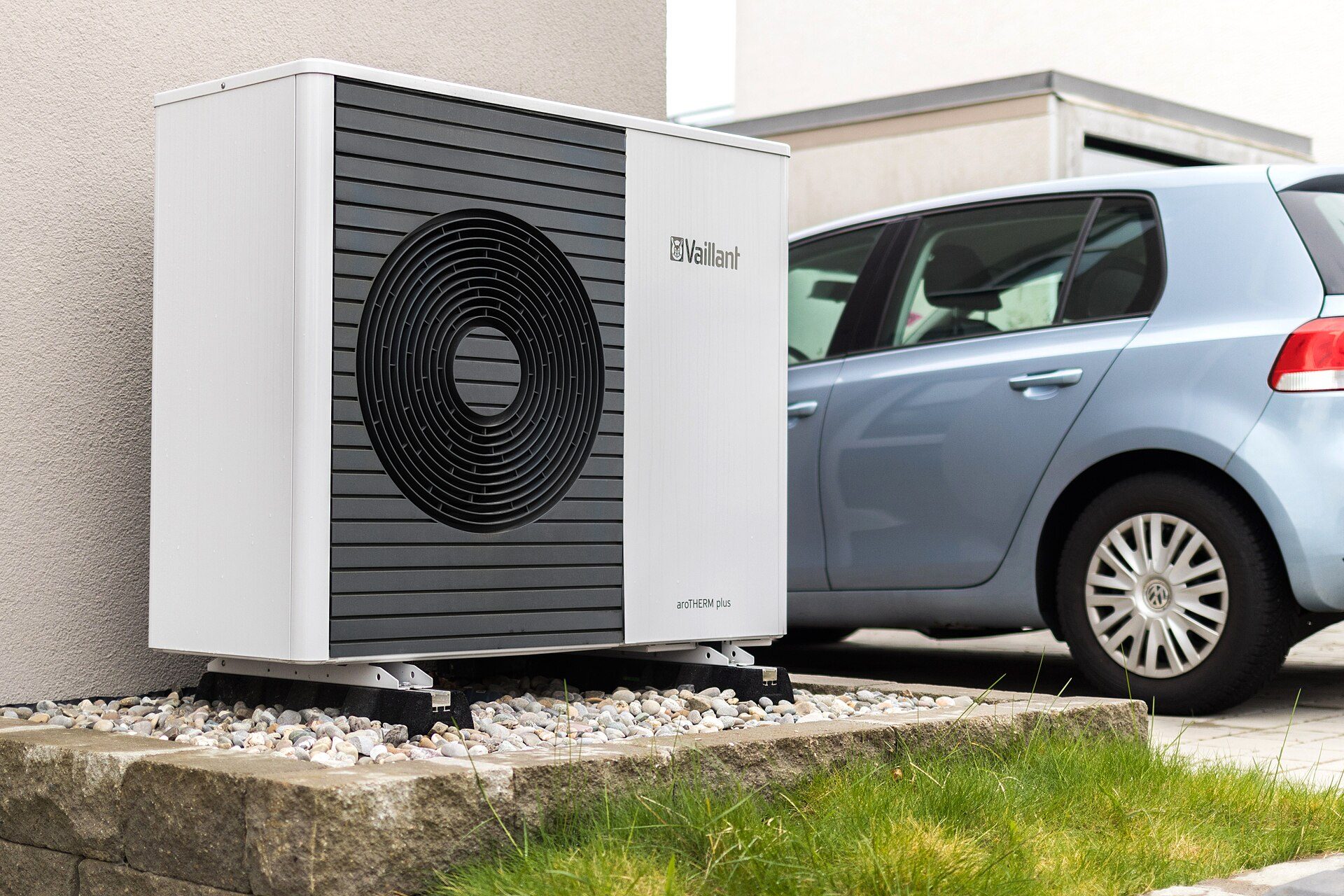
The Rhode Island Office of Energy Resources said on September 23, 2026 that it has launched the $32 million Home Owner Managing Energy Savings (HOMES) program, a federal rebate program whose launch the U.S. Department of Energy approved, to support heat pump installations in multifamily housing. Per the release, the program is available to income-eligible multifamily properties with five or more units, the maximum heat pump system grant is $16,000 per housing unit, and building owners apply through OER's website. The release calls Rhode Island "the first state in New England to launch" the federal program, and Acting OER Commissioner Chris Kearns is quoted in it: "This program ensures that multifamily households benefit directly while reducing their household energy bills long-term."
The terms are on OER's HOMES program page, as read on September 25, 2026. The page describes HOMES, "previously known as the Home Efficiency Rebates (HER) Program," as a $32 million federally funded program through DOE that provides heat pump rebates to income-eligible multifamily buildings with a modeled energy savings of at least 20 percent. To be eligible, a building must have five or more attached dwelling units, with 50 percent or more of those units occupied by low-income residents, which the program defines as under 80 percent of area median income. The page's own instruction is one sentence: interested building owners "can start the application process by filling out the Multifamily Heat Pump Retrofit Questionnaire below."
An informational card OER posts in English and Spanish adds three things the page does not state, one framing and two eligibility conditions: the program is "designed to help cover 100% of the cost for heat pumps (up to $16,000 per unit)," the building "must have a delivered fuel heating system," which the card lists as oil, propane or natural gas, and applicants can be categorically eligible through LIHEAP or public housing. The card also spells out the consequence of the page's 50 percent threshold, "the entire building is eligible," and describes the process as a "pre-screening application" after which "OER will review each application to determine eligibility." OER's fraud, waste and abuse mitigation plan, filled in on DOE's June 2026 template, names the implementer: records are to be maintained by Abode and OER on the Clean Heat Rhode Island (CHRI) application portal, and the plan checks the box committing OER to agreements with participating contractors but leaves unchecked the aggregator box, which the template says to check "only if your program will engage aggregators."
For a reader in one of Rhode Island's triple-deckers, the operative facts sit in three documents: the release gives five or more units and the $16,000 cap, the program page adds "attached" and the test that half the units be occupied by households under 80 percent of area median income, and the card alone adds a heating system that runs on oil, propane or natural gas.
The two programs, the federal rules, and where other states stand
HOMES is one of Rhode Island's two Inflation Reduction Act rebate programs. OER's rebate programs page, as read on September 25, 2026, says the state will receive approximately $32 million for HOMES and $31 million for the Home Electrification and Appliance Rebate (HEAR) program, that the HEAR application was approved and the program launched on September 17, 2024, and that the HOMES application was approved and the program launched on September 23, 2026.
The federal rules changed while Rhode Island's application was pending. DOE's Home Energy Rebates Program Notice 26-1, effective May 29, 2026, changed the program's name from "Home Efficiency Rebates" to "Home Owner Managing Energy Savings" to match the statutory name in IRA section 50121, and said DOE "is removing all program requirements not required by statute related to diversity, equity, and inclusion, Justice40 per rescinded Executive Order 14008, and disadvantaged communities," a list that includes the Justice40 reserve of 40 percent of funding for low-income households; among the requirements that survive because they are statutory, grantees "must provide either a contractor or aggregator $200 for each dwelling unit located in a disadvantaged community upon completion and verification of the installation," and in the same section the notice says grantees "may propose" a single disadvantaged-community incentive per building for multifamily properties receiving central system upgrades. The notice gives launched programs three months to conform and says programs not yet launched "are required to align with new program requirements prior to launching." The notice says DOE "recognizes that the multifamily sector is especially challenging for HOMES program implementation," and among its multifamily changes it expands the definition of a multifamily building to include multiple buildings, allows common-area upgrades that benefit occupants of individual units, and requires that a majority of the benefit of central system upgrades in a mixed-use building go to the residential portion.
Rhode Island's launched program is narrower than the floor DOE removed, in different units: DOE dropped a reserve of 40 percent of funding for low-income households, while Rhode Island restricts eligibility to multifamily buildings at least half of whose units are occupied by low-income residents, so up to half the units in an eligible building can be above the income line. The Northeast Energy Efficiency Partnerships roundup of the region's rebate programs, dated "as of June 2025" in its prose and "as of July 2025" in its table caption, wrote that "Rhode Island's HOMES program requires that 40 percent of benefits go to disadvantaged communities, 40 percent to low-income homes (<80 percent of area median income), and 10 percent to multifamily homes" and that OER had submitted the application in August 2024, alongside a plan for a new low-income multifamily Clean Heat RI pathway, the program name the fraud plan gives the launched portal; NEEP put the state's allocation at $63.7 million, $32 million of it for HOMES and $31.8 million for HEAR. As of that roundup, the only HOMES program launched in NEEP's Northeast and Mid-Atlantic region was the District of Columbia's, with New York's approved and launching and Connecticut aiming for early 2026, which is the backdrop to OER's first-in-New-England claim; the claim is OER's. The Building Performance Association fact sheet counted twelve states and the District of Columbia as having launched rebate programs of either kind as of June 2026, out of the 55 states and territories that, per the sheet, had applied and received full conditional awards by January 2025, and reads DOE's guidance release, which it dates June 1, 2026, as a pathway for the states without programs to launch.
Outlook
The release gives no target number of buildings or units and no application deadline. At the $16,000 cap the $32 million would reach at most 2,000 housing units, by our arithmetic, and fewer if OER uses the portion that Program Notice 26-1 says section 50121 allows for planning, administration or technical assistance. None of the documents says how large the eligible stock is; the questionnaire on OER's page is the first count.
⚠ The Outlook extrapolates from OER's September 23, 2026 release and HOMES program page, OER's informational card, and DOE's Program Notice 26-1 of May 29, 2026; the 2,000-unit figure is our division of $32 million by the $16,000 cap.
Sources
Primary
- Rhode Island Office of Energy Resources Launches $32 Million Federal Home Owner Managing Energy Savings Rebate Program · Rhode Island Office of Energy Resources
Supporting
- Home Energy Rebates Roundup Across the Northeast and Mid-Atlantic · Northeast Energy Efficiency Partnerships (NEEP)
- Home Energy Rebates Program Notice 26-1: Changes to Program Guidance for the Home Owner Managing Energy Savings (HOMES) Rebate Program under IRA Section 50121 · U.S. Department of Energy, Office of Critical Minerals and Energy Innovation
- State Home Energy Rebate Programs, June 2026 · Building Performance Association
- HOMES Program Informational Card (English and Spanish) · Rhode Island Office of Energy Resources
- Home Owner Managing Energy Savings Rebate Program Fraud, Waste, and Abuse Mitigation Plan (Rhode Island, IRA Section 50121) · Rhode Island Office of Energy Resources, on the U.S. Department of Energy template
- Home Energy Rebate Programs · Rhode Island Office of Energy Resources
- Home Owner Managing Energy Savings (HOMES) Program · Rhode Island Office of Energy Resources
Copies of every cited source are retained. If a link no longer resolves, request a copy at contact@theduckcurve.com.