 The Duck Curve
California offers at least $28M for fast chargers, up to $100,000 a port
The $100,000 rate is only for ports of 275 kW or more; the window that opens February 24, 2027 pays up to $55,000 per port and drops that tier.
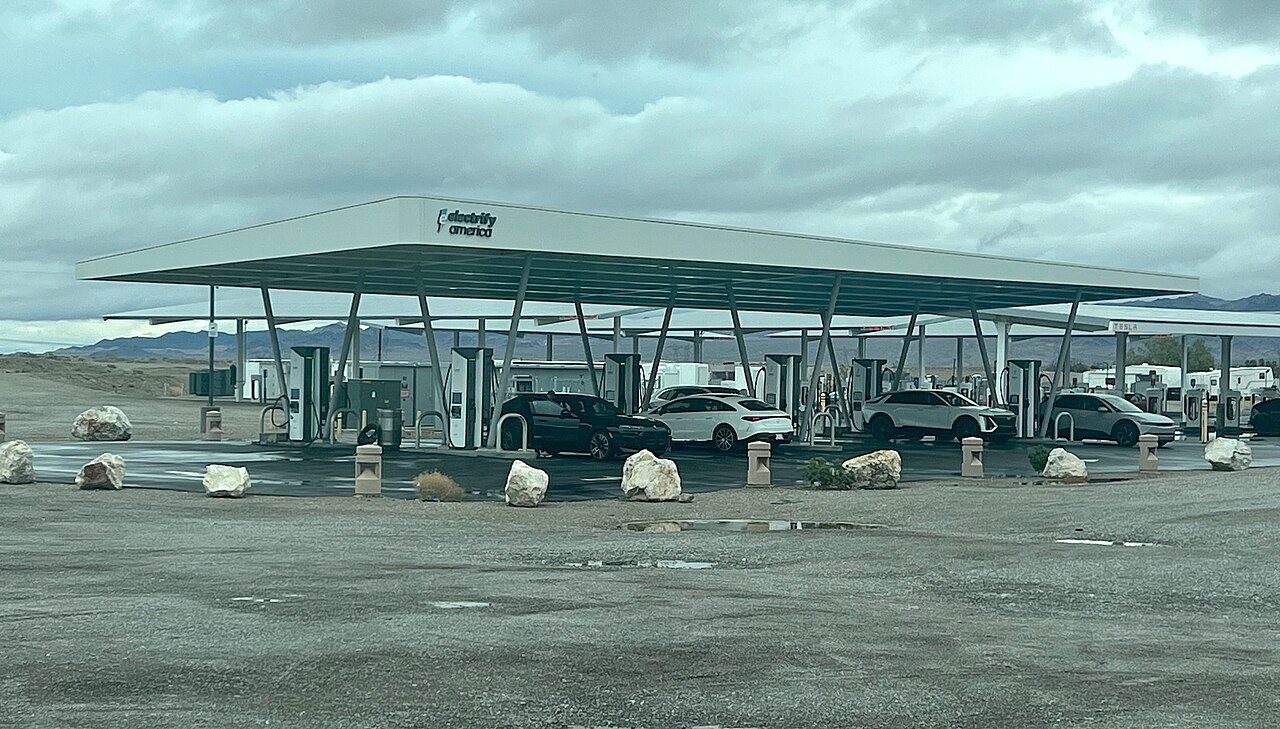
California businesses, nonprofits and public agencies can apply from October 7, 2026 through January 14, 2027 for at least $28 million in state incentives for publicly accessible DC fast chargers, the California Energy Commission said on October 7. Awards under its Fast Charge California Project can cover up to 100% of eligible costs, at up to $100,000 per charging port, and only ready-to-build projects qualify, which the release says includes having an issued permit and a final utility service design.
The $100,000 figure belongs to the fastest hardware. The program page pays it only for ports with a guaranteed output of 275 kW or more; ports rated 150 kW to 274.99 kW are capped at $55,000. A site needs at least four ports able to deliver 150 kW at the same time and can be paid for up to 20, per the implementation manual, which says "A minimum of $27.6 million will be available in incentives," where the release says at least $28 million. The project is part of the California Electric Vehicle Infrastructure Project (CALeVIP), which the Center for Sustainable Energy (CSE) administers for the commission.
Who gets paid first
The queue is first-come, first-served with one exception. Applications in disadvantaged communities, low-income communities or on tribal lands get processing priority, in the manual's words, "over every Application that does not qualify for DAC/LIC/TL application status and that has a Received Date on or after the Received Date of the DAC/LIC/TL application." If a queue remains when the window closes, successful applicants hear by March 1, 2027 and unsuccessful ones by March 3. Funding is reserved in queue order until the window's allocation runs out. Winners then have 450 days from reservation to complete the installation, chargers energized and fully operational.
Fewer kinds of site qualify this time. Charging hubs, hotels and business districts were all on the first window's list of eligible site types, and the program page now says they "will no longer be eligible site types." The release, meanwhile, says eligible locations "may include businesses, public facilities, high-traffic destinations and sites along key travel routes." The manual also excludes sites at or serving car dealerships, automotive service centers and other automotive facilities.
The money also cannot be combined with other charger incentives on the same project. A site that applies to both this program and the National Electric Vehicle Infrastructure (NEVI) program, which the commission administers in California, gets one or the other: per the program page, funding "will be reserved for whichever program is processed first. Applicants cannot choose which program they would like to participate in." The prohibited list includes utility programs such as Charge Ready 2 and air district programs. The only exceptions are Low Carbon Fuel Standard revenue, federal funding including tax credits (but not the NEVI money the commission administers), utility tariff Rules 29 and 45, which fund the utility side of the meter, and local governments' own funds for costs the rebate does not cover, so long as those do not come from another charger incentive program. Other states are spending federal NEVI money on the same kind of hardware: Minnesota announced up to $41.2 million for Greater Minnesota on September 1, 2026, and Colorado awarded $23.2 million from NEVI and state funds. California's program is state money, from the commission's Clean Transportation Program and the Greenhouse Gas Reduction Fund, per the release.
The rate after January
The spring 2026 round awarded well below the headline cap: the release says it awarded $56.9 million for more than 1,266 ready-to-build fast-charging ports in 58 counties, with more than 67% of chargers installed or planned for disadvantaged, low-income and tribal communities. By our arithmetic that averages under $45,000 per port, below even the lower tier. The project's first window opened on August 5, 2025 as a $55 million program with the same $55,000 and $100,000 tiers, and its program page shows applications ran to January 29, 2026, with oversubscribed applicants held on a waitlist until March 14, 2026.
The next window opens February 24 and runs through May 27, 2027, at up to $55,000 per port, the release says. Its program page says all incentives "will default to $55,000 per charging port as long as the eligible equipment meets the minimum 150kW power level," and that the 275 kW category is no longer eligible. It loosens the plug rule as well: J3400 and CCS connectors both qualify, with one CCS connector required per site, where the current window requires at least 50% CCS connectors per site. A developer planning 275 kW ports has until January 14, 2027 to apply with a permit and a final utility design in hand; after that, by our arithmetic, the cap on each such port drops by $45,000.
Permits are half of ready-to-build, and the state has moved on them. SB 1283, one of the six EV bills Governor Newsom signed on September 20, extends expedited administrative approval to charging stations with a canopy or with onsite energy storage sized to support charging, and gives cities and counties until December 31, 2027 to amend their ordinances and checklists. That deadline falls after both windows close.
"This next round of Fast Charge California Project funding will help move ready-to-build projects forward, expand access to public charging and put state investments to work in communities that have historically had fewer charging options," said Spencer Reeder, director of the commission's Fuels and Transportation Division. The release says CALeVIP, which it calls the nation's largest EV charging incentive initiative, has supported 10,200 charger installations across California since its launch in 2017, in a state with more than 2.2 million light-duty EVs.
Sources
Primary
- California Opens $28M in Electric Vehicle Fast Charger Incentives · California Energy Commission
Supporting
- California Opens $55 Million Incentive Program to Expand Public Electric Vehicle Fast Charging · California Energy Commission
- Implementation Manual for Fast Charge California Project 2 · Center for Sustainable Energy
- Fast Charge California Project Window 2 · Center for Sustainable Energy (CALeVIP, for the California Energy Commission)
- Fast Charge California Project Window 3 (2027) · Center for Sustainable Energy (CALeVIP)
- Fast Charge California Project (Window 1) · Center for Sustainable Energy (CALeVIP)
Copies of cited sources are retained where available. If a link no longer resolves, request a copy at contact@theduckcurve.com.