 The Duck Curve
Ex-BP Dutch fast chargers change hands as US ports pass 80,000
Australia's Electric Vehicle Council will lead a A$1.43 million national charging roadmap, and Tesla built more US fast-charging ports than anyone in the third quarter while its share of the network fell below half.
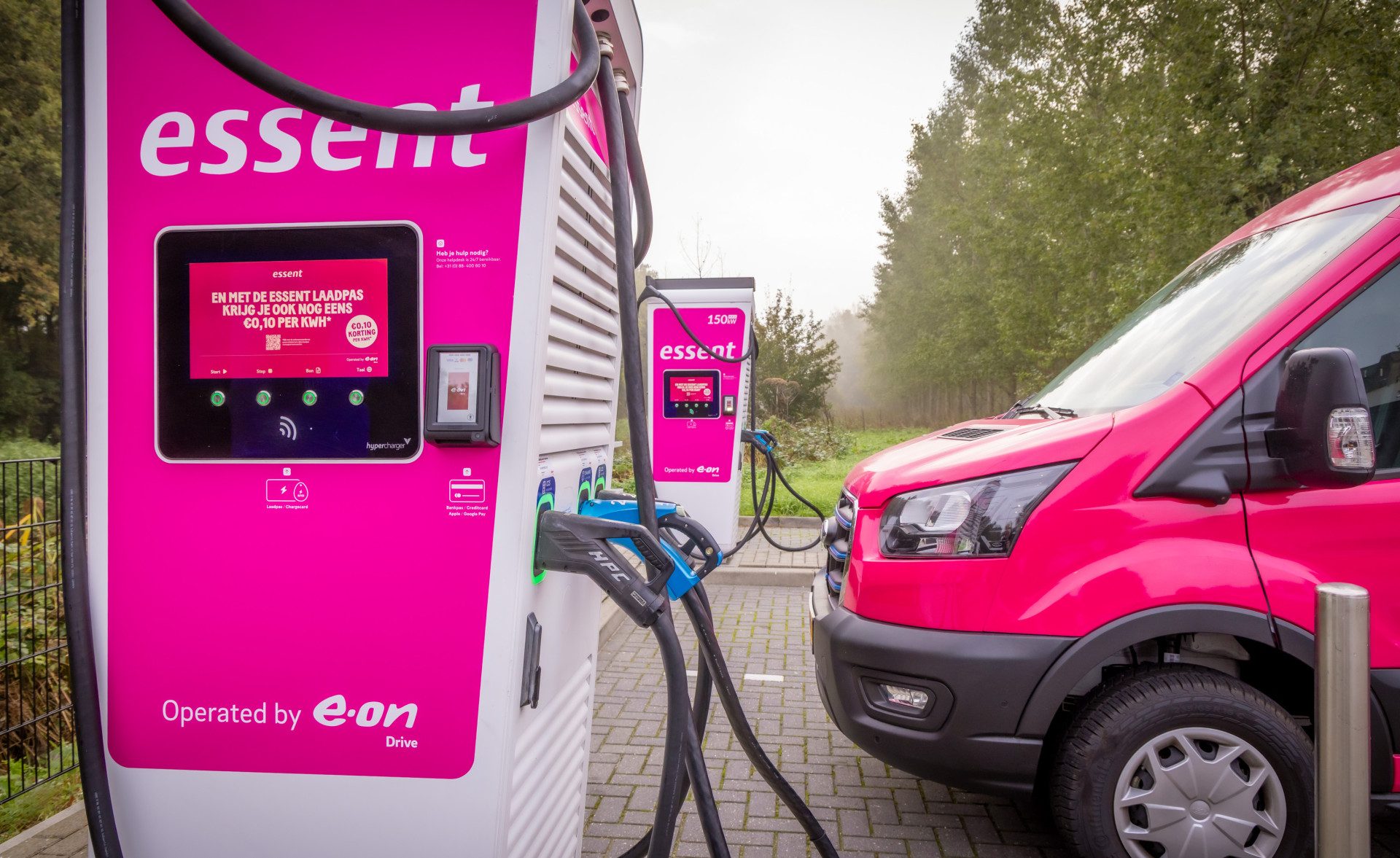
Three charging stories from October 8 to 13, 2026: BP's former Dutch fast-charging network changed owners, Australia started planning its charging system as a whole, and the US passed 80,000 fast-charging ports.
E.ON and Essent take over BP's former Dutch fast chargers
E.ON Drive Infrastructure is taking over the former BP fast-charging network in the Netherlands, 79 sites with 370 charge points, and will run it with Essent, Essent announced on October 8, 2026. Both companies are E.ON subsidiaries. E.ON Drive owns, installs and maintains the chargers; Essent puts its brand on them, with "Operated by E.ON Drive" on each unit, and handles marketing. The deal includes 45 secured development sites for new fast-charging hubs, to be built in stages over the coming years, and E.ON Drive's own 46 existing Dutch fast-charge points move to the Essent name. The parties disclosed no financial terms.
The hardware is Alpitronic, at up to 300 kW. Some sites use chargers with a built-in battery buffer that refills through the day on a small-consumer grid connection, so sites with limited grid capacity can still fast-charge. Most locations sit at OK fuel stations on busy routes: after BP left the Netherlands its Dutch business went to Catom, which runs the former BP stations as OK, and E.ON Drive is taking over the chargers on those forecourts.
BP's exit from the Netherlands is part of a wider BP retreat from European mobility assets, electrive reports: Sorégies is taking over more than 600 BP Pulse charge points in France, and BP is selling 250 Austrian fuel stations with their charging and fleet business to Volenergy, while it stays in German charging through Aral Pulse. In Australia, fuel retailer Ampol is moving the other way: it has agreed to buy Evie Networks and its 1,031 charging bays.
Australia commissions a national charging roadmap
The Electric Vehicle Council will lead a A$1.43 million National EV Charging Roadmap, backed by A$1.06 million from the Australian Renewable Energy Agency's Driving the Nation Program, with the rest from the council and project partners, the council announced on October 13, 2026. It will build an evidence base for passenger and heavy-vehicle charging needs through 2035, in cities and regions, and identify pressure points and where coordination could inform investment. The final roadmap is due in mid-2027.
"The challenge is not simply to deliver more chargers, but to ensure we invest in the right charging infrastructure nationally, in the right places, at the right time," said council chief executive Julie Delvecchio. The council bills the project as Australia's first national roadmap for planning charging infrastructure. ARENA has supported a national EV roadmap before, from a different angle: the National Roadmap for Bidirectional EV Charging, out by February 2025, which deals with cars that can send power back out. The new one is about where the plugs go. Project director Alina Dini said the roadmap "will be a planning and coordination tool rather than a fixed prediction or prescription." The plan arrives with battery-electric vehicles taking 24.2% of the new-vehicle market in September on FCAI's count.
US fast-charging ports pass 80,000
The US added 664 DC fast-charging stations and 4,106 ports in the third quarter of 2026, taking the network to 14,614 stations and more than 80,000 ports for the first time, according to Paren's Q3 2026 report, published October 13 with data as of September 30. Tesla added more ports than any other network, 1,287 or 31.3% of new ports (1,411, or 34.4%, counting its Supercharger for Business sites), yet its share of all US fast-charging ports slipped from 54.3% a year earlier to 49.3%. Tesla added about 5,700 ports over the year; the rest of the market added more than twice as many.
Fewer sites are opening, but on average each one is bigger. Through the third quarter, operators opened 2,158 stations, about 20% fewer than the 2,696 through the same point of 2025, while ports fell about 9%, to 12,354. In the third quarter, new non-Tesla sites averaged 5.0 ports, up from 4.1 a year earlier, and 73% of the quarter's new ports, Tesla's included, were rated at least 250 kW. Ionna added 378 ports, up from 182 in the second quarter, much of it by converting the Circle K charging sites it acquired in 2026. Some of that growth is at sites that already had chargers: under Paren's method, when a network replaces another network's chargers at a site, those ports count as new.
Prices rose on Tesla's account. The national average reached $0.540/kWh, up 2.7% from a year earlier; Tesla's non-member price rose 15% to $0.569 while the non-Tesla average has held near $0.533 for five quarters. Utilization, the share of time a port spends charging a vehicle, was 15.9%, and has stayed between 15.7% and 16.5% for five straight quarters, which Paren reads as supply and demand in close balance at the national level. California, home to a state fast-charger incentive of at least $28 million, still led with 87 new stations, down from 128 in the second quarter.
Sources
Primary
- Essent stapt in openbare snellaad-infrastructuur · Essent (E.ON)
- Electric Vehicle Council to lead ARENA-backed National EV Charging Roadmap · Electric Vehicle Council
- US EV Fast Charging — Q3 2026 (State of the Industry report) · Paren
Supporting
- The ultimate battery: how your EV could reduce power bills and contribute to a cleaner energy grid · ARENA (ARENAWIRE)
- E.ON Drive takes over BP Pulse fast-charging network in the Netherlands · electrive
Copies of cited sources are retained where available. If a link no longer resolves, request a copy at contact@theduckcurve.com.