 The Duck Curve
Ampol agrees to buy Evie Networks and its 1,031 charging bays for A$225M
The fuel retailer's public charging network would grow from 393 bays to about 1,425 at more than 400 sites, with completion targeted for the first half of 2027 subject to ACCC clearance.
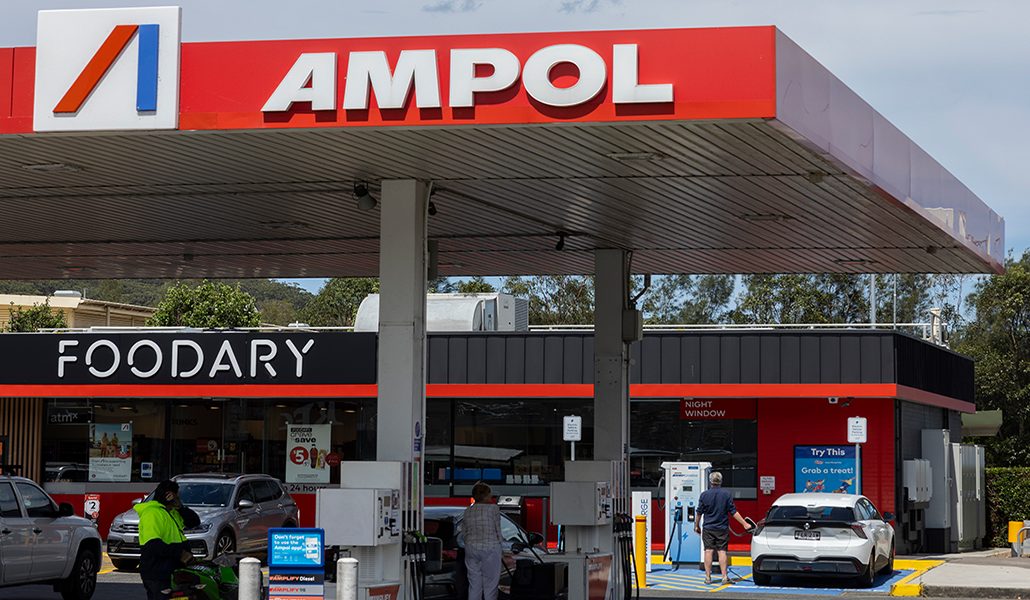
Ampol has agreed to buy Evie Networks for A$225 million, a deal that would take the fuel company's public charging network from 393 bays to about 1,425. Its subsidiary Ampol Energy signed a share sale agreement for 100% of Fast Cities Australia Pty Ltd, the company behind Evie, Ampol told the ASX on October 1, 2026. The purchase adds more than 1,030 bays and creates a combined network across more than 400 sites, subject to clearance by the Australian Competition and Consumer Commission (ACCC), with completion targeted for the first half of 2027.
The buyer knows the product. In June 2020 the first ultra-fast charging station in Ampol's retail network was set to open as an Evie site at Avenel, Victoria: two bays of 350 kW Tritium chargers at a service station then still branded Caltex, the companies announced. Six years on, Ampol is buying the network it once hosted.
More plugs, slower plugs
The two networks are built differently. In the footprint table of Ampol's deal presentation, counted as at September 29, Evie has 1,031 bays served by 618 chargers, 369 of them rated 50 to 75 kW and 34 rated 350 kW or more, for about 63,050 kW of installed capacity across 322 sites. AmpCharge has 393 bays on 199 DC chargers, 141 of them in the 180 to 300 kW band, for about 33,000 kW. By our arithmetic Evie brings about 2.6 times AmpCharge's bays but only about 1.9 times its kilowatts.
The pitch is about locations as much as hardware. Evie's sites carry a weighted average lease expiry of about 10 years (including options, per the presentation) and established grid connections, the release says, and the presentation counts about 20 MW of spare grid capacity across some Evie sites that could go into faster charging. Evie's bays averaged 142 kWh a day each in September through the 29th, against 117 kWh across its financial year to June 30, 2026 and 134 kWh in June, and the network brings about 380,000 registered app customers. "The acquisition secures a portfolio of well-located sites with long-dated average lease tenure and established grid access that we believe will become increasingly valuable as BEV adoption accelerates in the years ahead," Ampol chief executive Matt Halliday said.
Ampol is calling the result the biggest network in the country by bays, with the caveat in a footnote. Its presentation charts the combined network at 1,424 bays, ahead of Tesla at 1,230 and Chargefox at 1,175, under the banner "Together Evie + AmpCharge move to #1 by bays." The chart's footnotes date Evie's and AmpCharge's bays to September 29 and source the operator figures to PlugShare connector data as at August 31, 2026, so the podium mixes bays and connectors counted a month apart. The release itself claims a leading position rather than the top spot.
The money and the demand case
Ampol says the combined business, Evie plus Energy Solutions (its transport energy unit outside traditional fuels), "is anticipated to achieve annualised EBITDA of $30 million (including synergies) within 3 years post completion including anticipated public charging demand growth and network expansion," with double-digit annual growth after that. The presentation phrases the same target as "$30m+." Ampol is targeting about $10 million in mostly cost synergies over the same three years and anticipates breakeven EBITDA from the combined charging business in 2028, the first full calendar year after completion. The deal will be fully debt funded, from existing facilities per the presentation, with what Ampol calls a nominal impact on leverage and a stated commitment to its Baa1 investment grade credit rating.
The demand case rests on cars arriving faster than chargers. Ampol's presentation indexes Australia's monthly BEV sales at 204 in July and August 2026 against 100 in the fourth quarter of 2024, while DC public charge points reached 153 on the same base. Electric vehicles have exceeded 20% of new cars sold on average over the five months before the deal, Ampol's media release says; the battery-electric share in August was a record 24.9% by the Federal Chamber of Automotive Industries' count, as we reported in September. On Ampol's own forecourts, Halliday said, "Within the AmpCharge network, utilisation has increased year on year, with charging sessions increasing 116% and energy supplied increasing 120% in the first half of 2026."
A familiar desk at the ACCC
Ampol's last deal went through the competition regulator the long way. Under the mandatory merger regime in force since January 1, 2026, the ACCC approved Ampol's purchase of EG Australia on June 3, 2026 on condition that Ampol divest 41 retail fuel sites to an ACCC-approved buyer; Ampol had first offered 19 and raised it during the Phase 2 assessment. Without the conditions, Commissioner Philip Williams said, the deal could have substantially lessened competition in the retail supply of petrol or diesel in 39 local markets.
Ampol completed that purchase on June 30, 2026, paying approximately $1,165 million in gross consideration for a network of about 480 sites net of divestments. Evie costs about a fifth of that, by our arithmetic, for a charging business whose combined EBITDA Ampol expects to reach breakeven in 2028.
Ampol's timetable puts the ACCC's response and the deal's completion both in the first half of 2027. Until then, Ampol says, the two companies will continue to operate independently. Full integration is expected to take about three years from completion.
Outlook
The ACCC's EG review tested where Ampol and EG sites overlapped at the local market level. If it applies the same lens to charging, Ampol's presentation supplies the starting material: a combined network that ranks itself first by bays, with about 92% of those bays in New South Wales and the ACT, Victoria and Queensland, by our sum of the presentation's map. Under the regime the ACCC describes, Phase 1 takes 15 to 30 business days and Phase 2 up to 90 more, subject to extensions, so on paper a first-half 2027 completion leaves room for either path.
Past completion, 2028 is the year to watch. If Evie's per-bay energy keeps climbing from the 117 kWh daily average of its 2026 financial year, the breakeven target has a tailwind; Ampol's synergy target is mostly costs, so the balance of that year's result will depend on how much energy the combined bays sell.
⚠ The Outlook extrapolates from Ampol's October 1, 2026 ASX release and presentation (timetable, 2028 breakeven target, per-bay energy figures, bay map) and the ACCC's June 3, 2026 EG Australia decision and stated review periods; it predicts no ACCC outcome.
Sources
Primary
- Ampol Executes Share Sale Agreement to Acquire Evie Networks (ASX release) · Ampol Limited (ASX: ALD)
Supporting
- Ampol partners with Evie Networks to deliver its first ultra-fast electric vehicle charging station · Evie Networks
- ACCC approves Ampol's acquisition of EG Australia, subject to conditions · Australian Competition and Consumer Commission
- Ampol Completes Acquisition of EG Australia (ASX release) · Ampol Limited (ASX: ALD)
- Proposed Acquisition of Evie Networks Presentation (ASX release) · Ampol Limited (ASX: ALD)
- Ampol Enters Agreement to Acquire Evie, Expanding National EV Charging Footprint · Ampol
Copies of cited sources are retained where available. If a link no longer resolves, request a copy at contact@theduckcurve.com.