 The Duck Curve
Germany's MiSpeL rules let home batteries mix grid and solar power
The EEG premium on stored solar survives only in direct marketing, which excludes systems on the fixed feed-in tariff, and the one-meter option for arrays up to 30 kWp waits on EU state-aid approval.
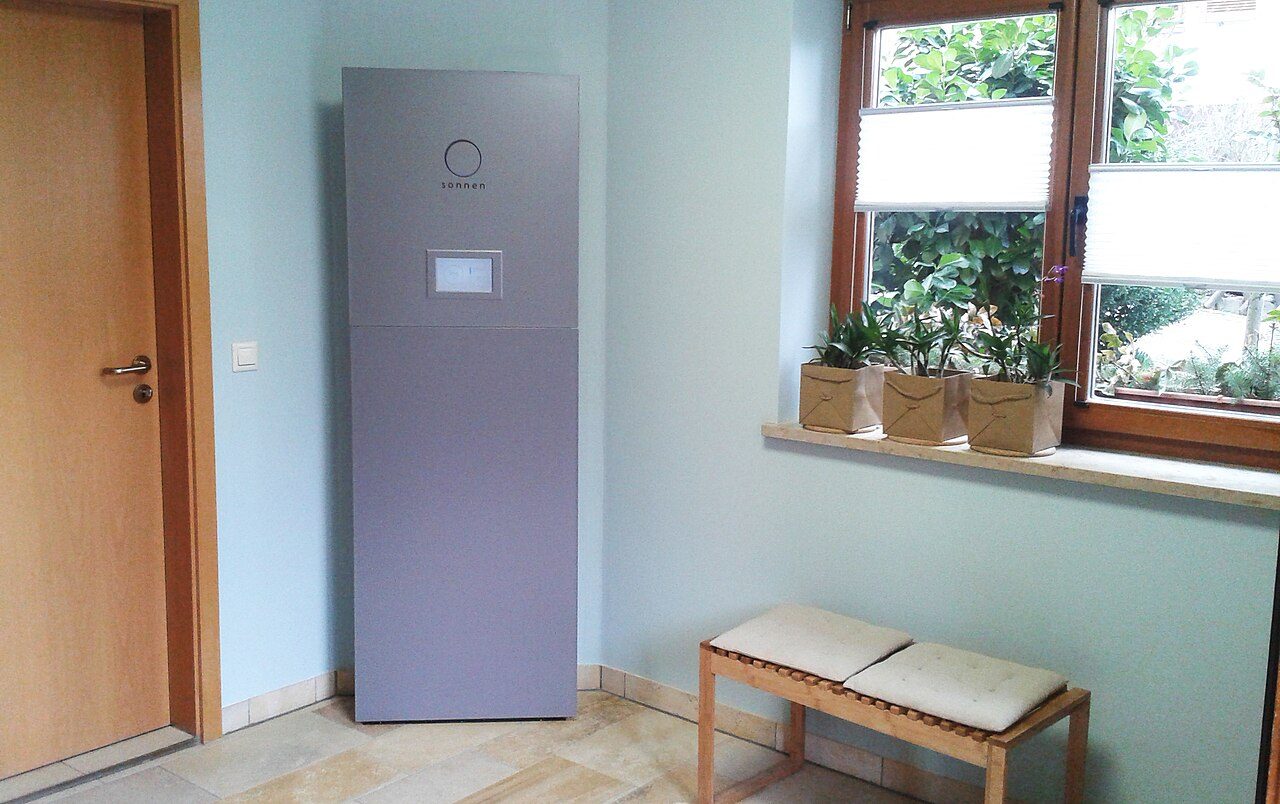
Germany's Bundesnetzagentur adopted its MiSpeL determination on October 1, 2026, giving home and commercial batteries a way out of the choice between grid power and EEG support for stored solar. Under the decision, a battery or a bidirectional EV charge point can charge from both the rooftop array and the grid, export later, and still collect the EEG market premium on the share of exports counted as solar; the share counted as stored grid power earns relief from levies and, per the agency, network charges. Two conditions come with it: the premium survives only in direct marketing, and the simpler one-meter option for solar arrays up to 30 kWp cannot start until the European Commission approves its legal basis under state-aid rules.
Until now, the only route for a battery behind an EEG-supported array was what the regulator calls the exclusivity option: store nothing but renewable power, or lose the support. Bidirectional charge points were excluded from it. MiSpeL, short for Marktintegration von Speichern und Ladepunkten (market integration of storage and charge points), adds two alternatives, and the agency's proceeding page says both extend pro-rata eligibility to charge points for the first time. "Germany can thus become a pioneer in bidirectional charging," agency president Klaus Müller said in the agency's press release.
Two ways to count a kilowatt-hour
The delimitation option (Abgrenzungsoption) is open to installations of every type and size and allocates each kilowatt-hour by formula from quarter-hour readings, typically from two meters. The flat-rate option (Pauschaloption) is built for solar arrays up to 30 kWp with batteries and bidirectional wallboxes in homes and small businesses. It needs only a quarter-hour meter at the grid connection, so, as the agency's background paper puts it, the meter cabinet does not have to be rebuilt.
The flat-rate option replaces measurement with a rule of thumb, settled once a calendar year. Under Annex 2 of the decision, exports up to 500 kWh per kWp of installed solar count in principle as eligible for the market premium. Exports above a second, higher threshold count in principle as stored grid power, which can be set against grid purchases to reduce the levies on them. Between the two sits an "indifference band" that earns neither, which the agency says keeps solar power from being subsidized beyond the EEG, without objective reason, out of consumers' levies and network charges. The annex's own worked example, an 8 kWp array with a 10 kWh battery, has an eligibility cap of 4,000 kWh of exports a year, a 320 kWh band above it, and netting only above 4,320 kWh.
For a bidirectional charge point without a stationary battery, the band is set by a flat factor of 0.2 times the eligibility cap, down from 0.5 in the working draft the agency published on August 5, 2026; the background paper calls the cut a central demand of market participants. By our arithmetic, the same 8 kWp array paired only with a bidirectional charger would carry an 800 kWh band. The rules look at the charge point rather than the car, so any bidirectional car can be integrated at any bidirectional charge point with no meter in the vehicle. Grid power used for driving still pays levies and network charges, and where it is recognizable that a car is discharging power charged elsewhere, at an employer's charger for example, that power gets no EEG support.
The direct-marketing condition
The premium usually comes with a middleman. To claim it under either option, every renewable installation, battery and charge point behind the connection point has to be assigned to direct marketing, in which the exports are balanced and sold in the market's quarter-hour slots, usually by a hired direct marketer. Homes on the fixed feed-in tariff, which pays the same rate per kilowatt-hour whatever the market does, are left out: the background paper says the new rules apply to direct-marketing users and not to feed-in tariff users, and the decision keeps the tariff available only under the old exclusivity option. When consultation respondents including DGS, DIHK and Green Planet Energy asked for the tariff in the flat-rate option, the agency said the statute rules it out, and that a payment fixed regardless of market price gives no one a reason to shift exports into expensive hours.
The condition reaches the balcony. A plug-in solar device behind the same connection must also be assigned to direct marketing, with or without the premium; free handover to the grid operator, which the decision notes is often used for such devices, is excluded. Respondents asked for an exemption for plug-in devices, and the agency replied that the law leaves no room for one.
Both options run on quarter-hour readings of exports and imports from meters that comply with metering and calibration law; the decision names no meter type. Germany's rollout of intelligent metering systems is partway along: the Bundesnetzagentur's rollout monitoring counted 3,172,579 of them reported installed as of June 30, 2026, or 5.9 percent of all metering points, a share the agency says is probably higher in reality because competitive meter operators are only partly represented. Per the agency, the law makes them mandatory only for generators above 7 kW, consumers above 6,000 kWh a year and controllable devices under § 14a EnWG; among mandatory cases using 6,000 to 100,000 kWh a year, including § 14a devices, 26.1 percent had one.
When it starts
The decision takes effect on publication; it was posted on the agency's proceeding page on October 1, 2026 and is due in the Bundesnetzagentur's official gazette on October 7, 2026. Until September 30, 2027, either option applies only with the consent of both the grid operator and the meter operator. The consultation split on timing: BNE, BVES, Enpal and sonnen were among those asking for immediate application, while 1Komma5°, BDEW, EnBW, Octopus and VKU were among those wanting to wait until the market-communication processes between utilities could handle mass volumes. The agency chose the middle path, then described its own nearly one-year window as tight for the industry's data-format and IT work. The flat-rate option can apply at the earliest to exports from the first day of the month after the Commission's state-aid approval, and none of the agency's MiSpeL documents gives an expected date for that approval.
The German solar association BSW-Solar welcomed the decision, and managing director Carsten Körnig called it the "lang erwarteten regulatorischen Schlüssel" (long-awaited regulatory key) for using renewable and grid power in the same battery, pv magazine reported.
The stakes in vehicles are large on paper: Europe's electric vehicles carry about ten times the battery capacity of the stationary storage connected to its grid by 2024, by Bruegel's estimate, a figure the think tank itself treats as hypothetical. MiSpeL is Germany's rulebook for putting a share of that to work from the driveway.
Sources
Primary
- Festlegung zur Marktintegration von Speichern und Ladepunkten (MiSpeL): Tenor mit Begründung (Az. 618-25-02) · Bundesnetzagentur
Supporting
- Arbeitsstand zur Anlage 2 zur Pauschaloption (MiSpeL) · Bundesnetzagentur
- Roll-out intelligenter Messsysteme · Bundesnetzagentur
- Bundesnetzagentur erlässt Festlegung zur Marktintegration von Stromspeichern und Ladepunkten (MiSpeL) · Bundesnetzagentur
- Festlegungsverfahren zur Marktintegration von Speichern und Ladepunkten (MiSpeL) · Bundesnetzagentur
- Bundesnetzagentur beschließt MiSpeL-Regeln für Speicher und bidirektionales Laden · pv magazine Deutschland
- MiSpeL-Festlegung, Anlage 2 zur Pauschaloption · Bundesnetzagentur
- Hintergrundpapier: MiSpeL: BNetzA eröffnet die aktive Nutzung von Speichern und bidirektionalen Ladepunkten · Bundesnetzagentur
Copies of cited sources are retained where available. If a link no longer resolves, request a copy at contact@theduckcurve.com.