 The Duck Curve
UK climate advisers tell ministers to keep the 80% EV sales target for 2030
The Climate Change Committee says the deepest cut in the Department for Transport's review would add 5.6 MtCO2e in 2030 and leave the Sixth Carbon Budget unmet without cuts of the same scale elsewhere.
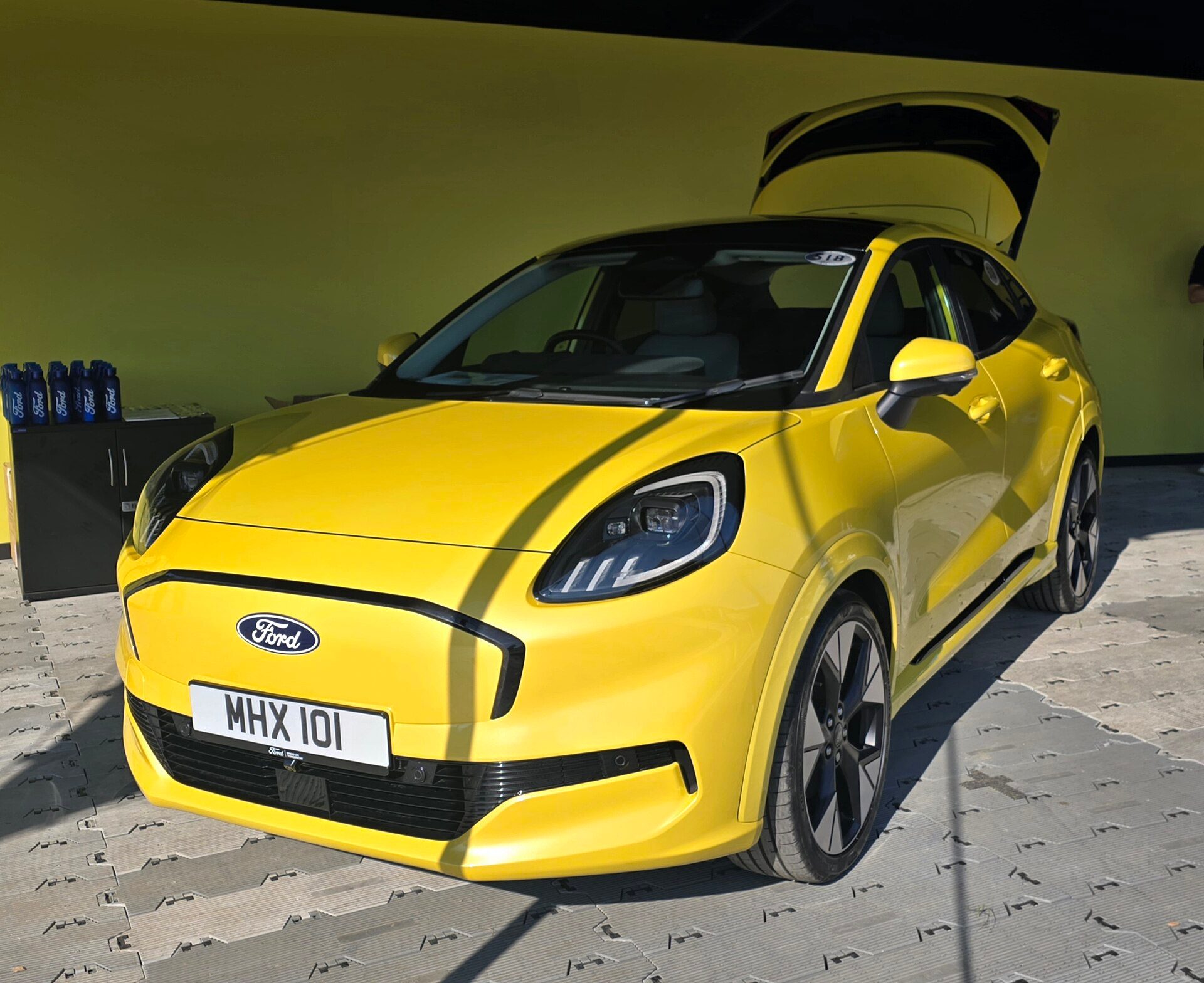
The UK should keep its rule that 80% of new cars sold in 2030 be zero-emission, the Climate Change Committee told Transport Secretary Heidi Alexander in a letter dated November 18, 2026. Weakening the ZEV mandate, chair Nigel Topping wrote, would put the government's climate commitment at risk, and by the committee's reading of the Department for Transport's own impact assessment, cutting the headline targets would mean "the legal Sixth Carbon Budget target would not be met without alternative action at the same scale." In its announcement, the committee put it more bluntly: the UK is "likely to miss" the targets Parliament set if the government weakens the mandate.
What is at stake for car buyers is the share of new cars sold in 2030 that must be zero-emission: 80% under the current rules, or as low as 50% under the weakest option in DfT's ZEV mandate review, the consultation the letter answers, which ran from August 14 to October 23, 2026. The current car trajectory climbs from 38% in 2027 to 80% in 2030, with an indicative 100% in 2035. Besides the 50% path, the review laid out lower paths reaching 70% or 60% in 2030, plus a fourth that keeps 80% but extends the borrowing, banking and CO2 conversion flexibilities, which now end in 2029, to 2034. Vans, legislated to reach 70% in 2030, got options down to 40%. The consultation document says "All alternative trajectories remain initial proposals," and that the 2030 end of sales for new purely petrol and diesel cars and the 2035 zero-emission date for all new cars and vans will not change.
The committee's sharpest numbers come from the department it is writing to. Working from DfT's initial emissions impact assessment, it calculates that the deepest cut (50% for cars, 40% for vans) would add 5.6 MtCO2e in 2030, equal to the annual savings of approximately 2.8 million residential heat pump retrofits, and 8.4 MtCO2e a year on average across the Sixth Carbon Budget period, 2033 to 2037. That could leave the government's Carbon Budget and Growth Delivery Plan short of the legislated budget by up to 4.2%. The same option would add petrol and diesel demand equivalent to 15 million barrels of oil in 2030, about £1.3 billion at October 2026 crude prices. The committee says it checked DfT's estimates against its own modelling and that they "appear to be broadly accurate."
The rest of the letter argues carmakers do not need the relief. The 2026 headline target is 33%, but once CO2 flexibilities are counted manufacturers need around 25%, and the EV share in October was 32%, the committee says. SMMT's count for January through October is 26.6% battery-electric, as we reported in our October registrations roundup. The committee also notes that the UK now ranks 22nd globally for EV sales share over the last 12 months, behind Germany (37% in October) and France (41%).
For households, the committee puts the saving from switching to an electric car at around £800 a year for a typical household with home charging, at October 2026 prices. A typical household that cannot charge at home, by contrast, still pays around £100 more per year if it switches to an EV, and the letter asks ministers to go further than the public-charging support in October's Budget.
The committee's to-do list goes further than holding the line, and some of it would tighten the rules. It wants the utility factor for plug-in hybrids updated, saying the factor has consistently been found to underestimate real-world emissions by up to a factor of seven, which earns carmakers an outsized CO2 credit for each PHEV and lowers the number of EVs they must sell. It also wants a tighter CO2 baseline for new entrants: brands with no UK sales before 2024 are credited against an industry-average baseline that the letter calls artificially high, "effectively subsidising Chinese PHEVs." Chinese brands accounted for 43% of PHEV sales in 2026 to June, against 21% of EV sales. PHEVs reached a 14% share of UK car sales in the 12 months to September 2026.
Vans get gentler treatment. Electric vans hold an 11% share so far in 2026 against an estimated implied target of 16%, and the letter asks the government to re-commit to the transition and tackle barriers such as costly public charging while giving manufacturers "enough breathing room in the meantime." The mandate is also jointly owned with the Scottish and Welsh governments and the Northern Ireland Executive, and the committee says it underpins their separate carbon budgets.
Industry was not persuaded. Mike Hawes, chief executive of the Society of Motor Manufacturers and Traders, told The Guardian that the committee "ignores the damaging cost of the targets it defends: billions in unsustainable discounts and millions more in government incentives." A government spokesperson told the paper the consultation "will ensure we are taking a pragmatic and balanced approach to the ZEV transition."
Outlook
The consultation is part of the government's existing commitment to review the mandate's legal instrument, the Vehicle Emissions Trading Schemes Order, by early 2027, so the trajectory decision is likely to come by then. If ministers pick one of the lower paths, the committee's arithmetic implies the Sixth Carbon Budget would then rest on finding cuts of a similar size elsewhere, the scale it compares to 2.8 million heat pump retrofits in 2030. The plug-in hybrid and new-entrant fixes could travel separately from the headline numbers, since the consultation already invites views on flexibilities and technical updates alongside the trajectories.
⚠ The Outlook extrapolates from the government's commitment, stated on the ZEV mandate review consultation page, to review the VETS Order by early 2027, from the consultation's scope, and from the Climate Change Committee's November 18, 2026 letter and its emissions estimates.
Sources
Primary
- Letter: Nigel Topping CMG to the Rt Hon Heidi Alexander MP, Secretary of State for Transport, on the Zero-Emission Vehicle (ZEV) Mandate Review · Climate Change Committee
Supporting
- Zero emission vehicle mandate review · Department for Transport
- Zero emission vehicle (ZEV) mandate review (consultation document) · Department for Transport
- Dual risk to climate targets and cost of living from weakening ZEV mandate, climate advisor warns government · Climate Change Committee
- UK will miss climate targets if it weakens EV sales rules, advisers warn · The Guardian
Copies of cited sources are retained where available. If a link no longer resolves, request a copy at contact@theduckcurve.com.