 The Duck Curve
UK Budget puts £100 million into cheaper local public EV charging
The money starts in spring 2027 and is worth about £150 a year to the average driver who charges on the street, while a taskforce studies letting such drivers use their home electricity tariff at local, lower-powered public chargers.
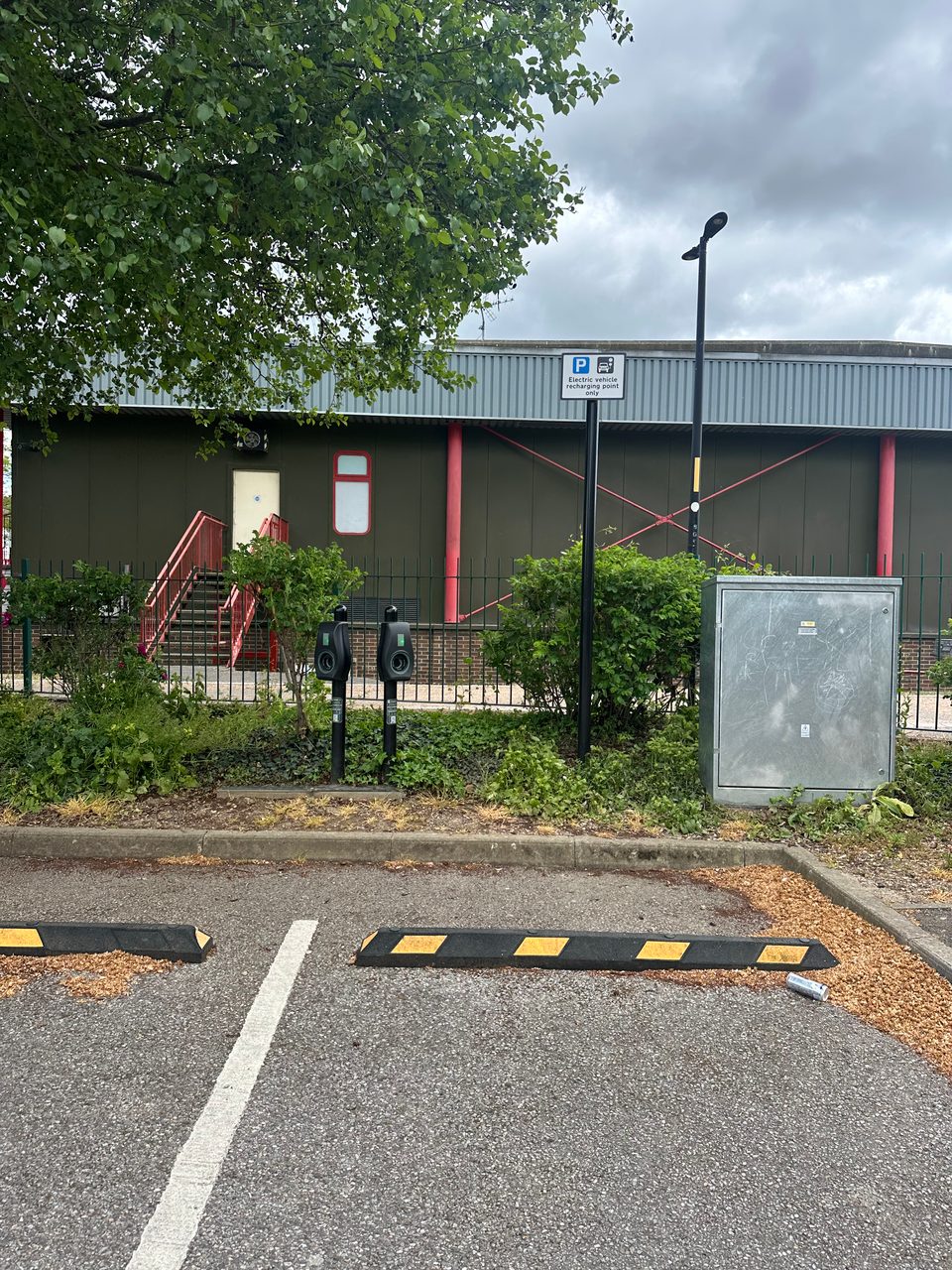
Britain will spend £100 million over two years, starting in spring 2027, to cut prices at local, lower-powered public chargers, the kind on residential streets where a car can sit for several hours or overnight, according to the Budget 2026 document published on October 28, 2026. The Treasury expects the money to save the average EV driver without home charging who charges on-street around £150 a year.
The Budget's policy table books it as £50 million in each of 2027-28 and 2028-29, for chargers in Great Britain. Chargers of this type make up around a third of the current network, the Treasury says. How the money reaches drivers is not settled: the Department for Transport "will set out next steps in due course."
The £100 million is the quick fix. The slower one is a taskforce, led by industry experts, to explore letting drivers use their domestic electricity tariff at local, lower-powered public charge points, which the Budget calls "a complex proposal that will take time to consider." Under that idea, known as tariff porting, a driver would plug into a standard or standard-plus public charger near home, have the electricity billed by their own supplier, and pay an access fee reflecting the operator's costs of installing, operating and maintaining it, according to the cost of public EV charging review led by Philip New and published alongside the Budget. The review suggests setting the fee near what a home charger costs its owner, for example £1,000 spread over five years, or £200 a year, and says porting would need changes to charger and supplier software, to Elexon's balancing and settlement codes and potentially to distribution network codes. It recommends pilots, noting that similar schemes are already being piloted elsewhere, including in Germany.
Why kerbside charging costs more
Kerbside charging has become expensive quickly. Since 2021, average prices at lower-powered AC chargers have risen 69% in real terms, and at higher-powered DC chargers 94%. The average standard public tariff is 54p/kWh, and at today's use the review finds AC chargers "are making significant losses on each kWh sold." In 2025, public chargers were in use between 5 and 12 hours a week on average.
Fixed costs did more of the damage than energy prices, by the review's account. Network standing charges paid by charge point operators rose 83–283% between 2021 and 2026, and the largest policy levies add 6.4p/kWh to public charging against 4.7p/kWh at home. The review describes "a basic unfairness at the heart of the market": 90% of current EV drivers can charge at home, and around a third of UK drivers do not have their own driveway. The kerbside price falls on the drivers EVs have mostly not reached yet.
The Treasury's £150 figure assumes a driver covering 8,000 miles a year at 0.303 kWh a mile; spread over that energy, the saving works out at about 6p per kWh, by our arithmetic. The review aimed higher: its full package of recommendations, it says, could be designed to cut local public charging costs by around 15–20p/kWh. It also warns that a subsidy can end up "absorbed into operator revenues" rather than passed to drivers, and calls for reporting requirements and controls to stop operators raising underlying tariffs before applying the discount. Fleets already buy that kind of discount privately: Octopus Fleet's FleetBoost offers businesses discounts at three networks, which Octopus says cut charging bills by up to 30%, for an extra £10 (ex VAT) per driver a month.
The tax side of the same Budget
A driver who charges at the kerb pays 20% VAT on the electricity, the rate the Budget confirms for public charge points, while household electricity in Great Britain carries 0% VAT until July 1, 2027, a cut that began on October 1, 2026 and that the Budget extends. The kerbside rate is HMRC's longstanding treatment, now being written into law with effect from November 1, 2026: legislation, which the Budget assigns to Finance Bill 2026-27, confirms that electricity supplied through publicly accessible and workplace charge points is not for domestic use, so it is standard rated (supplies to a charity for non-business use aside) and carries the Climate Change Levy, according to HMRC's brief on the change, which follows a First-tier Tribunal decision in Charge My Street Ltd. The review made no recommendations on tax, which its terms of reference left to fiscal events, so the kerbside gap the £100 million is meant to narrow includes a VAT gap that the same Budget is writing into law.
The discount from spring 2027 and the end of the household VAT cut on July 1, 2027 come first; a new tax follows. Electric Vehicle Excise Duty (eVED), a mileage-based charge on electric and plug-in hybrid cars, starts in April 2028, the Budget confirms, with a mileage estimation tool at launch, an opt-in "eVED Connect" system that reads mileage from connected cars, and an automated refunds model by 2030. The Budget 2025 document that announced eVED put the average EV driver's bill at around £240 a year. That Budget also commissioned the charging review, which has now reported alongside its successor.
The charging money runs through 2028-29, so the discount and the new mileage charge overlap from April 2028. Earlier help for drivers without driveways went the other way, toward home charging: since October 21, 2026, households in England no longer need planning permission for a charger whose cable crosses the pavement, as we reported, and the Treasury cites that change alongside the new funding.
Outlook
If the Department for Transport's scheme follows the review's design, the discount would be paid through charge point operators or a delivery body with pass-through reporting attached, and the first test would be whether posted kerbside tariffs actually fall in spring 2027. Tariff porting is further off: the review wants the taskforce to agree a delivery timeline with Ofgem and Elexon for the code changes, and pilots would have to come first. For a driver who charges on the street, the £150 saving and an eVED bill the government put at around £240 for the average driver would both apply in the 2028-29 tax year.
⚠ The Outlook extrapolates from the cost of public EV charging review's description of how a price subsidy and tariff porting would be delivered, and from the Budget 2026 and Budget 2025 documents' timing of the £100 million and of Electric Vehicle Excise Duty.
Sources
Primary
- Budget 2026 · HM Treasury
Supporting
- Budget 2025 · HM Treasury
- Cost of Public Electric Vehicle Charging Review · Department for Transport (independent review chaired by Philip New for DfT, DESNZ and HM Treasury)
- Cutting electric vehicle charging costs · HM Treasury
- VAT and Climate Change Levy on electric vehicle charging for non-domestic use (Revenue and Customs Brief 13 (2026)) · HM Revenue & Customs
Copies of cited sources are retained where available. If a link no longer resolves, request a copy at contact@theduckcurve.com.