 The Duck Curve
UK sets February 2027 start for standard supplier tariff data APIs
A code change effective November 6 fixes the technical rules; Great Britain's electricity suppliers must publish tariff prices through one public API, for optimisers and smart appliances, by February 18, 2027.
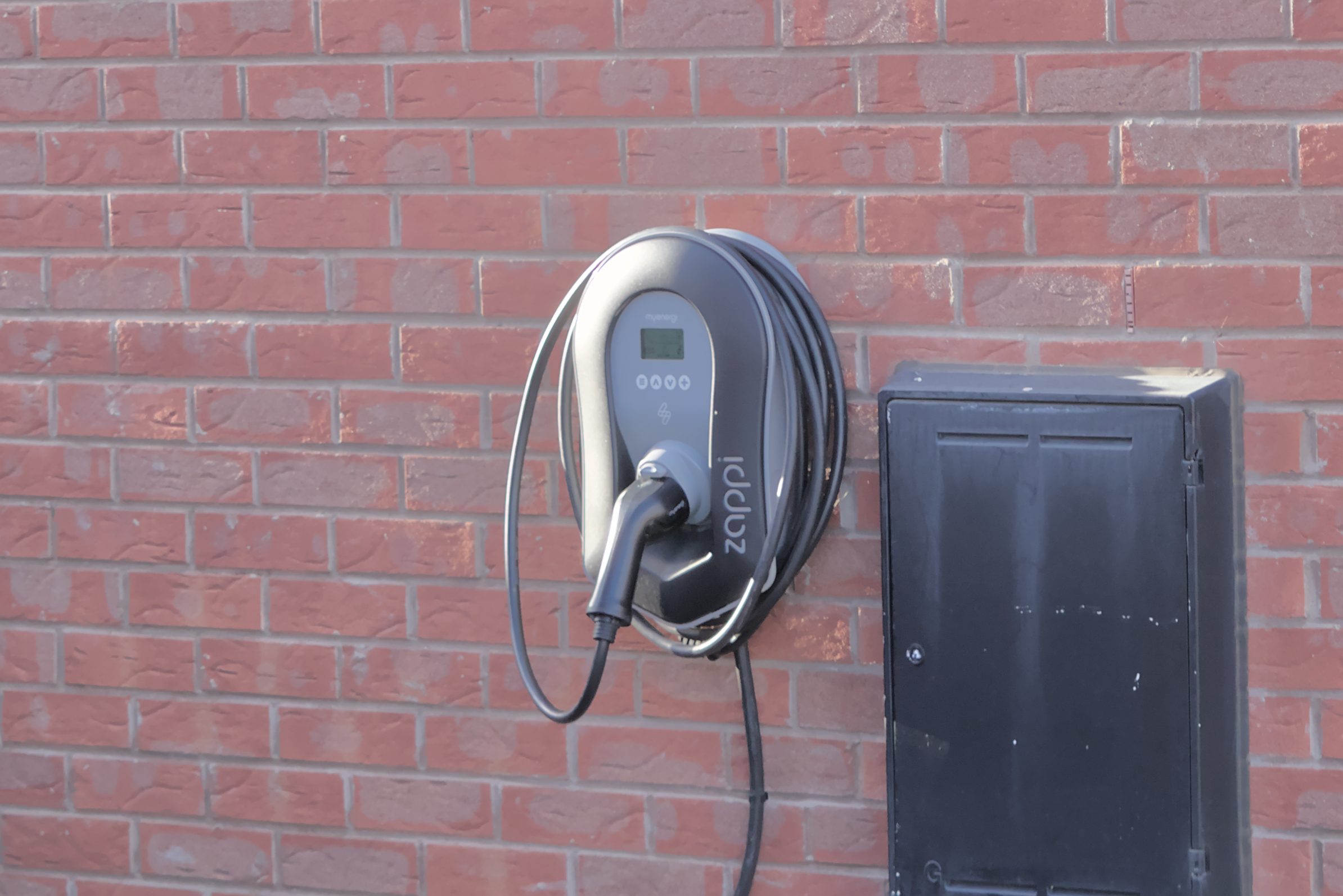
Electricity suppliers in Great Britain will have to publish their tariff prices through one standard, public API from February 18, 2027, so that EV chargers, heat pumps and the services that run them can read a price signal without a separate integration for each supplier. On October 30, 2026 the Department for Energy Security and Net Zero (DESNZ) published the Secretary of State's modification of the Retail Energy Code (REC) that writes the final technical rules into the code, with effect from November 6, 2026.
The obligation itself is not new. In May 2026 the government created it through a new supply licence condition, SLC 11C, and a new REC Schedule 35, and baselined a technical specification so suppliers could start building. The decision notice signed on October 29 adds the finished version: the Tariff Interoperability API Technical Specification, version 1.0, plus new market messages and data items in the code's Energy Market Data Specification. The messages read like a shopping trip: get the list of supplier endpoints, get a supplier's tariffs, get one tariff's details.
The final rules spare the people building on the API some downloads. A device or optimiser can now send a conditional request and get a short "not modified" reply instead of fetching unchanged prices again, and the rules add a requirement for gzip compression. Both were added after the August 27 to September 17 consultation, which drew replies from seven organisations, along with fixes for inconsistencies between the API specification and the data specification. The August package had already folded in changes found in testing since the May baseline; after the consultation, the government made only "limited updates" to it, according to DESNZ's government response. One clean-up came earlier: on September 29 the REC Performance Assurance Board granted a derogation from supplier response retry requirements in Schedule 35, "which had been included in error." Under the Phase 1a design, checking that an answer arrived is the user's job, not the supplier's.
What suppliers must publish
The mandate covers electricity suppliers only. Suppliers with domestic customers are in scope; one serving only non-domestic customers may be exempt if it and its affiliates supply no more than 100,000 relevant non-domestic premises, per the Retail Energy Code Company's (RECCo) Tariff Interoperability FAQ. Gas suppliers and electricity suppliers outside the mandate can opt in voluntarily.
The scope reaches back to tariffs no longer on sale and out to exports. A tariff closed to new customers stays in scope while it is still used to charge existing ones. Smart Export Guarantee tariffs are in where they meet the licence's definition of an export tariff; Feed-in Tariff payments are out. The FAQ lists bespoke charges, block tariffs and unmetered supply charges among the exclusions from mandatory sharing. Economy 7 tariffs whose cheap hours depend on how the meter is configured get a warning flag in a comments field rather than a fix; a fuller solution will be considered in the Phase 1b design.
Prices are published exclusive of VAT, and under the current requirement a new tariff has to appear on the API at least 60 minutes before customers can be supplied on it, the FAQ says. Phase 1a sends no push notifications, so a device or optimiser asks again whenever it wants fresh prices. Before go-live, each mandated supplier must complete RECCo's mandated test scenarios and confirm its readiness through a Director-level attestation by January 8, 2027.
A price list, not an account
The public route needs no consumer consent, and any person can be a user. What it serves is a price list. Phase 1a will enable "consumers who know and can share current supplier and tariff name" to optimise, in the words of the May 2026 government response that split the project in two. A smart charger will be able to read every mandated supplier's prices and still need its owner to say which one applies to the house.
Account-specific data, for households that do not know their tariff, belongs to Phase 1b, which would run through RECCo's Consumer Consent Solution and also cover notifications of tariff changes, switching and changes of occupancy. DESNZ aims to consult on that design in November 2026 and proposes a November 2027 go-live, subject to the consultation and a later decision.
Tariff data is the price half of a policy whose appliance half is still in draft. DESNZ's Energy Smart Appliances regulations, which would require electric heating appliances in scope to be sold with smart functionality, now apply from October 31, 2028 at the earliest, subject to parliamentary approval (as we reported in September); a second phase covering interoperability between appliances and flexibility service providers was planned to take legal effect from 2029. Tariffs also came up for drivers without a driveway: Budget 2026 set up a taskforce to explore letting them use their domestic tariff at local public chargers (UK Budget puts £100 million into cheaper local public EV charging).
Outlook
If mandated suppliers attest by January 8 and go live on schedule, February 18, 2027 would be the first date an optimiser could read every mandated supplier's public prices through one interface instead of bespoke integrations. Whether households notice depends on others building on it: the FAQ says consumers are more likely to experience the arrangements through a supplier, an optimiser, a comparison service or a smart appliance than through any central app. The Phase 1b consultation DESNZ aims to publish in November 2026 is the next marker, and its treatment of meter-dependent Economy 7 hours is the detail to watch.
⚠ The Outlook extrapolates from the go-live and attestation dates in DESNZ's October 2026 government response, RECCo's Tariff Interoperability FAQ on how consumers will encounter the arrangements, and the response's stated aim to consult on Phase 1b in November 2026.
Sources
Primary
- Smart Secure Electricity Systems (SSES) tariff interoperability: code modifications for Phase 1a · Department for Energy Security and Net Zero
Supporting
- Tariff Interoperability MVP Consultation: Government Response (May 2026) · Department for Energy Security and Net Zero (hosted by RECCo)
- Tariff Interoperability: Technical Specification Government Response (October 2026) · Department for Energy Security and Net Zero (hosted by RECCo)
- Tariff Interoperability FAQ (October 2026) · Retail Energy Code Company
- Notice to Modify the Retail Energy Code for Tariff Interoperability Phase 1a · Department for Energy Security and Net Zero
Copies of cited sources are retained where available. If a link no longer resolves, request a copy at contact@theduckcurve.com.