 The Duck Curve
DOE offers Grid United up to $2.8B loan for Wyoming east-west grid tie
The 106-mile, up-to-1,800 MW line has no named capacity customer yet, and signing one is a condition of closing; Grid United's timeline starts construction no earlier than 2030.
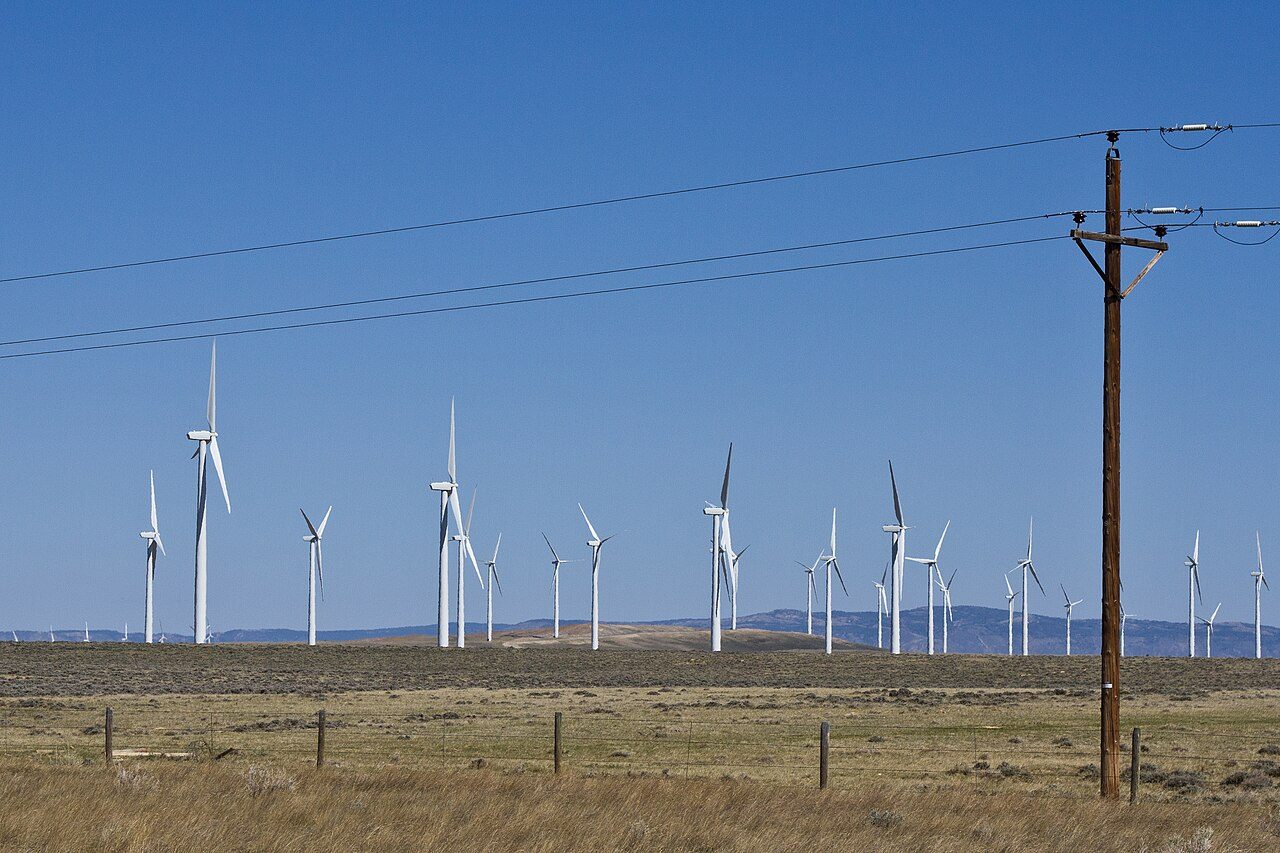
The US Department of Energy's Office of Energy Dominance Financing announced on November 17, 2026 a conditional loan commitment of up to $2.8 billion for Grid United's Wyoming Intertie, a planned link between the eastern and western US power grids inside Wyoming. DOE says the project will add approximately 1.8 GW of transfer capacity and estimates it will deliver up to $39 billion in electricity cost savings across 17 states in the Western Electricity Coordinating Council (WECC) and Southwest Power Pool (SPP) regions.
No money has moved. Per DOE, the project "must satisfy certain technical, legal, environmental, and financial conditions before the Department enters definitive financing documents and funds the loan."
The line is short for a grid-to-grid tie. Grid United's October 2026 project boards describe an approximately 106-mile, up-to-1,800 MW line through Carbon, Albany and Platte counties, from the existing Aeolus substation near Medicine Bow to a back-to-back converter station near Wheatland, where the two interconnections meet. In a back-to-back station, Grid United's converter brochure explains, power arriving on an AC line is converted to direct current inside the facility, then back to AC; the brochure puts the Platte County station on a 20-acre fenced site with a valve hall approximately 75 to 100 feet tall. WyoFile reports that the line will run from the Laramie River Station coal plant outside Wheatland, which John Jenks of the Wyoming Energy Authority told the outlet is one of the few power plants with access to both grids.
The seam it crosses is thin. Grid United's boards put the existing transfer capacity between the Eastern and Western Interconnections at 1,320 MW and say the project "could more than double" it. DOE's release says the line "will double existing transfer capacity between the SPP and WECC regions."
A loan that still needs customers
The money arrives last. Grid United's loan fact sheet lists the closing conditions as "Full project right-of-way; commercial capacity contracts; federal, state, and local permits; compliance with federal program requirements." Advances start only after notice to proceed and the start of construction. The loan runs 30 years including construction, covers 80% of construction cost, and the $2.8 billion excludes interest during construction.
Neither DOE nor Grid United names a customer for the line's capacity, and signing one is a condition of closing. Grid United's fact sheet treats the loan as part of the pitch: cheaper federal debt "makes the project more attractive to prospective utility customers," and the loan "can be assigned to utilities who may acquire capacity on the transmission line." That is the reverse of the order in Vistra's uprate commitment in October, whose 433 MW matched output Meta had already agreed to buy.
The price depends on who is counting. Grid United's boards call the project "an approximately $3 billion investment in Wyoming"; WyoFile reported it as a $4 billion project. By our arithmetic, a $2.8 billion loan covering 80% of construction cost implies a construction cost of about $3.5 billion. The fact sheet does not state a total.
The savings figures measure different things. DOE's $39 billion is a regional estimate of electricity cost savings; Grid United's fact sheet claims "ratepayer savings of greater than $500 million" from the lower federal interest rate compared with private project financing. Jenks was more cautious about bills than either. He told WyoFile the intertie can dispatch generation more efficiently, which in theory should lower bills: "It might be a stretch to say it will [lower monthly bills], but that's the theory behind it."
Permits first, then a 2030 start at the earliest
County, state and federal reviewers all still have to pass on a route that remains proposed. Grid United's boards list a state Industrial Siting certificate, county conditional use permits in Carbon and Platte counties (Albany does not currently require one) and a federal environmental review, needed because portions of the route cross federally owned land. The fact sheet's timeline puts the earliest start of line and converter construction in 2030 and commercial operation in 2032 or 2033, "contingent on HVDC procurement." The brochure gives the converter station alone a construction timeline of approximately three to four years.
The loan joins federal support for two other Grid United crossings of the east-west seam. The company's project list includes North Plains Connector, a 420-mile direct-current line between North Dakota and Montana, whose federal grid grant, approximately $620 million of it for the line itself, was finalized in October. It also includes Three Corners Connector, a 300-mile direct-current line between Pueblo, Colorado and the Oklahoma Panhandle, for which Oklahoma's Office of Management and Enterprise Services was among DOE's September SPARK selections, requesting $250 million against a project value of about $832 million. One is a finalized grant, one a September selection, and Wyoming's a conditional loan offer.
Sources
Primary
- Energy Department Announces $2.8 Billion Loan to Strengthen Grid Reliability and Help Lower Costs in Wyoming · U.S. Department of Energy, Office of Energy Dominance Financing
Supporting
- HVDC Converter Station Overview · Grid United (Wyoming Intertie)
- Wyoming Intertie open house boards (October 2026) · Grid United (Wyoming Intertie)
- U.S. Department of Energy Issues Conditional Loan to Advance Interregional Transmission (fact sheet) · Grid United (Wyoming Intertie)
- Projects · Grid United
- Feds back $4B project to connect eastern and western electricity grids · WyoFile
Copies of cited sources are retained where available. If a link no longer resolves, request a copy at contact@theduckcurve.com.