 The Duck Curve
Austria plans to swap its solar panel grant for a battery bonus in 2027
The 2027 redesign would pay after completion and require a European inverter on new solar-plus-storage systems, but the bonus size is still being negotiated and the law change needs opposition votes.
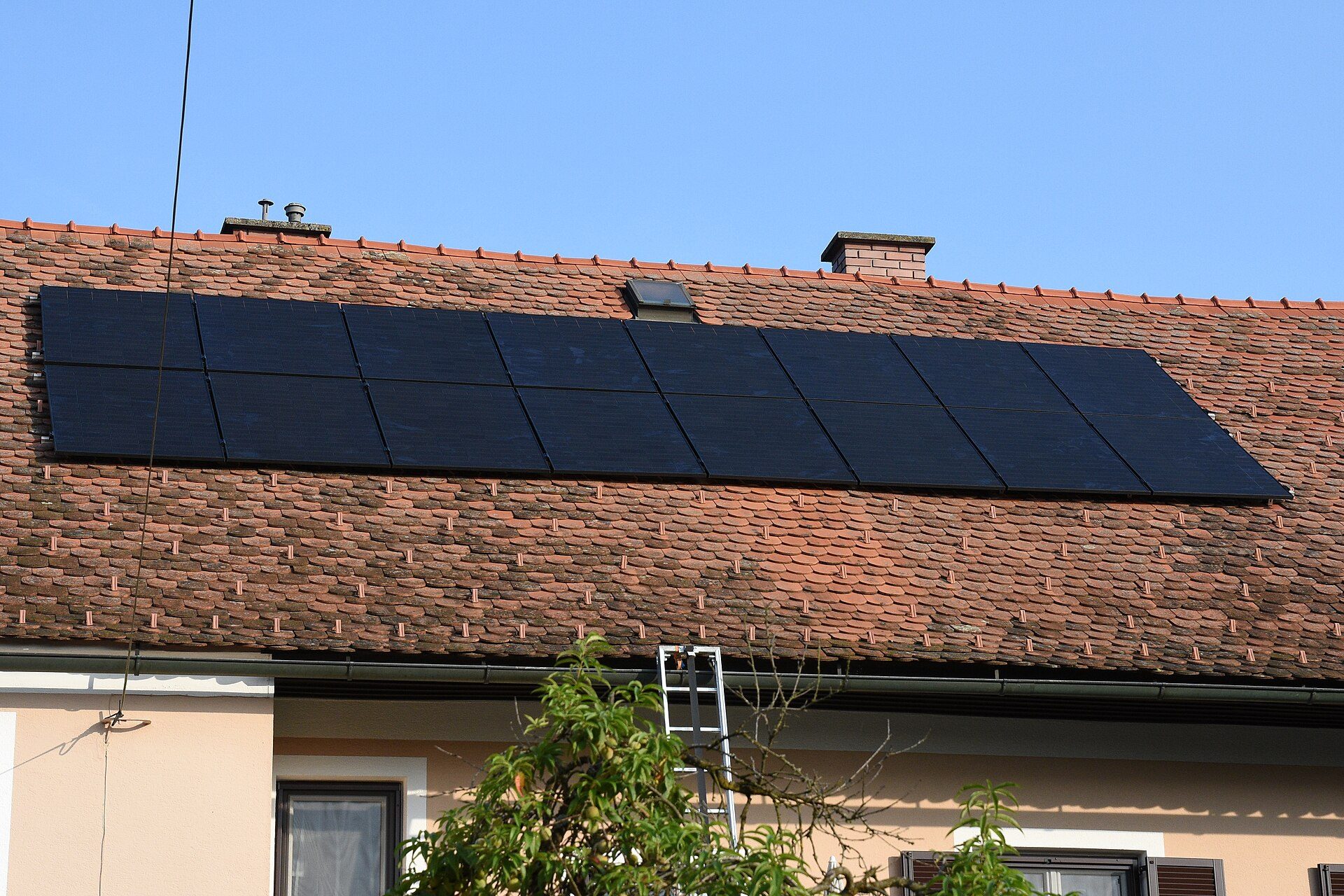
Austria's government plans to stop subsidizing new solar arrays through its main investment grant and pay for batteries instead. Under cornerstones presented on October 6, 2026, the classic investment grant for photovoltaics under the Renewable Expansion Act (EAG) is to be replaced from 2027 by a "storage system bonus" for batteries, paid on application once a project is finished instead of in timed funding calls. The second 2026 call shows why: its money was gone after 33 seconds, with close to 28,000 applications chasing funds for about 3,000 projects, per the economy and energy ministry (BMWET).
The plan carries the names of all three governing parties: energy state secretary Elisabeth Zehetner (ÖVP), state secretary Michaela Schmidt (SPÖ) and NEOS energy spokesperson Karin Doppelbauer. "Funding must not be a race for the fastest click," Zehetner said (quotes in this article are our translations from German). It is not law yet. The cornerstones are being turned into an amendment to the law, which needs a two-thirds majority in parliament, the ministry said on October 8; the bonus amount and the technical criteria are still being finalized, and the final details are to be set in the annual investment-grant ordinance.
The old system gets one more round first. The third and last call under the current rules opens with a ticket draw at 17:00 on October 8 and runs to October 22, with €38.5 million, the ministry said on October 7. The regular allocation was €8 million; the rest is money freed up mostly when projects funded in earlier calls were not built or only partly built. "This is not additional budget, but money that was already earmarked for photovoltaics and storage and can now be used again for specific projects," Zehetner said. On the morning of the draw, her advice was to "be quick once more," and she expects the money to be committed within a very short time again. Rates for the call, per the EAG funding agency, are a fixed €150 per kWp for arrays up to 10 kWp and €140 per kWp from 10 to 20 kWp, up to €130 per kWp from 20 to 100 kWp and up to €120 above that, and a fixed €150 per kWh for storage, which qualifies only together with PV. By our arithmetic, a 10 kWp array with a 10 kWh battery would draw €3,000, if it gets funded.
What the bonus is meant to buy
The redesign would pay for timing rather than panels. Batteries installed with a new array and batteries retrofitted to an existing one would both qualify, on condition that an intelligent energy management system runs the battery in a "grid- and system-serving" way by defined criteria. The aim, in the ministry's words, is for solar power to be stored, used and fed into the grid "when it is needed in the energy system"; its August announcement put it more plainly as storing cheap power from the midday peak for the pricier evening hours, the evening ramp of the duck curve. The focus on storage is meant to dampen system costs, and unused funds are to lower the EAG flat-rate charge "slightly," which Schmidt presented as short-term relief for households and businesses. The niche solar that the August plan kept on the list (building-integrated panels, agrivoltaics, parking canopies, floating arrays, noise barriers) appears in none of the ministry's three releases on October 6, 7 and 8, 2026.
Anyone buying a new array with a battery would face a firmer European rule than August promised: a new storage system on a new PV array is to require a Made-in-Europe inverter, while retrofits would keep a Made-in-Europe bonus. When the ministry first announced its storage push on August 20, 2026 (covered in our August roundup), European core components were only to earn a bonus. Herbert Paierl, chair of the industry association Photovoltaic & Battery Austria, said in the ministry's October 6 release that the association still sees "room for a broader and more practical design" of the obligation.
Applications would work like the Handwerkerbonus: apply after completion, with no call to wait for. Smart-storage projects that received no EAG funding in 2026 and are invoiced or commissioned from November 1, 2026 are to be allowed to apply under the new system in 2027. That gives buyers a start date for a bonus whose size is still being negotiated. FPÖ energy spokesperson Paul Hammerl put it bluntly: "People are supposed to order, install and pay, but only find out later whether their system meets the funding conditions" (FPÖ, our translation).
The votes are across the aisle
The three governing parties' clubs hold 109 of the Nationalrat's 183 seats (ÖVP 51, SPÖ 41, NEOS 17, with one member outside any club). Two-thirds of a full chamber is 122 by our arithmetic, so the government needs the Greens (16 seats) or the FPÖ (57). Both attacked the announcement within hours. The FPÖ endorsed its direction while doing so; the Greens went after the money.
Hammerl said the coalition was finally taking up "central demands of our initiative" after more than a year and a half of watching, and that around 25,000 applicants went away empty in the last call. "We support a sensible reform with storage and clear grid and system benefits, but the binding conditions must be on the table before people invest," he said. The Greens' energy spokesperson Lukas Hammer said the underlying problem lies in missing funding rather than the application mode: the government, he said, cut the funding budget "to the absolute legal minimum," and moving away from first come, first served "does not change the fact that it must provide sufficient money." He also said there is no draft bill to see yet. The Austrian Economic Chambers called the plan a right first step and asked for a fundamental overhaul of the EAG.
Two other European moves in early October 2026 point home batteries the same way. Poland opens PLN 1 billion in battery grants on October 20 that also pay only for finished work, require an energy management system and add a bonus for EU-made equipment, and Germany's regulator has let home batteries mix grid and solar power and still collect the EEG market premium on the share of exports counted as solar, though only in direct marketing, which leaves out homes on the fixed feed-in tariff. Austria's distinction is what it plans to give up: the standing grant for the panels.
Sources
Primary
- Zehetner/Schmidt/Doppelbauer: Schluss mit 33-Sekunden-Fördercall: PV-Förderung wird Systemförderung für Speicher & intelligente Steuerung · Austrian Federal Ministry for Economy, Energy and Tourism (via OTS)
Supporting
- Hattmannsdorfer: Hitzesommer bestätigt Fokus auf Speicheroffensive · Austrian Federal Ministry for Economy, Energy and Tourism (via OTS)
- FPÖ – Hammerl zur PV-Förderung: „Eineinhalb Jahre verschlafen, jetzt folgt auf Förderlotterie der Investitionsblindflug!“ · Freiheitlicher Parlamentsklub (via OTS)
- Grüne zu PV-Förderung: Regierung hat Energiewende ausgehungert und vertröstet Betroffene aufs nächste Jahr · Grüner Klub im Parlament (via OTS)
- WKÖ-Danninger: Neue Systemförderung erster Schritt, EAG umfassend novellieren · Wirtschaftskammer Österreich (via OTS)
- Zehetner: Letzter EAG-PV-Fördercall startet am 8. Oktober · Austrian Federal Ministry for Economy, Energy and Tourism (via OTS)
- 3. Fördercall 2026 für Photovoltaik und Speicher (nur in Verbindung mit PV) Kat A-D · EAG-Förderabwicklungsstelle
- Abgeordnete zum Nationalrat · Parlament Österreich
- Zehetner: Heute um 17 Uhr noch einmal schnell sein - 38,5 Millionen Euro für letzten PV-Fördercall · Austrian Federal Ministry for Economy, Energy and Tourism (via OTS)
Copies of cited sources are retained where available. If a link no longer resolves, request a copy at contact@theduckcurve.com.