 The Duck Curve
BMW opens Irlbach-Straßkirchen plant to assemble Neue Klasse batteries
Series production started on two shifts at the roughly €1 billion Bavarian site, which builds sixth-generation packs from bought-in cylindrical cells for the new BMW i3 made in Munich.
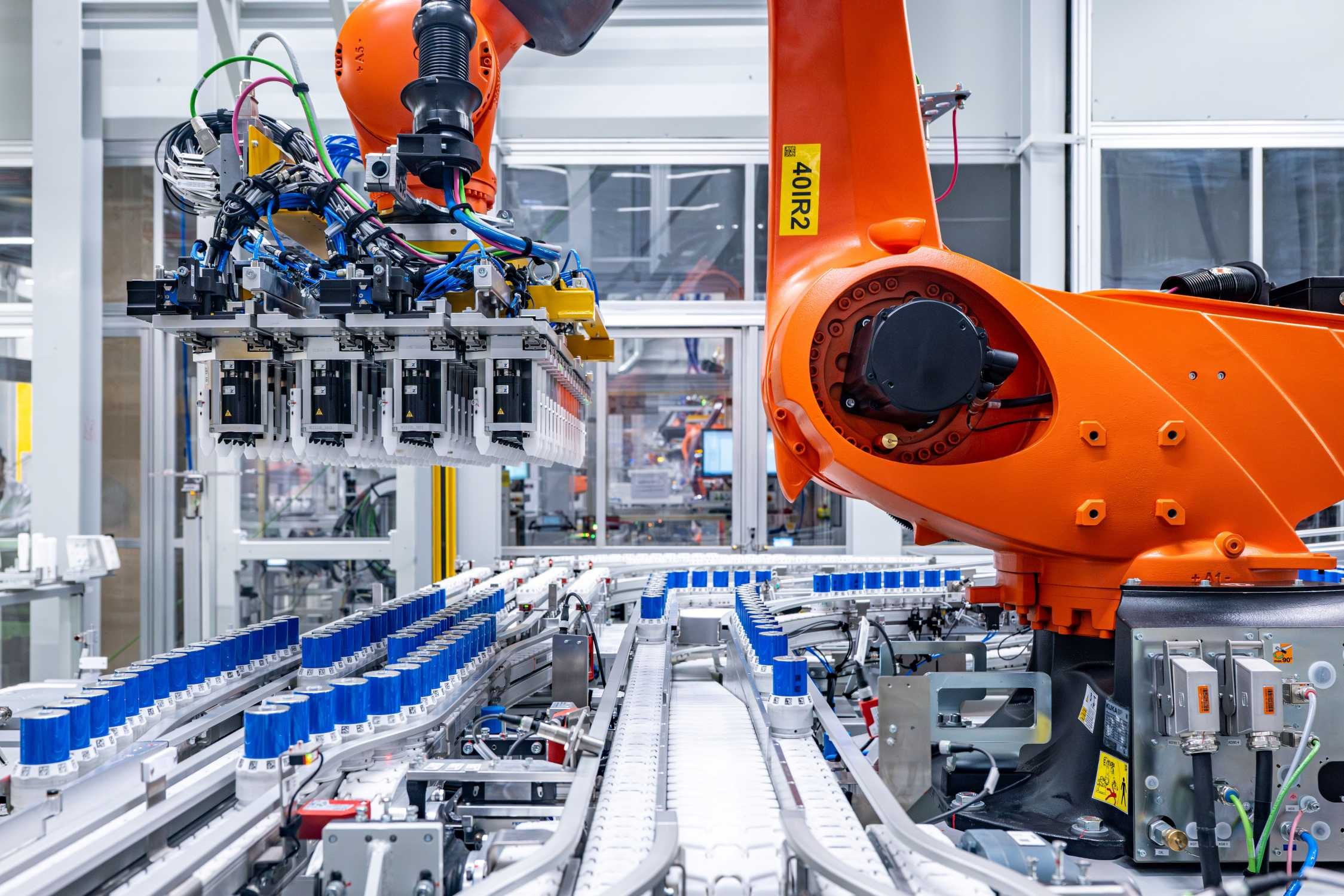
BMW Group opened its high-voltage battery plant at Irlbach-Straßkirchen in Bavaria on October 1, 2026 and started series production there, supplying sixth-generation (Gen6) batteries to its Munich vehicle plant for the new BMW i3. BMW puts the investment at around €1 billion and says demand for Neue Klasse models pushed the ramp-up ahead of the original plan, so series production started on two shifts from the outset.
Speed was the theme of the day. Construction on the 60-hectare site began in April 2024 and the first pre-series battery was produced in March 2026, less than two years later; series production followed two and a half years after construction began. Minister-President Markus Söder said the plant was built at "Bavarian speed." The project cleared a local referendum in Straßkirchen in September 2023, when over 75 percent of residents voted in favor on a turnout of around 77 percent. Once fully operational, BMW says, the plant will employ around 1,600 people producing "several hundred high-voltage batteries per day on two production lines."
That phrase is the only output figure BMW gives: the release states no annual capacity in gigawatt-hours and no volume target. For scale only, by our arithmetic, a hundred packs the size of the launch i3's 108.7 kWh battery hold about 10.9 MWh.
The i3 is the first customer. BMW quotes a WLTP range of up to 906 kilometers for the i3 50 xDrive First Edition, DC charging at up to 400 kW, and up to 423 kilometers of range added in 10 minutes on a DC fast charger. The car also supports bidirectional charging, relevant in Germany, where the Bundesnetzagentur adopted rules on October 1, 2026 that let bidirectional EV charge points store grid power alongside solar while keeping, under conditions, the market premium on the solar share.
What Irlbach builds, and what it buys
Irlbach-Straßkirchen is a pack plant, not a cell plant. BMW says "the battery cells for the high-voltage batteries are supplied by leading cell manufacturers," and they are checked on arrival with measurements such as voltage tests. The plant then connects the cylindrical cells to coolers in clusters, laser-cleans and welds the clusters and the cell contact system, foams the assembly into a single mechanical unit, closes, seals and rivets the housing, and fits the Energy Master control unit before a 100 percent end-of-line inspection. BMW says it records more than 3,500 data points per battery, and that 500 robots work across the 50,000-square-meter production area.
The design does without modules. The cells sit directly in the pack ("cell-to-pack"), and the pack forms part of the car's body structure, which BMW calls "pack-to-open-body." When BMW announced the cell format on September 9, 2022, it described round cells with a standard 46-millimeter diameter in two heights, with more nickel and less cobalt in the cathode than its fifth-generation prismatic cells and more silicon in the anode. It said then that, based on current market assumptions, the cost of the whole high-voltage battery could fall by up to 50 percent from Gen5. The opening release gives no cost figure.
Söder called the batteries produced at the plant high-tech "Made in Bavaria," at the forefront by international standards, "for example compared with China." The cells inside them come from suppliers the release does not name. BMW's 2022 announcement did name its Neue Klasse cell partners: it had awarded contracts in the two-digit billion-euro range to CATL and EVE Energy to build cell factories in China and Europe, two in each region, each with up to 20 GWh of annual capacity, with two more planned for the USMCA region and no partners yet nominated. Which of those suppliers and factories feed Irlbach, BMW does not say.
The network around it
BMW is putting Gen6 pack assembly next to its vehicle plants. Alongside Irlbach-Straßkirchen, it lists battery assembly plants in Debrecen (Hungary), Shenyang (China), Woodruff (USA) and San Luis Potosí (Mexico). Debrecen came first: at its opening on September 26, 2025, BMW said it would be the first of the five to begin series production of Gen6 batteries, with the iX3 due to enter series production there in late October. Irlbach's job is closer to home: BMW production board member Raymond Wittmann said that as the central platform, it "will supply our German vehicle plants with sixth-generation high-voltage batteries." BMW says all of the construction companies it contracted directly came from Germany, two thirds of them from Bavaria, and that more than three quarters of the plant engineering firms are German.
The plant runs without fossil fuels in regular operation, per BMW: a solar array on site generates a share of its electricity, the rest comes entirely from renewable sources, and pack assembly uses no water. For the i3's Gen6 cells, BMW says a portion of the cobalt, lithium and nickel comes from secondary material, and that CO2e emissions per watt-hour are about 33 percent lower than for the Gen5 cell in the previous model. In 2022, development board member Frank Weber put the cut in CO2 emissions from cell production at up to 60 percent. The two figures are framed differently, per watt-hour of cell against emissions from cell production, so they do not compare directly, and the opening release does not mention the earlier one.
Recycling sits 16 kilometers away. BMW's Cell Recycling Competence Center in Salching went into operation in December 2025 and uses direct recycling, mechanically dismantling residual material from cell production, and even whole cells, to recover raw materials for reuse in production. Encory GmbH builds and operates it; BMW owns the intellectual property for the method.
Sources
Primary
- Series production gets underway: BMW Group officially opens Plant Irlbach-Straßkirchen · BMW Group PressClub
Supporting
- More performance, CO2-reduced production, significantly lower costs: BMW Group to use innovative round battery cells in NEUE KLASSE from 2025 · BMW Group PressClub
- BMW Group's newest, most innovative production site officially opens in Debrecen · BMW Group PressClub
Copies of cited sources are retained where available. If a link no longer resolves, request a copy at contact@theduckcurve.com.