 The Duck Curve
EHPA: residential heat pump sales rose 11% in 12 European countries
EHPA calls the oil and gas price rise after the Hormuz closure and the Commission's plans to encourage EU governments to lower electricity tax likely drivers; its May release put residential first-quarter sales up 17% in 11 countries.
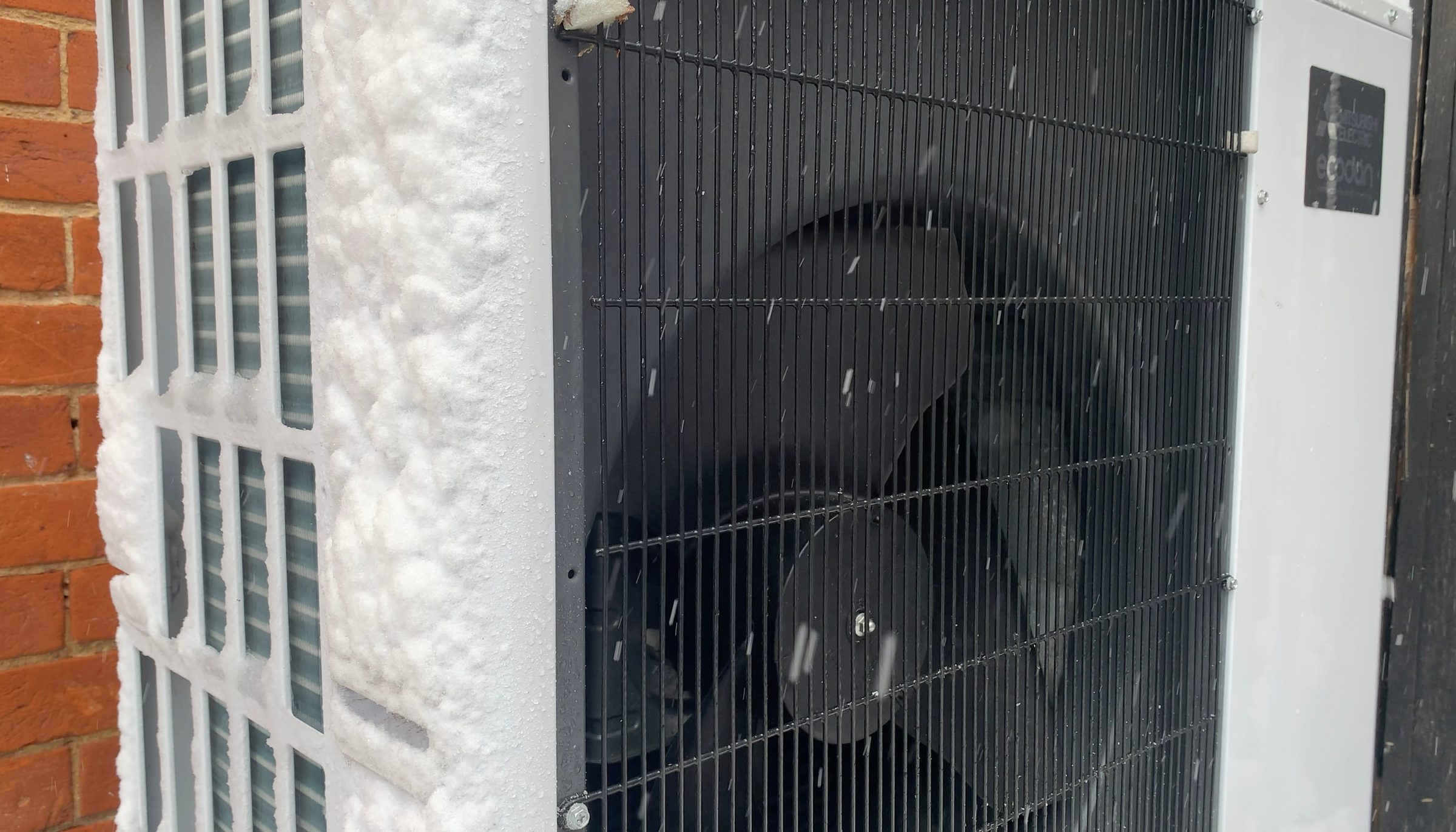
The European Heat Pump Association said on September 28, 2026 that sales of residential heat pumps in 12 European countries rose 11% in the first six months of 2026, to around 1,163,000 units from 1,048,000 in the first half of 2025. The association names the countries in a footnote: Austria, Belgium, Switzerland, Denmark, Finland, France, Germany, Italy, the Netherlands, Norway, Portugal and Sweden; the caption on its chart says the 12 represent around 80% of the total market. The release gives no per-country figures. It also gives no split between air-to-air and air-to-water units, a breakdown it says is on its market intelligence platform, free to media and EHPA members.
EHPA's explanation is stated as likelihood, not measurement. The release says Iran closed the Strait of Hormuz in February 2026, which it says sent oil and gas prices up, that "Soon afterwards" the European Commission published plans to encourage EU governments to lower electricity tax, and that these are "likely drivers of the growth in heat pump sales so far this year," which the association "has long argued depend strongly on the electricity price." The words "Soon afterwards" in that sentence are a link to EHPA's own March 10, 2026 release, which says the Commission's Citizens' Energy Package, published that day, says EU Member States should reduce electricity taxation to make it more affordable for citizens compared to gas. The Commission document the release names, in a later paragraph and for the tax principle, is the Electrification Action Plan, dated July 17, 2026. Paul Kenny, EHPA's director general, is quoted: "The fix? Dropping taxes on electricity and shifting them over to fossil fuels." He says the Commission "has made this clear" and that all EU governments must enact it, "following in the footsteps of the Netherlands and Belgium."
What EHPA's earlier figures show
The first-half figure is a slower rate than the association's first-quarter reading. EHPA said on May 4, 2026 that around 575,000 residential units were sold in 11 European countries from January to March 2026, up 17% from 494,000 in the same period and countries in 2025, with sales in France, Germany and Poland up 25% on average and Austria down 30%, a drop the release attributed to the lack of government subsidies. That release dated the Strait of Hormuz closure to March 2; the new one says February 2026. The country sets differ as well: the first-quarter release counts 11 countries without listing them, and Poland, which it names, is absent from the 12 listed in the first-half release.
EHPA's full-year 2025 figure rests on a wider set and a different period, so its rate is not comparable with the half-year one. In an August 6, 2026 article, EHPA put 2025 sales at around 2.9 million domestic heat pumps across 21 European countries, a 13% increase on 2024, after sales fell in 2023 and 2024 as energy prices eased and some countries reduced support schemes; the article credits stronger incentives and lower electricity taxes in several countries for the rebound.
The 2025 base in the new release differs from the figure EHPA published for the same six months on October 17, 2025. That page put first-half 2025 sales of heat pumps at 980,000 across 13 countries, up 9% from 898,000 in the first half of 2024, in a country list that included Spain; it does not say whether the count is residential only, where the new release counts residential heat pumps. The September 28 release's 12 countries are those 13 minus Spain, and its base for the same six months is 1,048,000: on our arithmetic, 68,000 higher on a smaller set. The new release offers no explanation for the higher base.
The Commission plan the release leans on
The document the release cites for the tax principle is the Commission's Electrification Action Plan, COM(2026) 595, dated Brussels, July 17, 2026. Its diagnosis of the price gap says that, taking all taxes into account, "electricity is taxed more than gas for final consumers in most Member States," a statement it sources to Eurostat, and its section on the taxation gap says that "electricity should not be taxed more than gas" and that the Netherlands and Belgium "have taken steps to rebalance electricity and gas prices by limiting the gap in taxation," while Denmark has reduced electricity excise duties for households using heat pumps and cut electricity taxes to the minimum for two years.
The plan measures the gap as an electricity-to-gas price ratio, where a ratio of two means electricity costs double gas for the same amount of energy, and says Member States with the lowest ratios "record triple the heat pump sales" of those where the ratio exceeds three, a sentence the plan footnotes to an EHPA taxation policy paper from 2025; a separate footnote puts only Finland and Sweden below 2, on the Commission's own calculations from Eurostat data for the second half of 2024. The Commission "encourages Member States" to bring the ratio down to a maximum of 2.5 for households and 2 for industry by 2030, and lists that as a KPI. The Commission's press release of the same day says electricity "often costs three times more than gas" and that its accompanying proposal on electricity bills "seeks to make sure that electricity is not taxed more heavily than gas." In Massachusetts the lever was rate design: the Department of Public Utilities approved discounted winter transmission charges on National Grid's and Unitil's optional heat pump rates for the 2026-2027 heating season (The Duck Curve's coverage).
On volume, the plan's buildings section sets a KPI to "increase installation rate of heat pumps to around 4 million per year in 2030 compared to 2025 of 2.4 million." That figure is an installation rate in an EU communication; EHPA's roughly 2.9 million for 2025 is a count of domestic heat pumps sold across 21 European countries its August 6 article does not list, so the two are different measures on different sets and are not compared here.
Sources
Primary
- Post-Hormuz heat pump sales climb 11% · European Heat Pump Association (EHPA)
Supporting
- Heat pump sales up 9% in 2025 so far · European Heat Pump Association (EHPA)
- EU advises electricity tax cuts for clean heat shift · European Heat Pump Association (EHPA)
- Energy crisis sees rise in heat pump sales · European Heat Pump Association (EHPA)
- Electrification Action Plan, COM(2026) 595 final (Communication from the Commission, Brussels, 17.7.2026) · European Commission (copy hosted by the Commission's BUILD UP portal)
- Commission boosts Europe's competitiveness, decarbonisation and independence with Electrification Action Plan and ETS review · European Commission (press corner, IP/26/1596)
- Why heat pump sales are growing again · European Heat Pump Association (EHPA)
Copies of every cited source are retained. If a link no longer resolves, request a copy at contact@theduckcurve.com.