 The Duck Curve
National Grid's winter heat pump rate clears the DPU at $0.02476 per kWh
Two September 30, 2026 orders allow the PBR adjustment and the October 1 rate summaries carrying the November-April distribution charge for customers enrolled in the optional heat pump rate, against $0.06777 per kWh on the default rate.
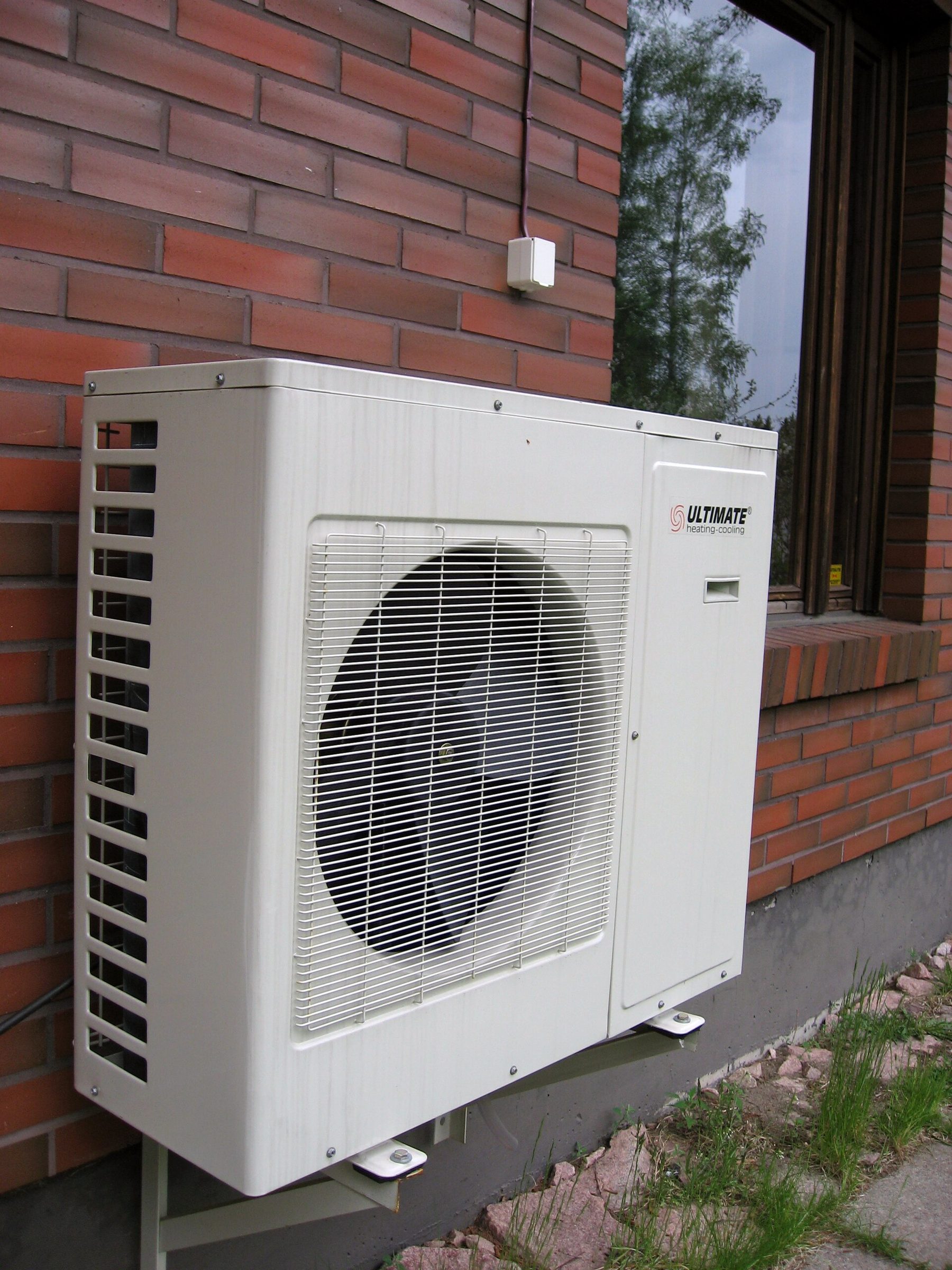
Massachusetts households enrolled in National Grid's optional heat pump rate will pay $0.02476 per kilowatt-hour for base distribution on all their electricity from November 1, 2026 through April 30, 2027, against $0.06777 on the default residential rate, which is also what they pay the rest of the year, under rate sheets the Department of Public Utilities allowed to take effect on October 1, 2026. In the company's own illustration, an enrolled household with a 3-ton heat pump pays $71.05 less on a 1,652 kWh November bill than it would on the default R-1 rate, and one with a 5-ton unit $143.70 less on a 3,341 kWh January bill. The figure cleared in two orders issued on September 30, 2026. In D.P.U. 26-84 the Department allowed National Grid's second annual performance-based ratemaking adjustment, $13,559,331 for effect October 1, 2026, and found the allocation behind it a reasonable means of collecting the revenue and the bill impacts acceptable. In D.P.U. 26-78, the same day, it allowed the company's Summary of Electric Delivery Service Rates tariffs, M.D.P.U. No. 1-26-I for Massachusetts Electric Company and No. 1-26-J for Nantucket Electric Company, to take effect, noting that the summary "includes rates approved in" D.P.U. 26-84.
The number settles the half of the discount that was still open when The Duck Curve reported the winter transmission discount for the same customers on September 17, 2026, when no order had appeared on the base distribution rate. The 9 and 20 percent bill reductions National Grid illustrated then are not this winter's numbers: per the company's D.P.U. 26-71 cover letter, both were computed on a normalized transmission charge of $0.01998 per kWh, the six-month winter and summer basis on which the letter says the charge will be calculated from March 1, 2027 onward, and the 20 percent also on the base distribution rate it had proposed in D.P.U. 26-84. For the 2026-2027 heating season the approved pair is $0.02476 for base distribution from November 1 and, per the same letter, $0.00477 per kWh for transmission from November 2026 through February 2027.
Four cents a kilowatt-hour, November through April
An enrolled household's winter kilowatt-hour costs about four cents less to deliver than a neighbor's on the default rate. The Massachusetts Electric Company summary of rates, issued September 9, 2026 and effective October 1, 2026, prices Rate R-1 and Rate R-2 in two volumetric rows: "All kWh" at a base distribution charge of $0.06777, and "Heat Pump kWh (Nov 1-Apr 30)" at $0.02476. Every other delivery component on the sheet is identical on the two rows, so the net distribution rate comes to $0.10924 against $0.06623 per kWh, and the net retail delivery price to $0.22829 against $0.18528; the $0.00558 ISRE factor inside both net figures is allowed only "subject to further investigation and reconciliation." The gap, $0.04301 per kWh by our arithmetic, is all base distribution. Nantucket Electric's sheet carries the same $0.06777 and $0.02476.
An enrolled household also pays $0.00477 per kilowatt-hour of transmission from November 2026 through February 2027, under the D.P.U. 26-71 charge the Department stamp-approved on July 29, 2026, against the $0.05464 that sits on both rows of this sheet, a discount the sheet itself does not show: its transmission column was last changed March 1, 2026, and the heat pump charge begins after the sheet's October 1 effective date.
Both residential rates rose with the adjustment, and the heat pump rate rose with them. National Grid's June 15, 2026 filing proposed raising the R-1 and R-2 energy rate from $0.06677 to $0.06777 per kWh and the heat pump rate from $0.02440 to $0.02476, which the testimony describes as the current heat pump rate multiplied by the increase as a percentage of the rate components. The testimony puts the effect for R-1 heat pump rate customers taking Basic Service at a decrease on average of $104.35, or 11.0 percent, compared with customers on the default R-1 rate; the company's Workpaper NG-1 averages that over four illustrative monthly bills, the two above plus a 3-ton January bill and a 5-ton November bill, where the savings run from $71.05 to $143.70. For R-2 heat pump rate customers on Basic Service the testimony gives a decrease on average of $70.96, or 11.0 percent, at a 32 percent low-income discount, and an average decrease of $9.39 per month, or 11.0 percent, at a 91 percent discount, compared with customers on the default R-2 low-income rate.
A 2.2 percent adjustment and a lost rollover fight
The adjustment that moved the rates is small per customer. Per the D.P.U. 26-84 order, the $13,559,331 comprises a $12,846,328, or 2.224 percent, increase of the base distribution revenue subject to the PBR-O adjustment, plus $44,808 in prior-year approved administrative costs for the income-eligible discount rate program and $668,195 related to a self-attestation pilot for the same program. The Department found the company had applied the approved formula, with an average annual inflation index change of 2.8 percent for 2026, an X factor of 0.21 and a consumer dividend of 0.40 percent, and that its earned distribution return on equity of 3.67 percent triggered no earnings sharing. The June filing's testimony puts the resulting monthly bill change for a Massachusetts Electric residential Basic Service customer using 600 kWh at an increase of $0.60, or 0.3 percent, from $238.95 to $239.55, counting the PBR-O adjustment, the five-year recovery of the exogenous storm event and the one-year recovery of the exogenous event cost.
The contested part was an incentive, and the Attorney General lost it. Her office asked the Department to add a rollover cap on the income-eligible discount performance incentive mechanism; the order declines to add one "or otherwise alter its design at this time." It records that in calendar year 2025 the company enrolled 39,827 net new customers into its income-eligible discount rate program, an increase of over 25 percent compared to the number of customers receiving income-eligible benefits in 2023, and holds that under the plain language of the Department's order and the tariff the company may roll over the remaining 32,427 customers enrolled in calendar year 2025 to its 2027 PBR filing. The other incentive cut the other way: the Department confirmed an $81,702 penalty under the distributed energy resources interconnection mechanism for performance 4.902 MW below the deadband target.
The same order that cleared the rate sheets also started the review of National Grid's 2025 capital spending. It allowed the company's infrastructure, safety, reliability and electrification factors for October 1, 2026, $0.00558 per kWh for R-1 and R-2, "subject to further investigation and reconciliation"; per the order, the company's filing puts the total proposed for recovery at $78,418,243, the annual recovery of costs on $509,747,798 of electric system investments placed in service during calendar year 2025. It disallowed a proposed revision to the ISRE tariff that the Department is already considering in D.P.U. 25-70.
Sources
Primary
- Massachusetts Electric Company, Summary of Electric Delivery Service Rates, M.D.P.U. No. 1-26-I (issued September 9, 2026, effective October 1, 2026) · National Grid (filed in D.P.U. 26-78)
- D.P.U. 26-78, Phase I Order on National Grid's ISRE factors and Summary of Electric Delivery Service Rates (September 30, 2026) · Massachusetts Department of Public Utilities
- D.P.U. 26-84, Order on National Grid's 2026 performance-based ratemaking adjustment (September 30, 2026) · Massachusetts Department of Public Utilities
Supporting
- National Grid 2026 Performance-Based Ratemaking Plan Filing, D.P.U. 26-84 (June 15, 2026), Exhibit NG-1 testimony of Patricia Pace and Cassandra D. Campagnone · National Grid
- Workpaper NG-1, Residential Heat Pump Rate Design and Bill Impacts (D.P.U. 26-84, June 15, 2026) · National Grid
- D.P.U. 26-71: National Grid compliance filing cover letter of June 15, 2026, stamp-approved July 29, 2026 · Massachusetts Department of Public Utilities
- Nantucket Electric Company, Summary of Electric Delivery Service Rates, M.D.P.U. No. 1-26-J (effective October 1, 2026) · National Grid (filed in D.P.U. 26-78)
Copies of cited sources are retained where available. If a link no longer resolves, request a copy at contact@theduckcurve.com.