 The Duck Curve
Brattle puts US distributed energy savings at $614 billion through 2050
The Pew-commissioned study models distributed capacity growing from 113 GW to 524 GW and household bills $122 a year lower by 2050 in real terms, about half the projected rise above inflation.
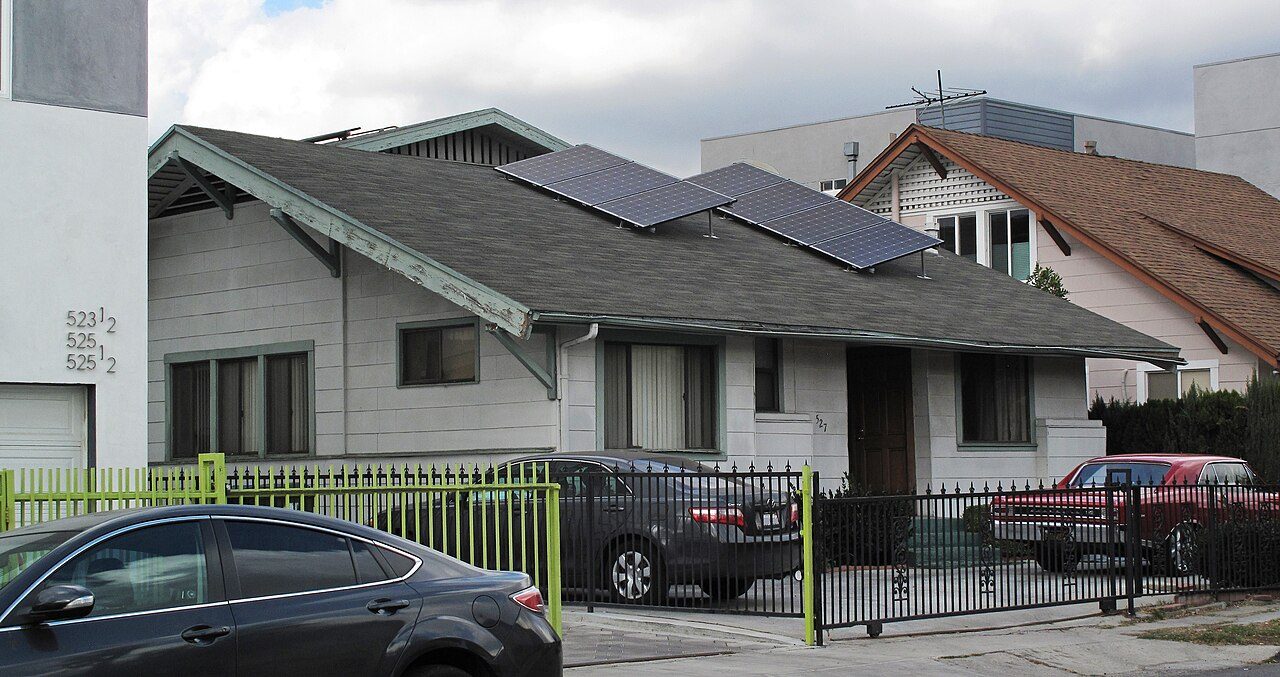
Letting homes and businesses do more of the grid's work would avoid an estimated $614 billion in US power system costs through 2050, The Brattle Group says in The National Case for a More Distributed Power Grid, a study prepared for The Pew Charitable Trusts and released on November 5, 2026. The figure is in 2026 dollars and undiscounted. It assumes the barriers facing distributed energy resources (rooftop and other distributed solar, batteries, and flexible demand such as smart thermostats and managed EV charging) come down, so that adoption nationwide reaches levels already observed or projected in leading US markets.
In Brattle's model, distributed capacity grows from a current 113 GW of nameplate, roughly 8% of installed US generation capacity, to 524 GW in 2050, making DERs the fourth-largest resource in the US capacity mix. The 411 GW added is roughly equivalent to total forecast load growth over the period. If the barriers stay, Brattle has less than half that growth, 196 GW, materializing by 2050, most of it distributed solar that depends heavily on existing solar compensation policies continuing. Every benefit in the report is measured against that status quo, and the authors say plainly that their estimates "are not forecasts of what is likely to happen; they assume the removal of significant barriers to DER deployment."
The pitch is about planning as much as hardware. "The opportunity is to treat them as resources in utility planning rather than leave their capabilities untapped," Ryan Hledik, a Brattle principal and coauthor of the report, said in the release.
Where the $614 billion comes from
Most of the money is power plants not built. Over half of the total, $334 billion, is avoided generation capital and operating costs, a saving Brattle says is driven partly by the installed cost of competing gas generation, which "has doubled over the past four years." The expanded portfolio avoids roughly 70 GW of net gas additions, a 22% cut, and replaces about 105 GW of utility-scale storage with distributed storage and other flexibility at the grid edge, around half of net utility-scale storage additions. Another $182 billion, roughly a third, comes from deferring load-driven distribution upgrades, on an assumed average deferral of five years. Annual avoided costs reach $19 billion by 2035 and $43 billion by 2050.
The remaining $97 billion is a different kind of saving. Brattle assumes similar levels of distributed solar get built with or without reform; what changes is that permitting and interconnection reform lower its installed cost, so "compensation can be reduced to a more financially sustainable level, easing or removing the burden on existing non-solar customers." Roughly 16% of the case for more distributed energy, by our arithmetic, rests on paying future distributed solar adopters less, because their panels would cost less to put up.
The household arithmetic
Brattle's status quo has residential rates rising 0.5% a year faster than inflation, which it says is consistent with EIA projections. That takes the average household bill from $1,855 to $2,087 a year by 2050 in 2026 dollars, $232 more. After the costs of enabling the DERs (technology investment, program administration and marketing), the savings would cut average bills by $122 a year by 2050, which Brattle says cuts the projected inflation-adjusted increase "roughly in half."
How that splits between households depends on what participants are paid. At about $50 per kilowatt-year, which Brattle puts near the lower end of levels that have proven effective, the average non-participant saves $90 a year by 2050 and the average participant $164. At $100 per kilowatt-year, non-participants save $57 and participants $206. Brattle says DER cost savings exceed its rough estimate of implementation costs "by a factor of five."
The answer will sound familiar. In October, Brattle's study for virtual power plant operator Everyday Electric found that a residential virtual power plant at a model utility would offset $56 of a $98 rise in the average annual bill over five years (our coverage), assuming bills grow 1% a year faster than inflation. The national study assumes half that pace over 25 years instead of five, covers commercial and industrial customers as well as homes, and again lands at about half. Hledik is an author of both.
Pew's playbook, priced
The study was built to put numbers on Pew's own agenda. Its April 2026 policy playbook set out six recommended actions for policymakers and regulators, from requiring DER optimization in distribution grid planning to establishing targets for VPP capacity and aligning utilities' financial interest with DER deployment. Brattle priced three of them. Integrating DERs into distribution planning is worth $177 billion through 2050. Cutting solar permitting costs by about 90%, to levels achieved in markets such as Germany and Australia, is worth $50 billion. Interconnection reform that lets batteries, bidirectional EVs and other participating DERs export their full capacity is worth $39 billion; without it, Brattle says, up to 75% of new distributed storage and bidirectional charging capacity could remain subject to export constraints. The three together come to $266 billion, or 43% of the total. Where VPP programs, deals and market rules stand is tracked on our virtual power plants reference page.
The data center hedge
The study's other selling point is insurance. Data centers make up roughly 40% (58 GW) of national peak-demand growth by 2035 in Brattle's outlook, which is anchored on EPRI's medium projections. Brattle then tests a case where that load comes in lower than forecast. Planning with only status quo DERs, the system ends up overbuilt by 153 GW in 2035, at a cumulative cost of roughly $84 billion from 2030 through 2040. An expanded DER portfolio cuts that overbuild by roughly 43 GW and its cost by $33 billion, roughly 40%. The difference is commitment: in Brattle's model, conventional generator investments are locked in through 2035, DER investments only through 2032, and DER incentives can be adjusted when the load does not arrive.
Several levers are not in the number at all. Energy efficiency, data center flexibility, grid-enhancing technologies, smart panels and time-varying rates sit outside the study's scope, and Brattle says including them could significantly increase the total; transmission expansion is not modeled dynamically either. The caution runs the other way as well: distribution upgrade deferrals "will not occur automatically," and the national results "necessarily abstract from local variation."
Sources
Primary
- The National Case for a More Distributed Power Grid: New Evidence on Affordability and Demand Growth, Volume 1: Summary Report · The Brattle Group (prepared for The Pew Charitable Trusts)
Supporting
- Distributed Energy Can Unleash the Resilient, Affordable Grid of the Future · The Pew Charitable Trusts
- The Affordability Advantage: How Virtual Power Plants Can Alleviate Household Electricity Bill Pressure, Volume I: Summary Report · The Brattle Group (prepared for Everyday Electric)
- New Brattle, Pew Report Finds Distributed Energy Resources Could Avoid Over $600 Billion in US Power System Costs Through 2050 · The Brattle Group (PR Newswire)
Copies of cited sources are retained where available. If a link no longer resolves, request a copy at contact@theduckcurve.com.