 The Duck Curve
Home VPPs could offset over half of modeled bill growth, Brattle finds
The report, prepared for VPP operator Everyday Electric, models a 301 MW virtual power plant at a one-million-customer utility and leans on the client's own program data for its largest piece, smart thermostats.
A residential virtual power plant could offset $56 of a modeled $98 rise in the average household's annual electricity bill over five years in inflation-adjusted terms, or 57%, The Brattle Group estimates in a report released on October 13, 2026. The model is a representative utility with one million residential customers. Brattle's Ryan Hledik and Kailin Graham prepared the report for Everyday Electric, the residential VPP operator that was called Renew Home until it renamed itself on October 6.
The $98 is a scenario, not a forecast of any utility's rates: Brattle assumes bills keep growing 1% a year faster than inflation. It says real residential rates grew 1.2% a year from 2020 to 2025, so the assumption sits a little below the recent pace.
In the model, the virtual power plant grows to 301 MW within five years, 4% of the utility's 7,000 MW coincident peak, which the report calls "equivalent in size to a natural gas power plant." Smart thermostats supply 236 MW of it, EV managed charging 44 MW and home batteries 21 MW. In its first year of full-scale operation it avoids $65 million a year in generation capacity, energy and distribution upgrade costs, against $9 million a year in implementation costs.
The remaining $56 million a year goes to consumers in two ways, and the split decides how far each bill moves. About $23 million of it is performance payments to participating households, an assumed average of $75 per kilowatt-year; Brattle's framing is that the utility pays its customers "instead of writing checks to power developers." The rest, about $33 million by our subtraction, is net system savings that flow through residential rates. A household that never enrolls still sees its five-year increase shrink by $34, about a third. Participants, who get both, see theirs shrink by $91, which nearly cancels it. Brattle adds that keeping that level of relief in later years would require the VPP to keep growing past the size modeled.
Scaling it up
Brattle then extrapolates to the country. Residential demand response averages 1.1% of system peak across US utilities, about 10 GW, while the top 10th percentile of utilities reach roughly 4%, per its reading of EIA-861 data averaged over 2022 to 2024. If every utility reached 4%, residential capability would rise from 10 GW to 35 GW, and the extra 25 GW would be worth $4 billion to $7 billion a year to households: $1.8 billion to $5.5 billion to all ratepayers and $1.9 billion paid to participants, the release says. The range comes from the low and high values across the report's sensitivity cases.
For scale, the Department of Energy's January 2025 Liftoff update put VPPs at 33 GW across North America and said 80 to 160 GW by 2030, enough to serve 10 to 20% of peak load, could support rapid load growth while reducing overall grid costs. Brattle's 35 GW counts residential capability at US utilities only. The report also notes that national demand response capability doubled from 30 GW to 60 GW between 2006 and 2011, driven primarily by FERC policy opening wholesale markets to demand response. Where the programs, deals and market rules stand now is tracked on our virtual power plants reference page.
What the model rests on
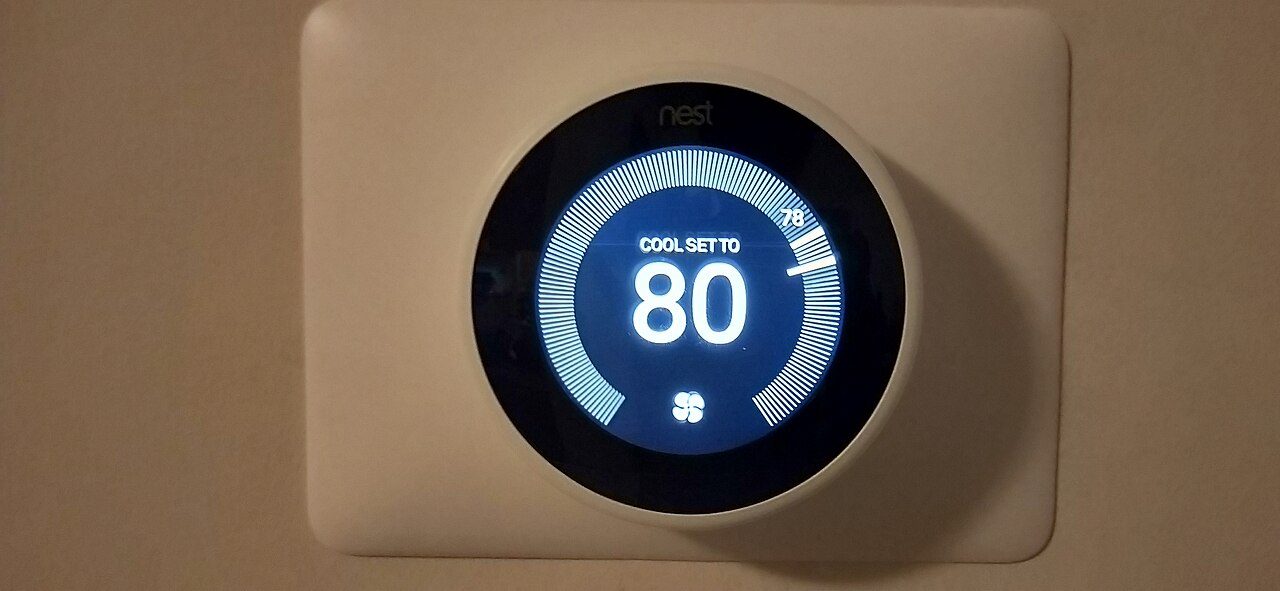
Smart thermostats are 236 of the 301 MW, and their enrollment assumptions draw on Everyday Electric's own program. Per the technical appendix, those assumptions were informed by the company's Energy Shift Capacity offering for Nest thermostats, which Brattle, citing a Renew Home release, says scaled enrollment fourfold. Brattle has 83% of smart thermostat owners taking part by 2032, 68% through Energy Shift and 15% in a high-impact tier, and the 0.58 kW average two-hour reduction it assumes for each Energy Shift household comes from Everyday Electric's 2025 randomized control trials. Brattle credits OEM-led enrollment, in which device makers and other providers sign customers up without requiring additional engagement with the utility, with 230 MW of the 301 MW.
The dollars turn mostly on gas turbines. Brattle prices avoided generation capacity at $200 per kilowatt-year (2026 dollars), reflecting turbine supply-chain costs, and credits the VPP with 211 MW of capacity value, an effective 70% of its 301 MW. Bill impacts are most sensitive to changes in avoided capacity costs: with every assumption set at its lowest, the VPP still avoids nearly a quarter of the average increase, and if high turbine costs persist it offsets almost all of it. The model also assigns all of the VPP's net value to the residential class, which Brattle calls broadly consistent with cost-causation because the VPP lowers residential peak demand and leaves commercial and industrial peak unchanged.
The report lists its own conditions. Its estimate is no substitute for system-specific analysis by a state or utility designing a program; many utilities have no direct financial incentive to build residential VPPs rather than conventional infrastructure; and reaching the modeled scale depends on tariffs that let device makers enroll customers, as ComEd's BYO Device Load Reduction program was designed to allow.
Who it was written for
Everyday Electric sells the product the report models. The report's acknowledgments thank the company's team for leadership and feedback throughout the study, and thank Sunrun and Tesla staff for insights on OEM-led enrollment; their Puerto Rico battery auto-enrollment, which Brattle says raised participation sevenfold, is one of the report's two case studies. The other is Everyday Electric's own Energy Shift. Brattle's notice says the report reflects the authors' analyses and opinions. It is not the firm's first VPP study done for VPP sellers: Sunrun and Tesla Energy commissioned its August 2025 study of California's DSGS battery program.
Everyday Electric's chief executive, Ben Brown, made the case for non-participants in the release: "And even the households that don't take part in a VPP stand to benefit."
Sources
Primary
- The Affordability Advantage: How Virtual Power Plants Can Alleviate Household Electricity Bill Pressure, Volume I: Summary Report · The Brattle Group (prepared for Everyday Electric)
Supporting
- U.S. Department of Energy Releases New Reports Highlighting Benefits of Consumer-Centric Solutions for Households, Businesses, and Utilities (Pathways to Commercial Liftoff: Virtual Power Plants Update) · U.S. Department of Energy, Office of Technology Transitions
- Brattle Report Finds California's Distributed Power Plant Program Could Deliver Hundreds of Millions in Cost Savings While Supporting Grid Reliability · The Brattle Group via PR Newswire
- The Affordability Advantage, Volume II: Technical Appendix · The Brattle Group (prepared for Everyday Electric)
- New Brattle Report Finds that Residential Virtual Power Plants Could Cut Expected Near-Term Household Electricity Bill Increases by More than Half · The Brattle Group (PR Newswire)
Copies of cited sources are retained where available. If a link no longer resolves, request a copy at contact@theduckcurve.com.