 The Duck Curve
ISO New England opens its markets to distributed energy aggregations
Aggregators can register pools of resources such as solar, storage, demand response and EVs from November 1, when the energy and ancillary-service rules took effect; ISO-NE lists capacity-market changes for 2028-29.
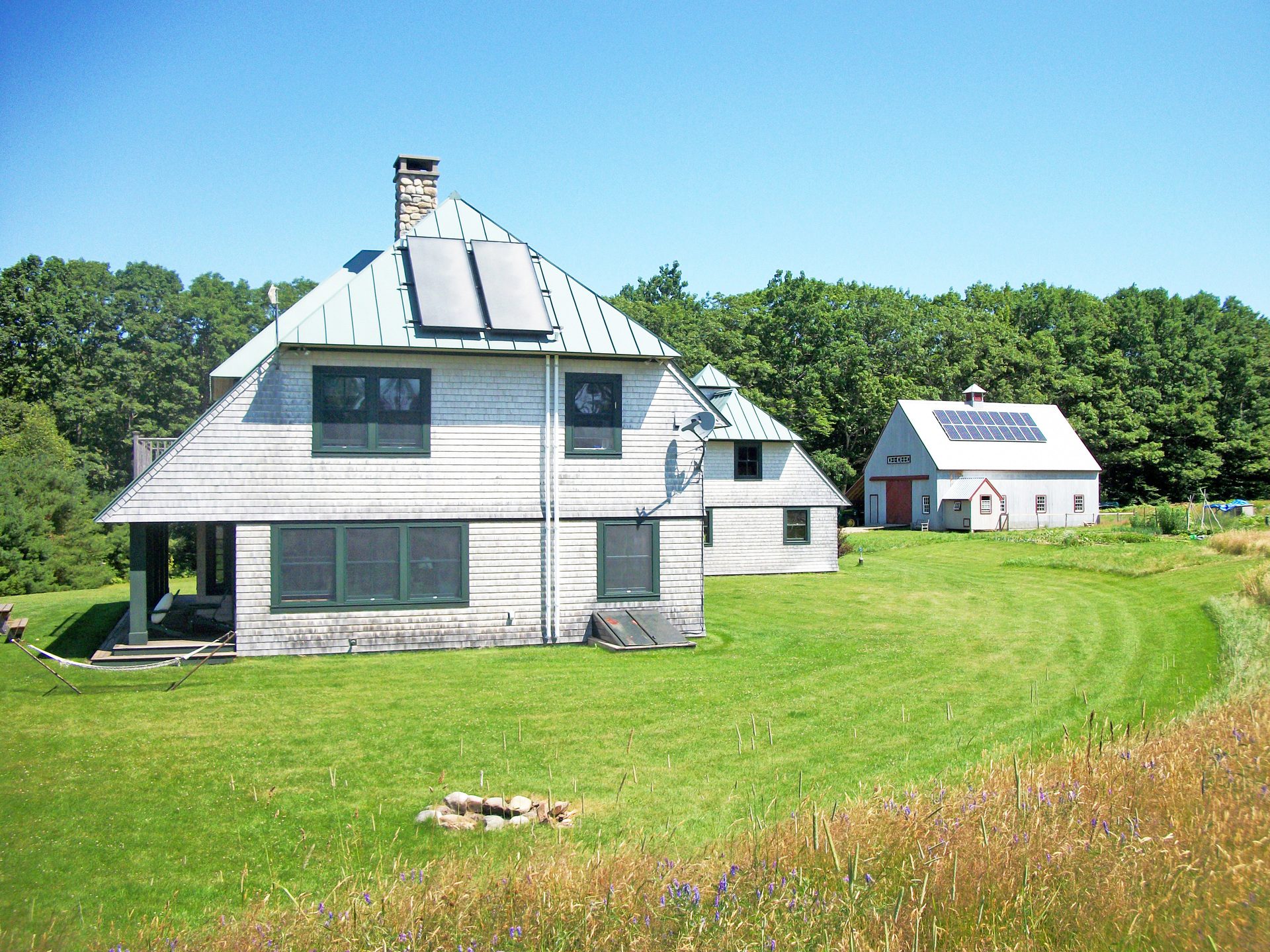
Resources such as solar, wind, battery and thermal storage, demand response and electric vehicles with controllable charging, connected to New England's local distribution systems, can now be registered in pools for the region's wholesale markets. As of November 1, 2026, ISO New England allows distributed energy resource aggregations (DERAs) "to compete with traditional resources in the capacity, energy, and ancillary services markets," the grid operator said on November 2, as a consequence of FERC's Order No. 2222. The smallest aggregation it will take is 100 kW, per its participant readiness page.
The new market participant is the aggregator: the company that registers a pool of small resources with ISO-NE and trades it. ISO-NE says its earlier participation models already let thousands of megawatts of larger distributed resources into its markets, but some resources could not meet minimum size and performance requirements on their own. Aggregation is their way in, and it makes a wholesale market resource out of the kind of equipment a virtual power plant is built from.
What aggregators can register
ISO-NE's design is built around what a resource can do rather than what it is. Each distributed resource has at least one of four capabilities, its compliance refresher says: demand reduction, energy injection, energy withdrawal and regulation. Seven participation models map those capabilities to registration, settlement and operating requirements, and all of the models ISO-NE proposed allow a mix of technologies.
The new options for aggregators sit in two new models. A settlement-only aggregation (SODERA) can pool non-dispatchable resources, which could otherwise be Settlement Only Resources, with flexible load and take part in the day-ahead energy market, which the existing settlement-only model cannot. A demand-response aggregation (DRDERA) pairs demand response with other resource types and may provide energy injection or withdrawal as well as demand reduction. The other five of the seven are existing models: generator, two storage models, demand response resource, and the alternative technology regulation resource, whose minimum size dropped from 1 MW to 100 kW.
Big concentrations get pushed down to the node. A single resource or aggregation of 5 MW or more at a single node "must participate as a standalone resource or through a more geographically limited aggregation," the readiness page says. The refresher adds that every resource in an aggregation must sit in the same demand-response aggregation zone and metering domain.
November 1 is a registration date. It is when "participants can begin to register DERAs," in the readiness page's words, and SODERA assets are activated only after an eligibility review period of up to 60 days; DRDERA assets activate on monthly boundaries. Local utilities do part of the vetting: the refresher has distribution companies developing processes to review whether a resource is eligible to join an aggregation and to assess the safety and reliability impacts of aggregations on their systems.
Six years from rule to registration
New England's start dates have been on the books since March 2023. FERC issued Order No. 2222 on September 17, 2020, and ISO-NE filed its compliance plan on February 2, 2022 with two effective dates, both of which FERC's March 1, 2023 order accepted. November 1, 2022 covered the rules for Distributed Energy Capacity Resources in the Forward Capacity Market and certain definition changes; FERC said that date "allows for Distributed Energy Capacity Resource participation in the earliest possible forward capacity auction, FCA 18." A resource clearing that auction would hold a capacity obligation starting June 1, 2027, ISO-NE told FERC. November 1, 2026 covered the remaining tariff sections, including energy and ancillary-service participation, a date that, as the order put it, "is seven months before the FCA 18 capacity commitment period begins." ISO-NE cited software development, utility systems for reviewing resources, and time for state regulators to write rules. FERC found the timeline reasonable and turned down a suggestion from Advanced Energy Economy, PowerOptions and the Solar Energy Industries Association for a phased approach that would have offered openings in the energy and ancillary markets before 2026. FERC wrote that "such an approach is unreasonable in this proceeding because the benefits would likely be outweighed by the complications and burdens involved for ISO-NE and the staff of other coordinating organizations."
The capacity side now runs on a later clock. ISO-NE's November 2 release lists capacity alongside energy and ancillary services as of November 1. Its compliance refresher, which carries no date, lists the capacity-market tariff changes as effective for the 2028-29 capacity commitment period, says the current tariff reflects a delayed schedule for that period, and expects further changes for anticipated capacity auction reforms to be filed ahead of it.
Meters were where ISO-NE pushed back. The 2023 order accepted the filing in part and rejected it in part, and ISO-NE sought rehearing after FERC rejected its proposal for the host utility or an assigned meter reader, instead of the aggregator, to provide metering data. On October 6, 2023, per the refresher, "FERC confirmed the requirement that the DER Aggregator provide metering data to ISO-NE," and a final compliance filing on January 31, 2024 designated the aggregator as responsible. The aggregator can still name itself, an agent or the host participant as the assigned meter reader for aggregations containing generator or load assets.
Not everyone at FERC wanted the exercise. Commissioner Mark Christie dissented from the 2023 order, faulting it for not accepting ISO-NE's measurement and verification efforts meant to prevent errors "such as double counting," and repeated that he would have voted against Order No. 2222 itself. "The problems and complexities of complying with Order No. 2222 are extreme," he wrote. Commissioner James Danly concurred, noting that he had dissented from Order No. 2222 itself: "One hundred percent compliance probably is impossible in a first, or perhaps even second, attempt."
Where the other grids stand
Elsewhere, the dates run from 2024 to 2030. CAISO implemented its Order No. 2222 program on November 1, 2024, according to a November 2024 implementation tracker report. PJM's March 2026 schedule starts enrollment in November 2027 and puts full go-live on February 1, 2028. MISO's revised timeline, given to its distributed energy resources task force on September 10, 2025 (minutes), opens day-ahead and real-time market participation on January 1, 2030 and capacity market participation from June 1, 2030.
In the meantime, US virtual power plants are growing through state programs and private capacity deals, as our virtual power plant reference page records; it tracks each operator's Order No. 2222 status, including NYISO and SPP.
Sources
Primary
- ISO-NE markets open to distributed energy resource aggregations · ISO New England (ISO Newswire)
Supporting
- Order on Compliance Filing, ISO New England Inc. and New England Power Pool Participants Committee, Docket Nos. ER22-983-000 and ER22-983-001, 182 FERC ¶ 61,137 (March 1, 2023) · Federal Energy Regulatory Commission (copy hosted by ISO New England)
- FERC Order 2222 & DER Policy and Implementation Report, November 2024 · Center for Understanding Sustainable Living Now (FERC2222.org / cusln.org)
- Distributed Energy Resources Task Force (DERTF) September 10, 2025 Minutes · MISO
- DER Aggregator Participation Model: Full Model Design (Informational Only), DISRS March 9, 2026 · PJM Interconnection
- FERC Order No. 2222 (Participant Readiness Outlook) · ISO New England
- FERC Order No. 2222: Refresher on Key Compliance Directives, Effective Dates, and Compliance Approach · ISO New England
Copies of cited sources are retained where available. If a link no longer resolves, request a copy at contact@theduckcurve.com.