 The Duck Curve
#batteries
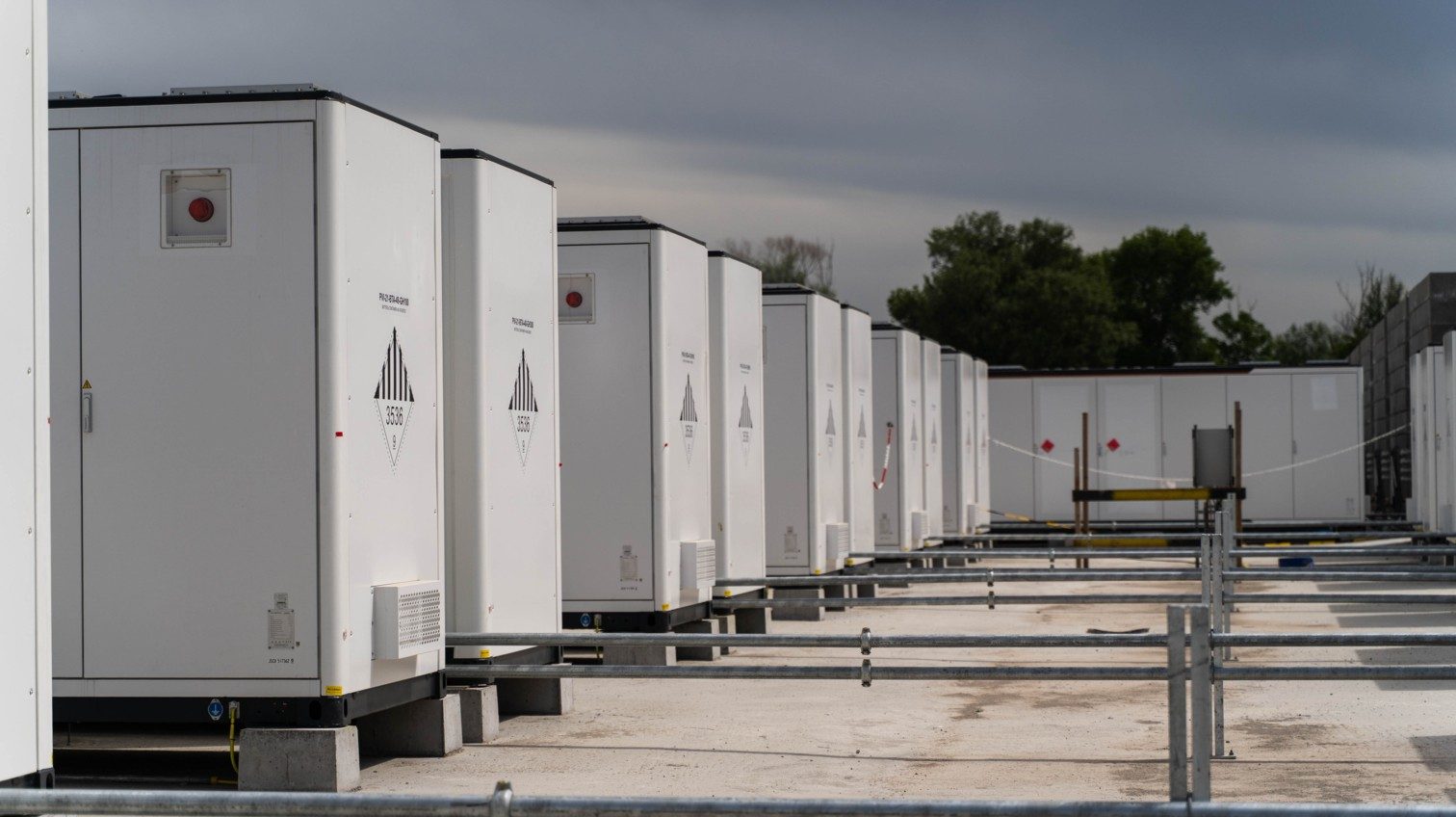
ENGIE's storage fleet reaches 10.7 GW operating or under construction
ENGIE said on September 4, 2026 that its storage portfolio in operation and under construction has reached 10.7 GW worldwide, counting batteries and pumped-storage hydropower, with 4.7 GW in Europe and 4.4 GW in the United States. July and August 2026 added 1.1 GW / 3.3 GWh of European battery projects across seven countries, led by a 758 MW / 2,156 MWh Polish portfolio assembled through two acquisitions and one adjacent development, scheduled for commissioning in 2028 and 2029.
-
Bruegel: Europe's EVs hold 600 GWh, about ten times its stationary storage
Bruegel's European Clean Tech Atlas, published September 2, 2026, says 60 GWh of stationary battery storage had been connected to the European grid by 2024 and estimates 600 GWh of capacity in the EV fleet. Assuming away physical constraints, it says the stationary fleet could absorb or supply the grid's average output for about a quarter of an hour, and the vehicles, if all connected, hypothetically for almost two hours; SolarPower Europe's June 2026 outlook says 2025's additions took operational stationary capacity beyond 100 GWh.
-
ProLogium says its 381 Wh/kg solid-state cell is in mass production
ProLogium Technology said on September 2, 2026 that its Gen 3.5 Lithium Ceramic Battery is in mass production at its Taoke Gigafactory in Taoyuan, Taiwan, citing a third-party TÜV report showing a 185.4 Ah cell at 381 Wh/kg and 903 Wh/L and a UL Solutions weight-loss test under China's GB/T 43568-2026 from which ProLogium concludes the cell can be classified as all-solid-state. The release gives no production volume and names no customer for the Gen 3.5 cell.
-
Virtual power plants in the US
As of October 6, 2026, US virtual power plants are growing through state programs and private capacity deals while FERC Order 2222 market access arrives operator by operator: live at CAISO since November 2024, due at ISO New England November 2026 and at MISO and SPP in 2030.
California budget bill carries no 2027 money for its DSGS home-battery VPP
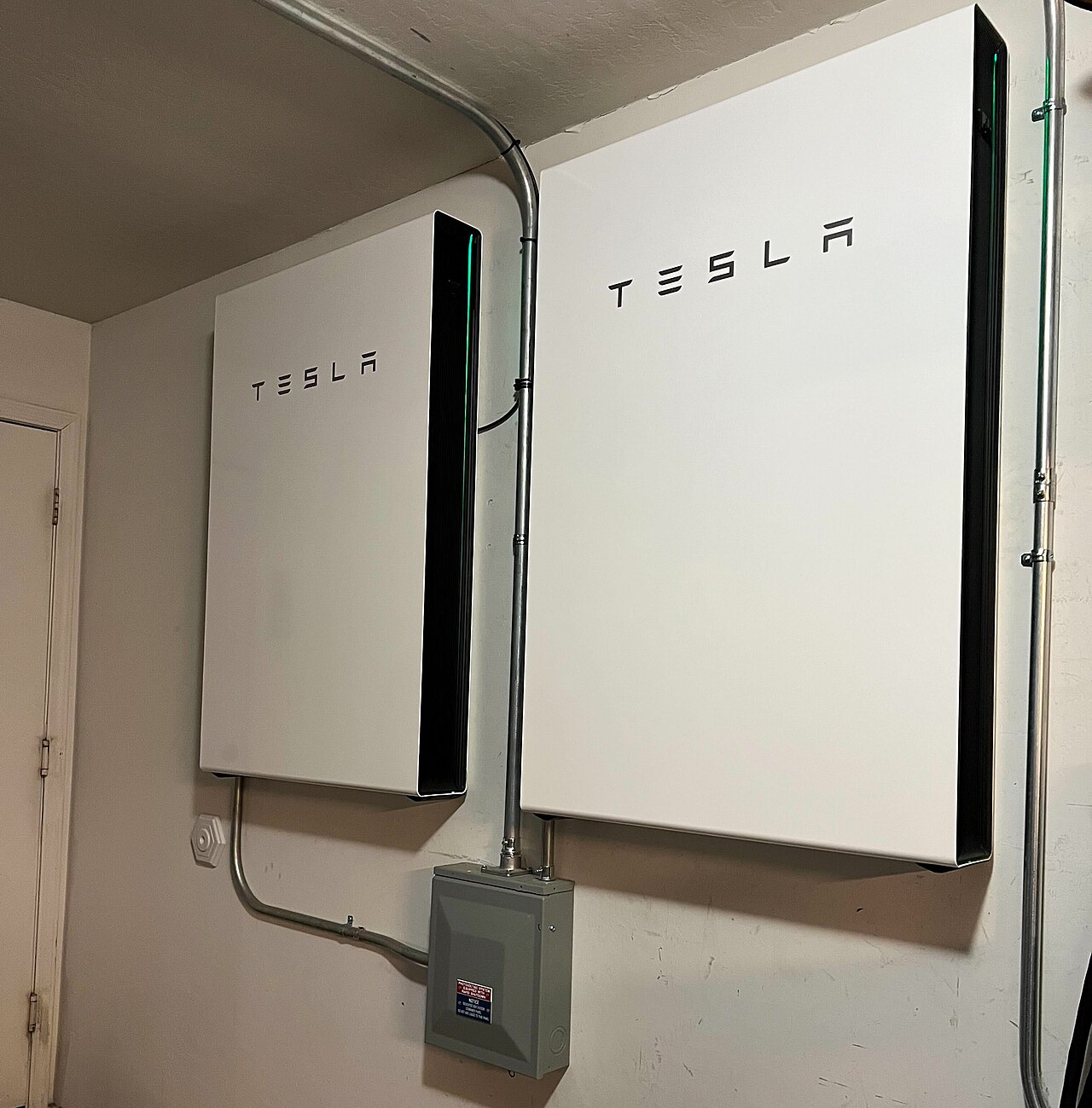
California's end-of-session budget bill AB 113, passed by the Senate on September 1, 2026 with the Assembly concurring the same day, contains no appropriation for the Demand Side Grid Support program, the California Energy Commission's virtual power plant of home batteries, smart thermostats and demand response that the CEC estimated at 1,145 MW enrolled in April 2026. The bill adds $20 million for the sister Distributed Electricity Backup Assets program; a Senate proposal to shift $70 million of CalSHAPE interest into DSGS was not included, and Advanced Energy United says the program is funded only through the end of 2026.
East Point withdraws 125 MW Tewksbury battery over grid upgrade costs
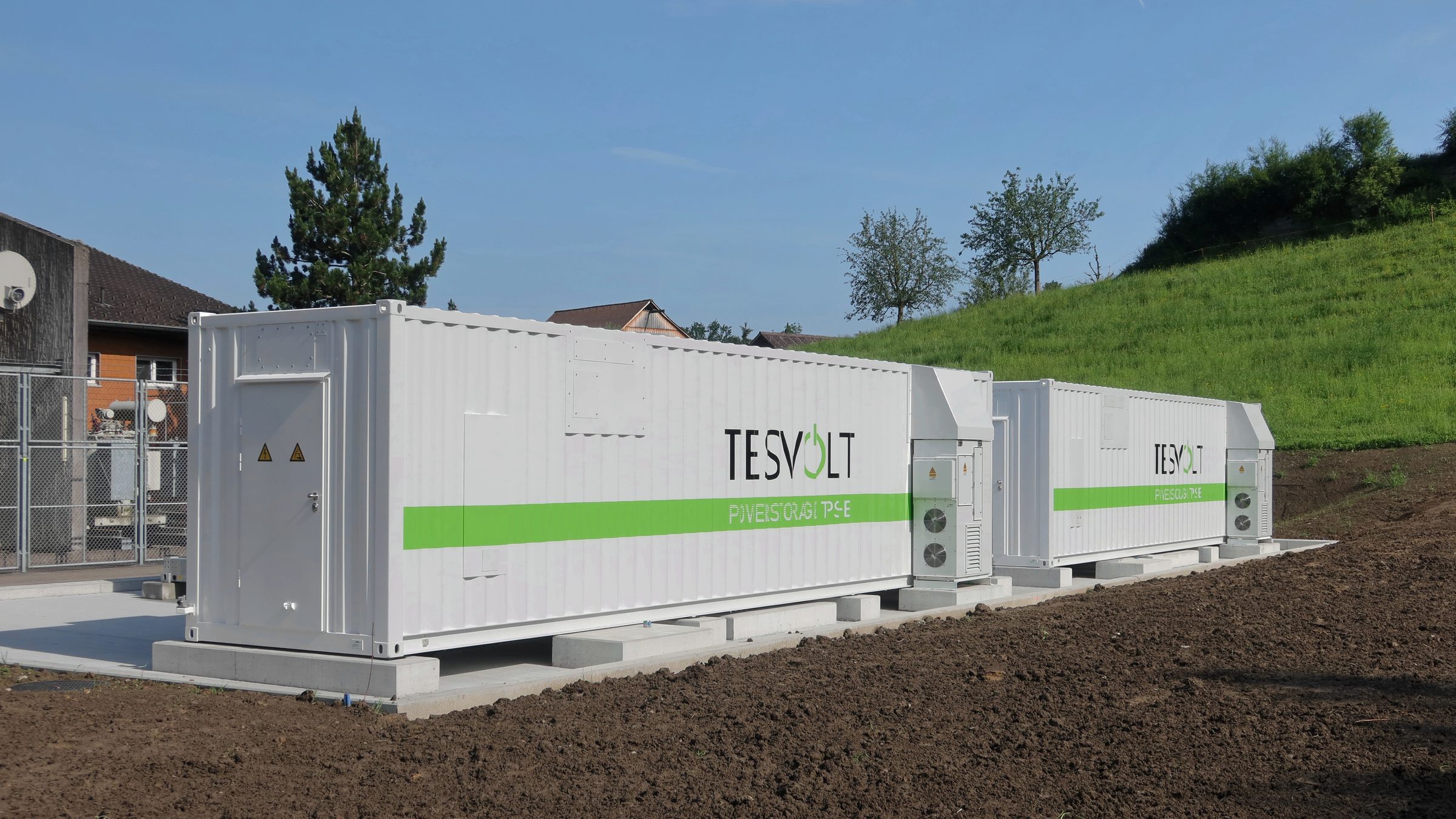
Hillman Energy Center, East Point Energy's project company, moved on September 1, 2026 to withdraw its 125 MW / 500 MWh Tewksbury, Massachusetts battery from the Energy Facilities Siting Board (docket EFSB 26-02), saying ISO New England's Transitional Cluster Study left the project economically unviable. The study's final report lists $65.3 million of upgrades for the 125 MW queue position at the Tewksbury 115 kV substation; the board had approved the project on June 30, 2026 with what the motion counts as 104 conditions.
-
Equinor's 100 MW Citrus Flatts battery starts merchant operations in ERCOT
East Point Energy, Equinor's wholly owned storage developer, has started operations at Citrus Flatts, a 100 MW / 200 MWh battery in Harlingen, Texas, Equinor announced on September 3, 2026. Equinor calls it its largest US storage project; the plant runs on a fully merchant basis in ERCOT, and the company says a four-project 80 MW / 160 MWh Virginia portfolio is on track for early 2027.
-
China starts taxing lithium-ion batteries at 2%, solar cells next
China began collecting a 2% consumption tax on lithium-ion, lithium primary, nickel-metal hydride, mercury-free primary, and vanadium flow batteries on September 1, 2026, returning to the statutory 4% on September 1, 2027, under a July 16 announcement from the finance ministry, customs, and tax administration. Solar cells join at 2% in April 2027; sodium-ion, solid-state, and fuel cells are exempt through 2028.
Duke Energy Florida turns a second grid battery into a community microgrid
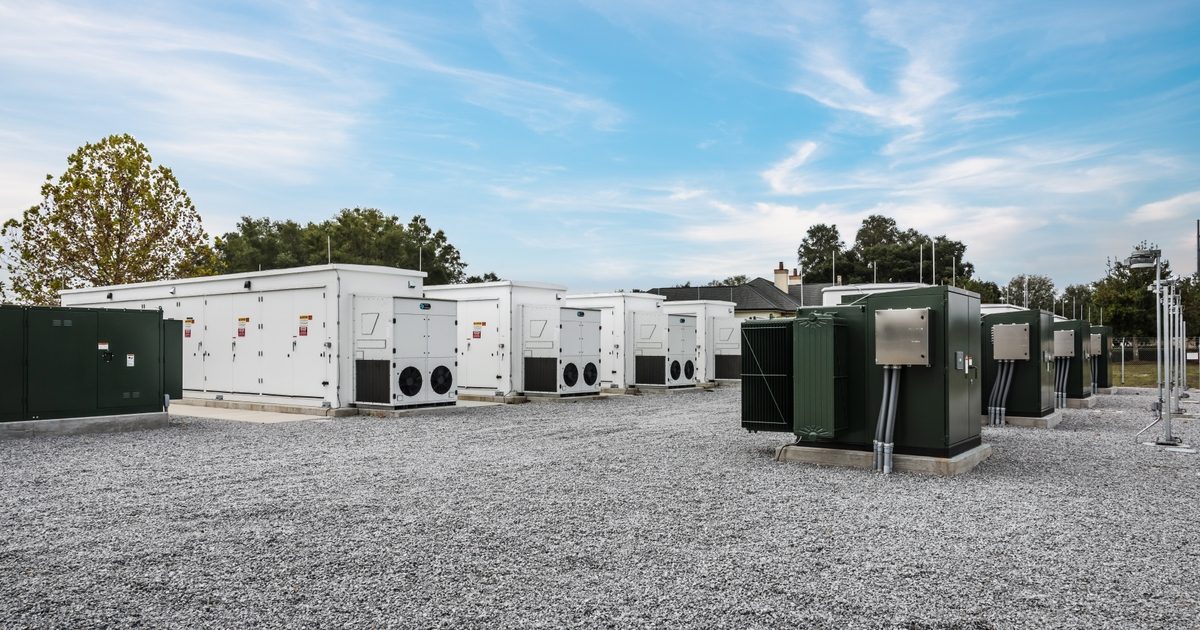
Duke Energy Florida announced on August 31, 2026 that its 11 MW Trenton battery site in Gilchrist County was upgraded in the summer of 2026 to island from the grid and back up approximately 1,500 customers for up to four hours during outages. It is the second of the utility's six Florida battery sites with the capability, after Micanopy; in February 2025 Duke said its goal was for most of them to be able to island by 2026.
-
SK On to supply 9 GWh of US-made LFP cells to NeoVolta Power
SK On signed a long-term agreement, announced August 31, 2026, to supply 9 GWh of US-produced LFP pouch battery cells to NeoVolta Power from 2027 through 2031 for storage products the release describes as aimed at utility-scale and commercial-and-industrial applications. The release discloses no value; Yonhap reports market estimates of about 1.5 trillion won (US$1.09 billion). A framework for a further 9 GWh of cells plus pack purchases by SK On would bring the partnership to 18 GWh.
-
Shell completes sale of home battery maker sonnen to family office Tiven
Shell has completed the sale of German home battery and virtual power plant company sonnen to Tiven, a family office headquartered in Malta, confirming the deal in statements to trade outlets between August 24 and 28, 2026; neither company initially made a public announcement. Financial terms were not disclosed.
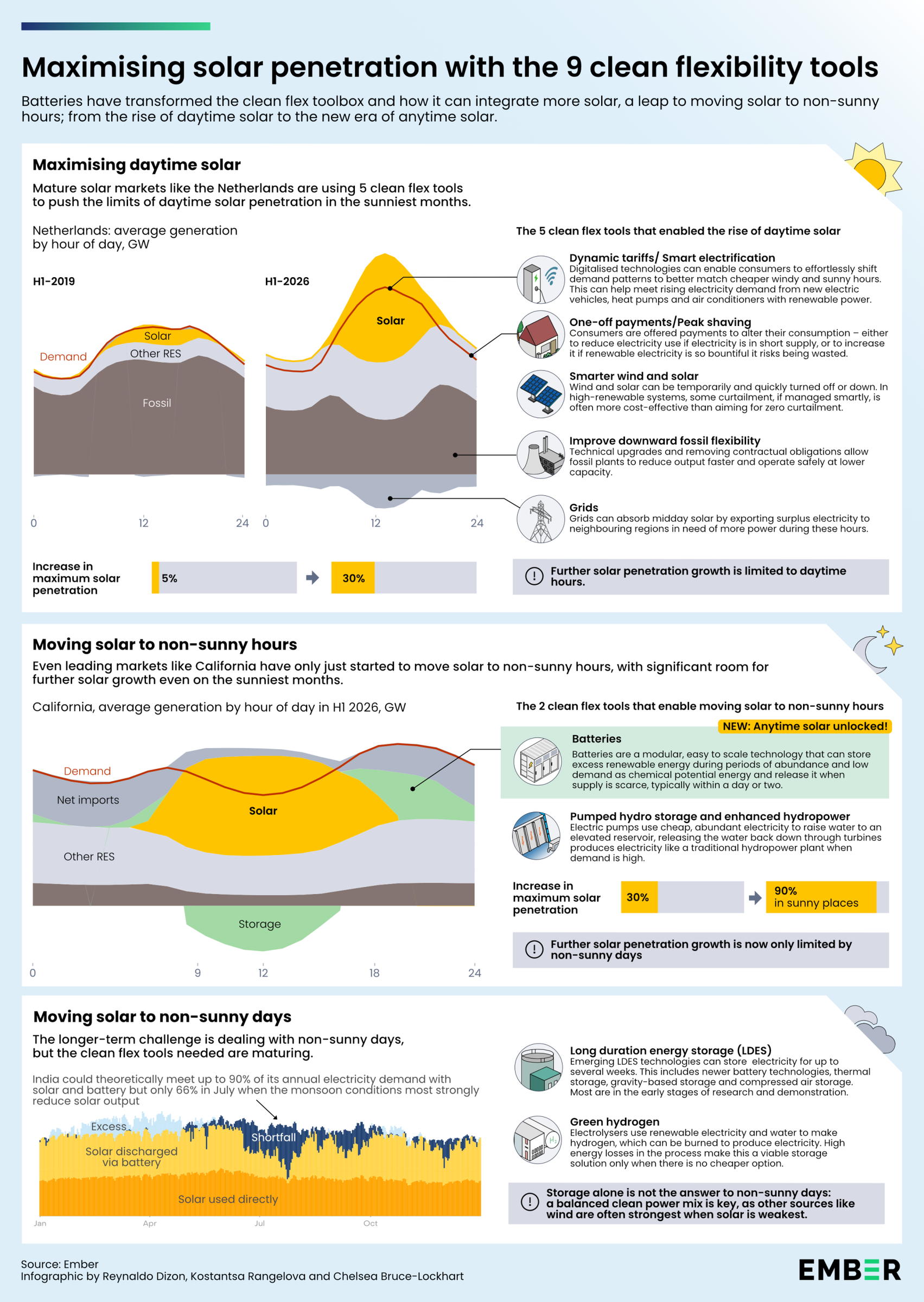
Ember: 2026 battery additions could shift over a third of new solar output
Ember's August 12, 2026 report finds solar met a record 10% of global electricity in H1 2026, over a quarter of demand at midday on the average day but near zero at night. Expected 2026 battery additions of 459 GWh, up 50% year over year, could shift up to 34% of new daily solar generation into non-sunny hours, based on H1 2026 solar growth.
-
Jackery launches HomePower 1000 Plus V2 with up to 11 kWh expansion
Jackery announced the HomePower 1000 Plus V2 on August 27, 2026: an 1800 W portable power station with 1024 Wh of base capacity, expandable to up to 11 kWh with 2 kWh add-on batteries, at a $749 list price. The company claims an 80% AC recharge in 36 minutes and a switchover of 10 milliseconds or less for backup loads.
-
Canadian Solar storage beats guidance, modules fall 60% year over year
Canadian Solar reported second-quarter 2026 results on August 27, 2026: battery storage shipments of 3.7 GWh exceeded guidance of 2.8 to 3.2 GWh and rose 73% year over year, while solar module shipments of 3.1 GW rose 25% from the first quarter but fell 60% year over year. Revenue was $1.2 billion, gross margin of 13.9% was within guidance but down sequentially, the net loss was $77 million, and Phase I of the company's HJT cell factory in Jeffersonville, Indiana held its ribbon-cutting in July 2026.
-
PSE&G pays $5,000 toward home batteries in new VPP pilot
PSE&G launched the GridSmart Battery Program, announced August 26, 2026: a $5,000 incentive toward a qualifying home battery plus up to $25,000 in interest-free on-bill repayment. Participating systems may be called on during scheduled GridSmart Battery Events under the utility's residential virtual power plant pilot in New Jersey; the release names no megawatt target or program size.
Sunrun will supply home battery capacity to Voltus's AI hyperscaler deals
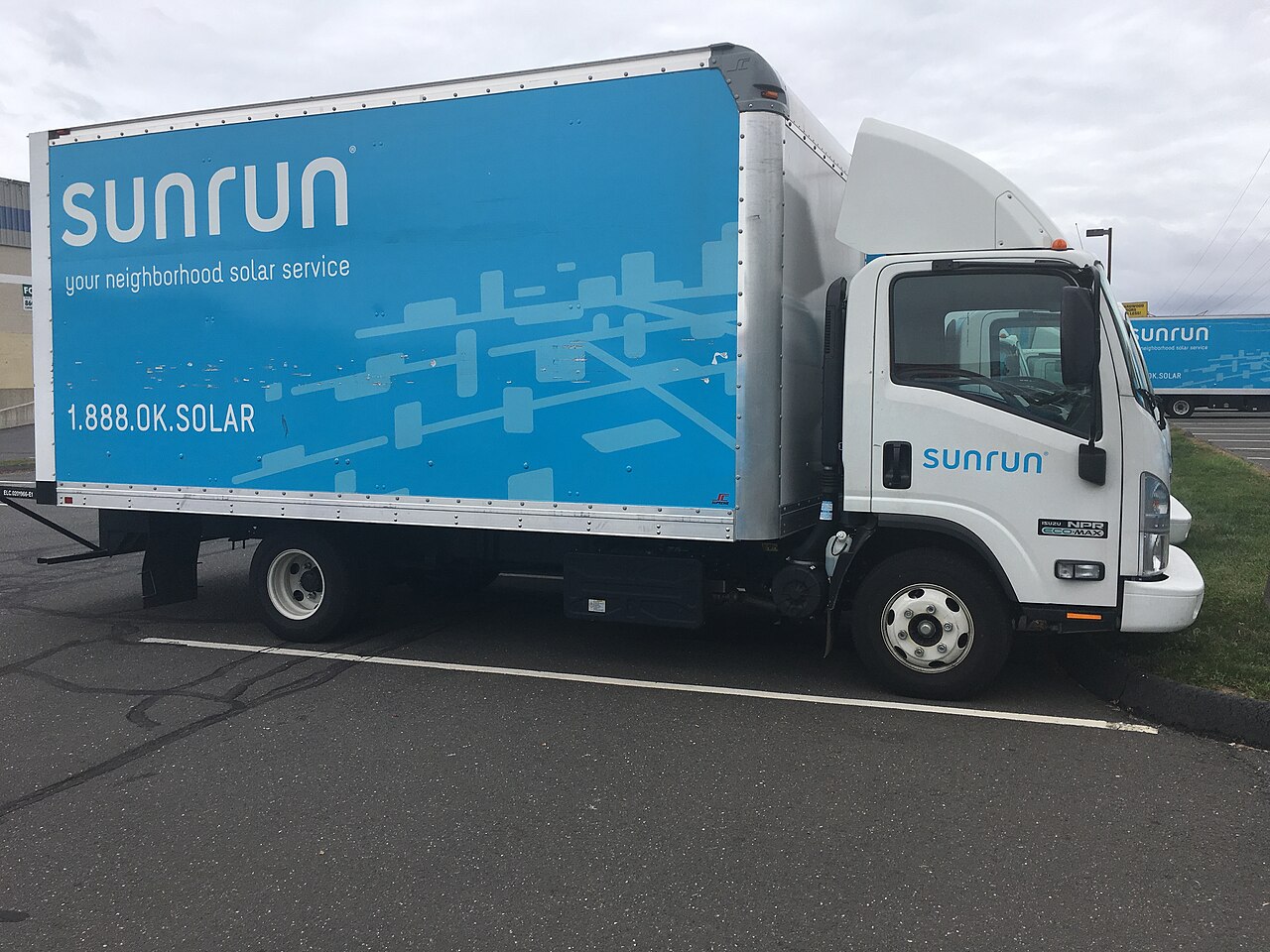
Sunrun announced an agreement on August 17, 2026 to supply capacity from a portion of its residential solar-plus-storage systems in PJM and MISO to Voltus's Bring Your Own Capacity programs for AI hyperscalers. Voltus's first disclosed BYOC buyer was Google, under a June 2026 agreement covering up to 100 MW of distributed resources a year in PJM.

Heart Aerospace's 106-foot electric X1 demonstrator makes first flight
Heart Aerospace's X1 demonstrator made its first flight on August 12, 2026, from Plattsburgh International Airport in New York: 27 minutes aloft, 1,100 feet of altitude, and more than one megawatt of all-electric power under a takeoff weight above 25,000 pounds. The company calls it the largest battery-electric aircraft ever flown and is applying the results to its 30-seat hybrid-electric ES-30, targeted for airline service in 2031.

Saudi Arabia signs 2 GW of battery storage deals in its first BESS tender
The Saudi Power Procurement Company signed storage service agreements on August 20, 2026 for the first group of four battery storage projects: 2,000 MW of four-hour storage (8,000 MWh) representing more than SAR 4.35 billion (about $1.16 billion) in investment. Three plants went to a consortium of Saudi Energy, ACWA Power, and Al Sharif Contracting; the fourth to a consortium of Engie and Haji Abdullah Alireza & Co.
Ann Arbor's city utility installs solar and batteries at no upfront cost
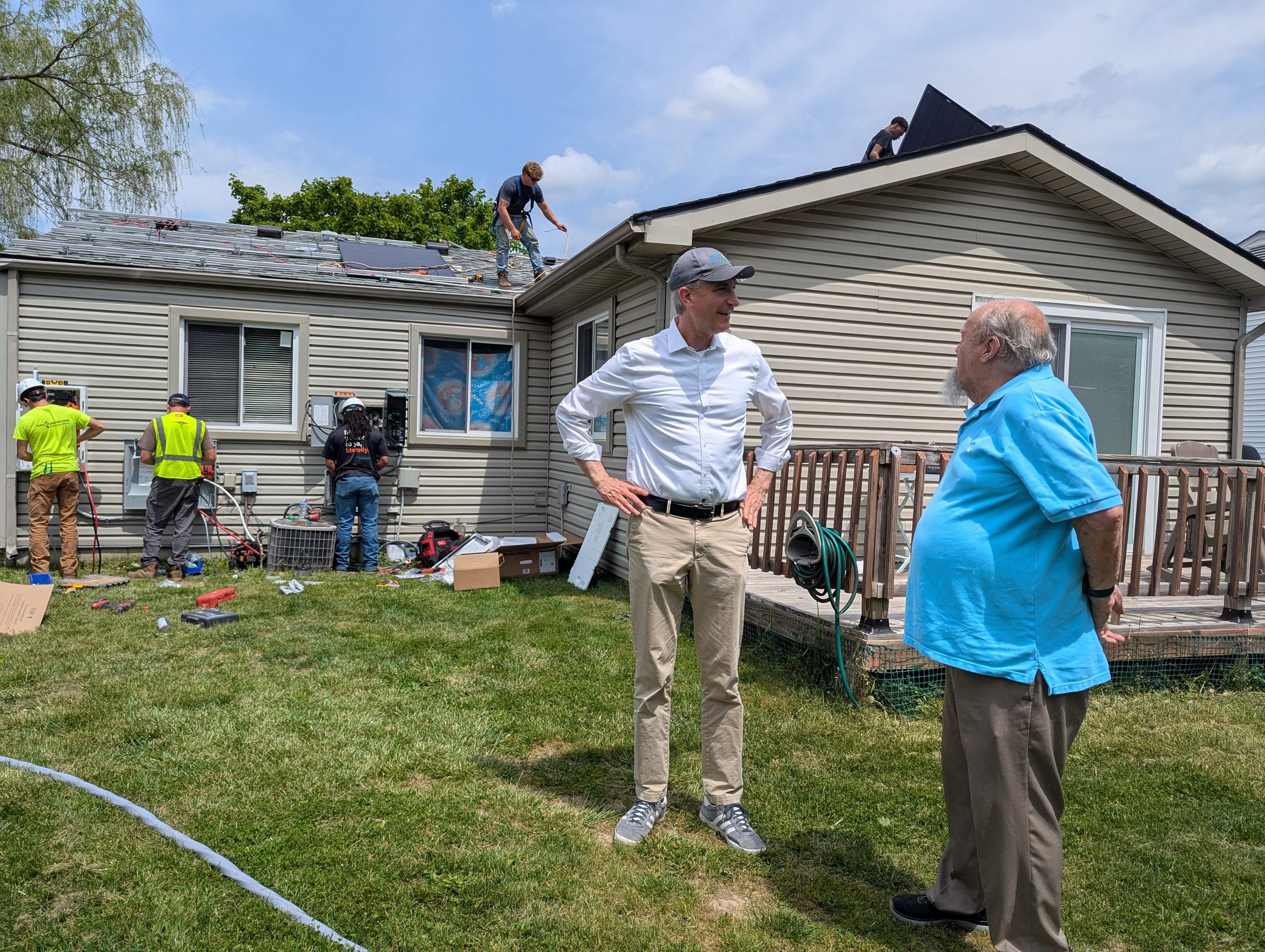
The Ann Arbor Sustainable Energy Utility, a voter-created municipal utility that supplements rather than replaces DTE, is installing city-owned rooftop solar and battery systems on homes in the Bryant neighborhood at no upfront cost, with plans to reach about 100 homes before the pilot concludes in 2026 and to begin citywide expansion in 2027. Participants pay roughly $600 a year and the city estimates $700 to $1,000 in annual utility-bill savings; one enrolled household rode out a two-day heat-wave outage in July 2026 on its battery.
Massachusetts swaps surprise solar upgrade charges for a flat $225 fee
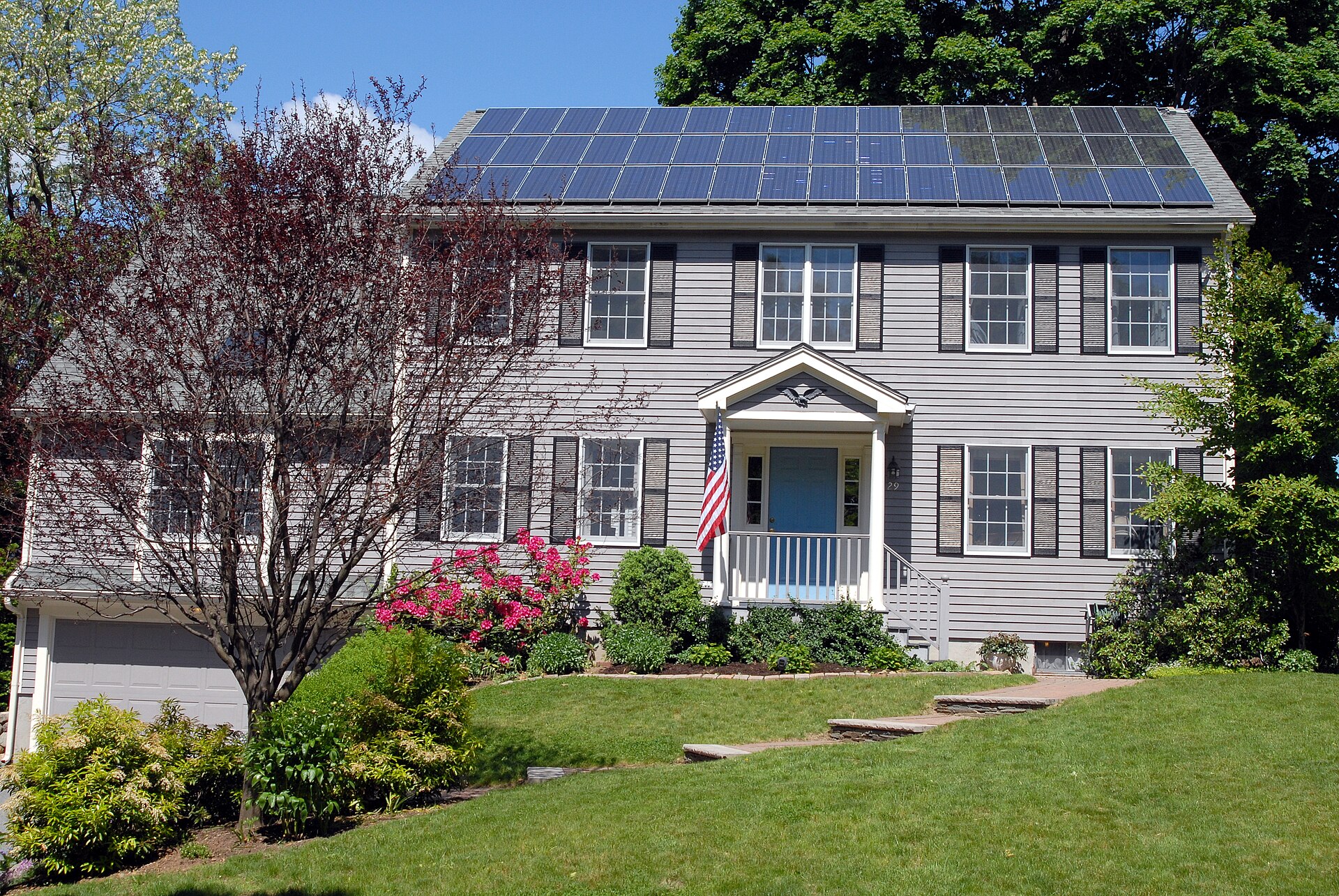
The Massachusetts Department of Public Utilities approved a Common System Modification Fee on August 12, 2026 in docket D.P.U. 26-57: every solar or battery project on the utilities' simplified interconnection path (listed inverter-based systems of 25 kW or less) pays a flat $225 at application, and the pooled fund covers grid upgrades up to $10,000 for Eversource and National Grid customers and up to $1,450 for Unitil customers. The tariffs take effect November 1, 2026, ending the practice of billing whichever customer happened to trigger a transformer upgrade.
-
11 GW-plus Northwest plan, Austria's storage pivot, Walmart's 100th charger
Three developments from August 13 to 21, 2026: the Northwest Power and Conservation Council's draft Ninth Power Plan calls for more than 11 GW of new generation and more than 5 GW of storage by 2032; Austria plans to redirect residential solar subsidies toward battery storage from 2027, guided by a ministry-commissioned study that finds up to 8 GW of market-oriented battery capacity economically useful by 2030; and Walmart's company-owned fast-charging network, delivering up to 400 kW, reached 100 stores across 20 states.
-
US grid batteries near 52 GW after three years of 70% annual growth
US utility-scale battery storage reached nearly 52 GW of nameplate capacity by mid-2026, after ending 2025 at 43.6 GW and adding 8.3 GW in the first half of 2026, according to EIA inventory data published August 7, 2026. Growth averaged 70% a year over the last three years, and operators report plans for another 54 GW by the end of 2028.
-
New Jersey proposes 10-year payments for up to 150 MW of home batteries
The New Jersey Board of Public Utilities released a straw proposal on August 19, 2026 for Phase 2, Block 1 of the Garden State Energy Storage Program: up to 150 MW of behind-the-meter home batteries earning performance-based payments of up to $200 per kilowatt-year over 10 years, administered by the state's four electric utilities, with enrollment targeted to open by July 2027.
CATL's lithium-air numbers, checked against 15 years of published results
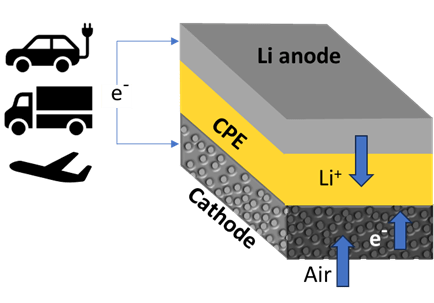
CATL chief scientist Wu Kai told a Beijing industrial forum on May 30, 2026 that the company has cleared 1,000 Wh/kg and 500 cycles with lithium-air chemistry in the lab, reviving a battery type IBM tried and abandoned by 2015. Published, peer-reviewed results run lower and under easier conditions: 700 cycles in simulated air (2018), 1,000 cycles in a single lab cell at room temperature with 1,200 Wh/kg only a stated design target rather than a measured result (2023), and 550 cycles from a new catalyst (2026), with almost none of it demonstrated in humid, carbon-dioxide-bearing air at the level of a full battery. A 1,200 Wh/kg figure widely repeated alongside coverage of CATL's forum remarks actually belongs to an unrelated Argonne/Illinois Tech result, and a 12,000 Wh/kg 'gasoline-level' figure circulating in the same coverage is generic background never attributed to CATL's own scientist. The startup furthest along commercially, Air Energy, is targeting wearables and drones first and electric vehicles only 'over the next five years,' extending a deferral pattern the chemistry has run since 2009.
Anthro Energy breaks ground on 12,000-ton electrolyte plant in Louisville
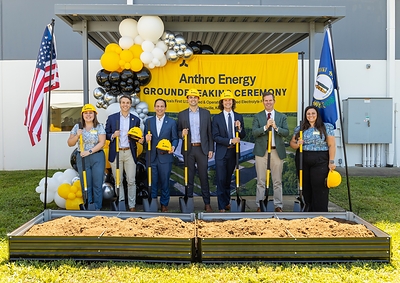
Anthro Energy broke ground on a polymer electrolyte plant in Louisville, Kentucky, the company announced on August 19, 2026. The $42 million facility is expected to produce about 12,000 metric tons a year, enough to support up to 25 GWh of lithium-ion battery production, with operation targeted for late 2027.