 The Duck Curve
Volkswagen recalls 22,524 ID.4s for battery fire risk with no fix yet
Owners are told to charge to 80% at most until a remedy exists. It is the ID.4’s fourth battery recall since December 2025, and all four name the same supplier.
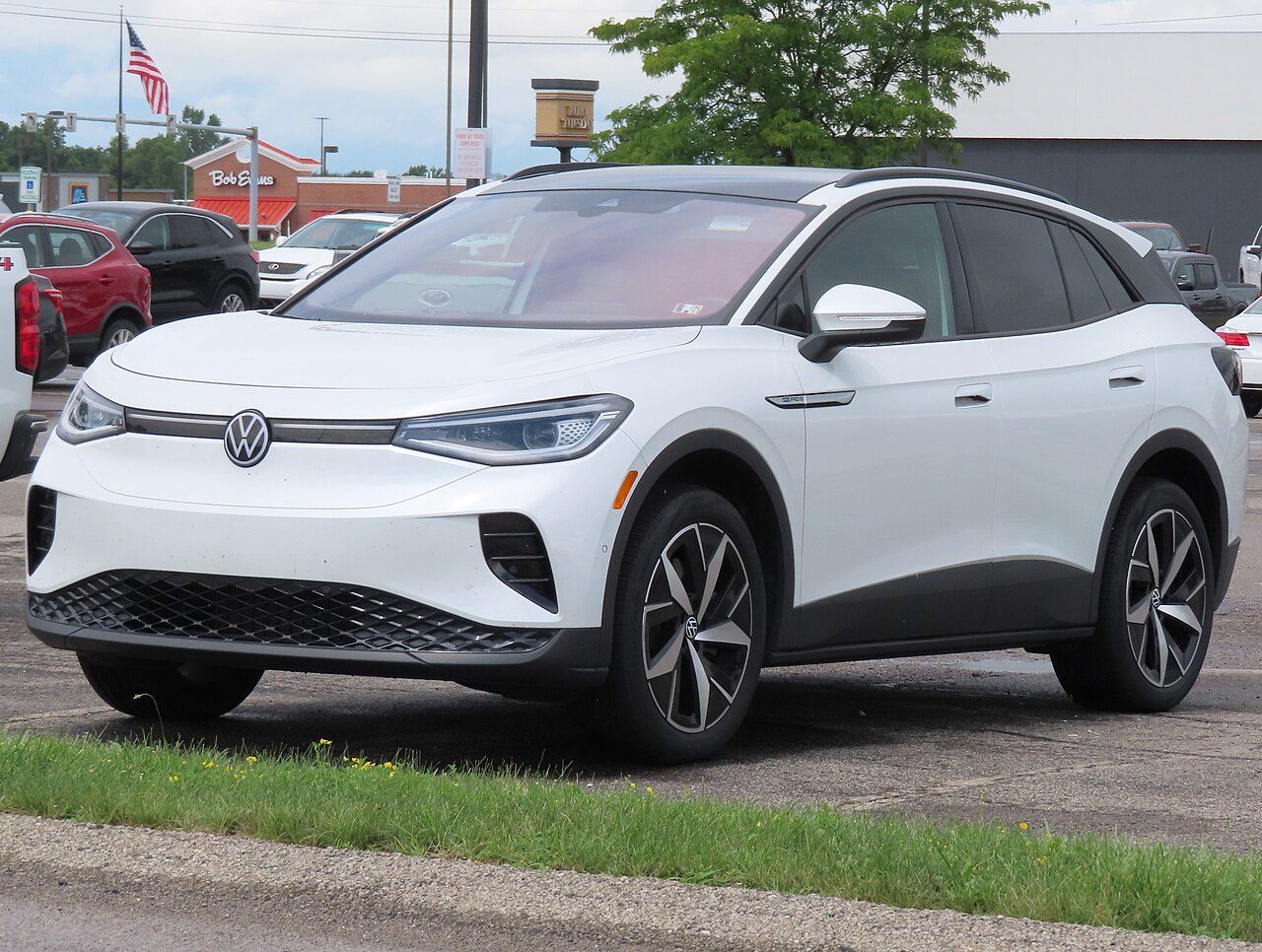
Volkswagen Group of America is recalling 22,524 ID.4 electric SUVs from the 2023–2026 model years because the high-voltage battery may fail and lead to a vehicle fire, and it does not yet know why. Until a fix exists, owners are advised to charge to no more than 80% of battery capacity, according to NHTSA's record of recall 26V630. Volkswagen's Part 573 safety recall report, amended October 1, 2026, says the root cause is unknown, but that in certain batteries in the recalled population, "certain charging profiles combined with a state of charge over 80% may trigger thermal propagation within the high-voltage battery."
The remedy is still under development. NHTSA's record says interim letters warning owners of the risk are expected to be mailed November 27, 2026, with additional letters once a remedy is available. In the meantime, every affected owner will receive a warning sticker for the vehicle as a reminder not to charge above 80%, the report says, and adds: "Depending on the vehicle configuration and online connectivity, some vehicles may be configured to limit the maximum state of charge of the high-voltage battery to 80 percent." Volkswagen's October 6 notice to dealers puts it more bluntly: "REPAIR NOT YET AVAILABLE." No reimbursement plan is offered, because the vehicles are still within the New Vehicle Limited Warranty period.
Who is in the recall, and why now
Volkswagen expects few of the cars to have the defect: its estimate is 0.1% of the 22,524, about 23 vehicles by our arithmetic. The report lists production dates from January 1, 2023 to February 1, 2025, and the dealer notice counts a further 5,633 ID.4s from the 2023–2025 model years in Canada.
The recall is drawn partly by how cars have been charged. Volkswagen built the population from assembly records, battery traceability information, supplier production records and available charging data. Cars left out either carry cells produced outside the suspect range or have recent, complete data showing charging use below what the report calls "the defined threshold"; the report does not give the threshold.
The decision took about three months. On June 17, 2026, while reviewing battery thermal events in the field, Volkswagen saw preliminary data pointing to "a potential influence related to specific isolation-resistance values and DC-charging ratios," and its Product Safety Committee ordered a field study of complete battery systems from vehicles not included in its earlier battery recalls. The committee reviewed the results on September 21, asked the cell supplier for clarifications on its production measures and "the potential clean date," and decided on September 23 to recall the vehicles while the root cause was still unknown. The report cites 22 claims in the US between January 18, 2024 and August 7, 2026.
Four recalls, one supplier
This is the fourth ID.4 traction-battery recall Volkswagen has filed with NHTSA since December 2025, and all four reports name SK Battery America of Commerce, Georgia, as a supplier, with the same three battery part numbers (11K.915.592.D, 11K.915.599.A and 11K.915.599.D). SK Battery America's website calls the company SK On's flagship entity; SK On is also the cell maker in a 9 GWh storage-cell deal with NeoVolta Power signed in August.
The earlier three each came with a named cause or a fix:
- Recall 25V836, filed December 3, 2025 and amended December 15 to 629 vehicles, covers 2023–2024 ID.4s whose cells may contain misaligned electrodes from a quality deviation at the supplier during a certain production period. Volkswagen will replace the affected cell modules.
- Recall 26V028, 670 vehicles from the 2023–2024 model years, filed January 21, 2026, covers a second production issue that could cause a different shifted-electrode condition, found by the supplier between December 16, 2025 and January 13, 2026. The report says it "does not appear to relate to any known field incidents." The fix is again new cell modules.
- Recall 26V030, 43,881 vehicles from the 2023–2025 model years, filed the same day, responds to thermal incidents outside those production ranges, with no clear root cause. Its report says "certain deviations at the supplier of the battery modules may result in self-discharge," and the remedy is a battery health check, self-discharge detection software for vehicles that lack it, and module replacement where needed. Volkswagen says data from three failures indicate the software would have detected a potential self-discharge in advance.
The 80% ceiling is a repeat. Until their modules were replaced, the 26V028 report told owners to set an 80% state-of-charge limit, avoid Level 3 DC chargers and park outdoors immediately after charging. The new recall asks only for the 80% limit, though the first entry in its own chronology mentions DC-charging ratios.
One date ties the old filings to the new one. The 22-claim window in the new report opens on January 18, 2024, the date the 26V028 report gives for the first thermal event in its chronology: a vehicle charging at a Level 3 DC charger in Illinois.
Sources
Primary
- Part 573 Safety Recall Report 26V630 (Amendment 1), Volkswagen ID.4 high-voltage battery · Volkswagen Group of America, Inc., filed with NHTSA
Supporting
- Part 573 Safety Recall Report 25V836 (amended December 15, 2025) · Volkswagen Group of America, Inc., filed with NHTSA
- Part 573 Safety Recall Report 26V028 · Volkswagen Group of America, Inc., filed with NHTSA
- Part 573 Safety Recall Report 26V030 · Volkswagen Group of America, Inc., filed with NHTSA
- NHTSA recall 26V630: Volkswagen ID.4 high voltage battery may catch fire · National Highway Traffic Safety Administration
- Advance Notice: Volkswagen Safety Recall 93EX / High-Voltage (HV) Battery Cell Modules · Volkswagen Group of America (dealer communication filed with NHTSA)
- About Us · SK Battery America, Inc.
Copies of cited sources are retained where available. If a link no longer resolves, request a copy at contact@theduckcurve.com.