 The Duck Curve
Grattan plan targets 670,000 electric trucks in Australia by 2050
The think tank's fuel plan pairs a mandatory electric truck sales target with A$2.4 billion in purchase vouchers and A$1.1 billion for chargers, and would cap miners' diesel fuel tax credits at A$35 million a year per corporate group.
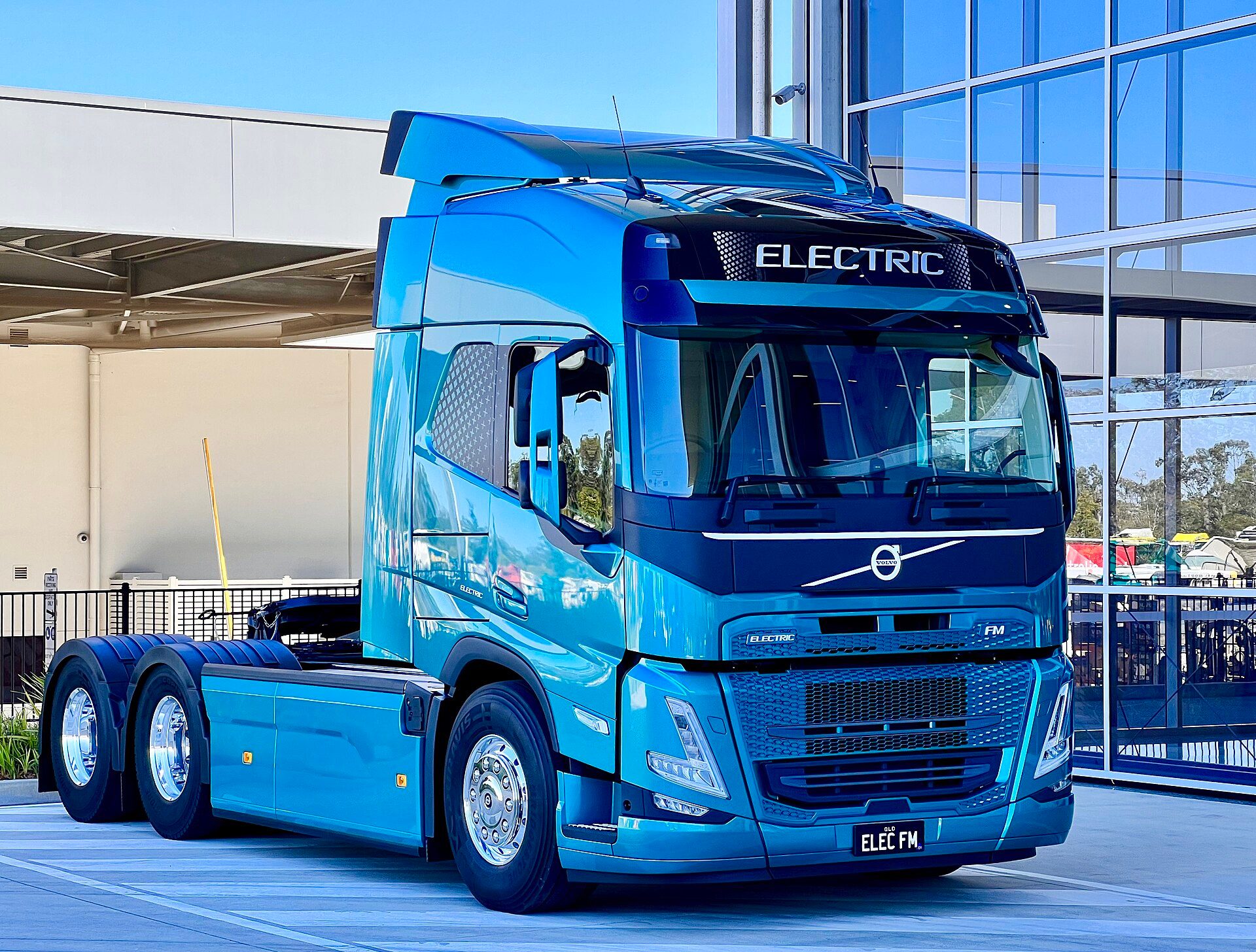
Australia should require that 64% of new rigid trucks and 42% of new articulated trucks sold in 2040 be electric, the Grattan Institute says in a fuel plan published November 22, 2026, backed by A$2.4 billion in purchase vouchers and A$1.1 billion for public truck chargers. The think tank estimates the package would put about 670,000 electric trucks on the road by 2050 and cut trucking's annual diesel use by 5 billion litres. It is a set of recommendations to the federal government, not policy.
The problem it aims at is a supply line. Australia uses 60 billion litres of liquid fuels a year and imports 97% of it, the report says. In the first eight months of the Iran War, Australians paid A$18 billion more for imported fuel than they would have at pre-war prices, Grattan says, and it expects the final bill to be much higher; it also says the war has cost the federal government at least A$3 billion. Its centrepiece is a "sovereign fuel" target: at least 50% of the fuel used by road transport, mining and aviation made in Australia by 2050, a share that locally generated electricity counts toward. Taken together, Grattan says, its measures would cut demand for imported fuel by 18 billion litres in 2050.
Cars, in Grattan's view, are already on their way. Under current policy it projects cars reaching a 74% sovereign fuel share by 2050, and the report notes that battery EVs outsold petrol cars in August, September and October 2026 (see our report on October's sales). Trucks are another matter. Fewer than 2,000 of Australia's more than 830,000 trucks are electric, and electric models took 0.8% of new truck sales in 2025, against 29% in China. Left to current settings, Grattan forecasts 100,000 electric trucks among 1.6 million on the road in 2050.
Target, vouchers, chargers
The sales target would fall on the companies that sell trucks, not the businesses that buy them, with interim steps of 16% for rigid and 10% for articulated trucks by 2030. Grattan prefers it to an emissions standard for new trucks, which it calls much harder to design and enforce for trucks than for cars; overseas, it says, such schemes have taken up to nine years to implement.
The vouchers address price. The government would pay half the extra cost of an electric truck over a diesel one for the first 75,000 sold from 2027. Grattan estimates that gap in 2027 at about A$74,000 for a rigid truck and about A$230,000 for an articulated one, in 2026 dollars, and expects 75,000 to be sold by 2034 under its targets, for about A$2.4 billion. The buyers are small: about 70% of freight operators own a single truck, and 98% are small enterprises on margins of about 2%, the report says.
Charging is the other gap. Australia has nearly 8,000 service stations selling liquid fuels and almost no public chargers built for trucks; the first open-access heavy vehicle charging site, at Laverton North in Melbourne, is due to open at the end of 2026, the report says. Grattan estimates a 20-bay site at about A$26 million and a 165-site national network at about A$4.2 billion. The government would meet no more than half the capital cost, and A$1.1 billion, Grattan says, could unlock half the chargers required in each state.
The upfront premium is familiar from abroad. Grattan says Australian electric trucks can cost about 2.5 times as much as diesel ones (for large rigid trucks; the premium is lower for light-duty models), while the UK's demonstration programme found its funded trucks cost around 2.7 times diesel to buy. Britain has gone the grant route: in March 2026 its Department for Transport announced £1 billion for truck and van grants and depot charging (our report on the UK programme).
Miners and the fuel tax credit
Mining burns a quarter of Australia's diesel, and Grattan's lever there is tax. Miners pay excise of 54 cents a litre on diesel and get it back as a fuel tax credit, worth A$4.6 billion to mining companies in 2024-25. The plan would cap the credit at A$35 million a year per corporate group. Thirty groups claim more than that, all of them miners once rail is excluded, and the A$5.2 billion in credits going to non-mining groups, farmers included, would be unaffected.
Grattan estimates the cap would make electric haul trucks cheaper than diesel over their lifetime by 2030, 12 years earlier than otherwise. By 2050, it says, the cap would cut annual mining diesel use by 3.5 billion litres, and it would save the budget an average of A$3.2 billion a year, or A$76 billion over 2027 to 2050.
Storing fuel versus using less
Storage helps Australia ride out the next shock, Grattan argues, but does not shrink the imports behind it. The federal government's approach, the report says, "is mostly focused on increasing the volume of liquid fuel stored onshore and underwriting ongoing shipments of fuel to Australia." Ministers' August 18, 2026 release lists three major measures underpinning the A$14.8 billion Fuel Security and Resilience Package, announced in the 2026-27 Budget: a A$3.2 billion government-owned reserve of one billion litres of diesel and jet fuel, an extra 10 days of mandatory industry stockholding by 2030, and support for the two remaining domestic refineries to keep operating beyond 2030. The same release opened consultation on a possible demand mechanism for low carbon liquid fuels.
By our arithmetic, the reserve's billion litres of diesel and jet fuel is a fifth of one year's diesel savings from Grattan's truck measures in 2050. Grattan would keep supporting the two refineries while they remain a significant source of sovereign fuel. On storage, it would freeze the volume of petrol held under the stockholding obligation at today's level, treat cutting diesel demand as an alternative to building more storage, and reduce storage requirements over time as reliance on imports falls. Its complaint is that Australia "has no strategy to reduce reliance on imported fuels."
The plan also draws a line between trucks and clean fuels. Grattan says one option the government is considering is letting entities meet clean-fuel obligations by electrifying fuel use instead, and calls that a mistake: it would weaken the signal to build the renewable diesel refineries Australia still needs. "The government should use electrification policy to drive electrification, and clean fuel policy to drive clean fuels," the report says. For aviation, it proposes a mandatory clean fuel target and A$6 billion toward the first clean refineries.
Sources
Primary
- Fuelling the future: The Grattan Fuel Plan for Australia · Grattan Institute
Supporting
- Joint media release: Building Australia's fuel security with strategic fuel reserves and low carbon liquid fuels · Minister for Climate Change and Energy (Australian Government)
Copies of cited sources are retained where available. If a link no longer resolves, request a copy at contact@theduckcurve.com.