 The Duck Curve
NeoVolta's home battery fund, Transaera's DC apartment test, Pascal's $9.3M
NeoVolta's fund is sized for about 700 residential projects, against over 50 homes deployed by September 30; Transaera will publish its apartment data; Pascal's CEO cites a 20% efficiency gain its release does not.
Three home-energy stories from October 21 and 22, 2026: a tax-equity fund that owns home solar and batteries so the homeowner does not have to, a moisture-stripping heat pump moving from Amazon warehouses to an apartment building, and a cooling startup whose heat pump story begins with a drinks fridge.
NeoVolta opens a $40 million fund to own home batteries
NeoVolta Inc. (Nasdaq: NEOV) launched a third-party-ownership financing platform on October 22, 2026, starting with an initial $40 million platform with a tax equity partner that it expects to support approximately 700 residential storage and solar-plus-storage projects. A third party, not the homeowner, owns the equipment; Luminia, NeoVolta's longtime financing and deployment partner, helps manage the platform.
The structure follows the tax credit. The federal Section 25D credit expired for homeowner-owned systems placed in service after December 31, 2025, while the Section 48E credit remains available to the owner of a third-party-owned system, the release notes, citing an Aurora Solar survey in which 55% of installers call third-party ownership their leading residential financing option. Scarce tax equity was one of the obstacles SEIA and Wood Mackenzie cited when they cut their 2026 residential solar outlook. NeoVolta does not name its tax equity partner.
The fund is sized for about 700 projects. As of September 30, NeoVolta had deployed projects in over 50 homes. The initial pipeline includes contracted projects for income-qualified California homeowners eligible for the state's Self-Generation Incentive Program rebates, and NeoVolta plans to add its NV Wave battery to the offering beginning in November 2026. It plans to extend the platform to commercial and industrial customers as its Pendergrass, Georgia, factory ramps production; that plant belongs to NeoVolta Power, the majority-owned unit that lined up 9 GWh of SK On cells in August for 2027 through 2031.
Transaera tests its heat pump in a DC apartment building
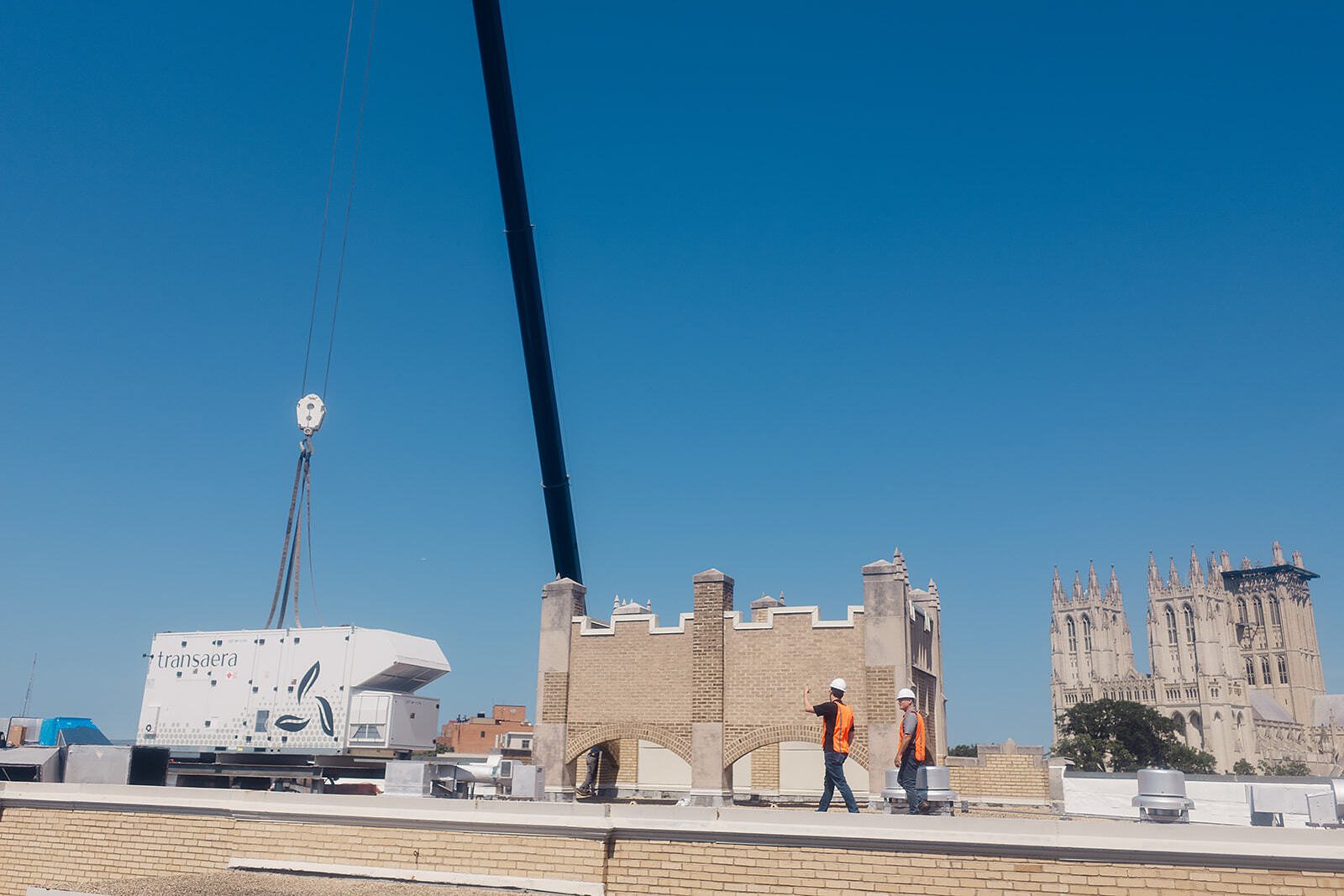
Transaera, a Somerville, Massachusetts, company whose products already run across Amazon's logistics network, announced on October 22, 2026 its first multifamily residential installation, in a Washington, D.C., building owned by what it calls the nation's largest apartment real estate investment trust. The unit will operate alongside a conventional system in the same building, and Transaera says the resulting performance data will be published for other building owners.
The pitch is humidity. Conventional systems overcool air well below the target temperature to wring out moisture, then reheat it; Transaera's heat pump uses metal-organic frameworks to remove moisture before cooling, which the company reports cuts seasonal energy use by 40% compared with conventional systems. The release's own boilerplate trims that to "up to 40%," which is what the side-by-side is for.
"Building owners deciding how to electrify need operating cost reduction and want to see performance data from a building like theirs before they commit," said Sorin Grama, Transaera's CEO and co-founder. The project has a $125,000 grant from the National Deployment Grant Fund of The Clean Fight, a New York nonprofit. The release ties the timing to D.C.'s Building Energy Performance Standards, which it says require privately owned buildings of 50,000 square feet or more to meet minimum energy performance targets by the end of 2026, extending to buildings of 25,000 square feet or more in the cycle that begins in 2027.
Pascal raises $9.3 million for solid refrigerants, starting with drinks coolers
Pascal, a Watertown, Massachusetts, startup founded in 2023 out of Jarad Mason's research group at Harvard, said on October 21, 2026 that it had raised $8.5 million in venture funding co-led by Sazze Partners and LB Investment, with KDB Silicon Valley participating, plus $839,000 in grants including $500,000 from ARPA-E. That brings its total funding to $17.3 million. The money supports its initial deployments with a multinational beverage manufacturer, its first commercial partner, using a pilot refrigerator Pascal says it recently completed as a working prototype.
Pascal's systems compress carbon dioxide into a cartridge holding a sponge-like material, which CEO Adam Slavney says is proprietary; the gas warms the material as it works into the pores, and running the cycle in reverse absorbs heat, according to TechCrunch's account. Because the refrigerant is solid, it cannot escape to the atmosphere the way the HFC gases in today's systems do. "We've cycled it up to 300,000 times," Slavney said. "It's the equivalent of a year or so in operation."
The efficiency claim depends on where you read it. Slavney told TechCrunch a refrigerator or heat pump using Pascal's material promises to be around 20% more efficient than existing models. The company's release has him saying Pascal has "proved that solid refrigerant systems are just as efficient as a conventional vapor-compression system doing the same job," with further improvements expected. The heat pump in TechCrunch's headline is, for now, a beverage cooler: Pascal says its current commercial work is focused on beverage cooling, and that the technology can scale up to large buildings, including data centers.
Sources
Primary
- Pascal Secures Additional $9.3M to Advance Initial Commercial Deployments of its Next-Generation Cooling Technology · Pascal
- Transaera to Install Its Heat Pump Against a Conventional System in First Multifamily Residential Deployment · Transaera (PR Newswire distribution)
- NeoVolta Launches a Third-Party-Ownership Financing Platform to Drive Residential and C&I Energy Storage Revenue Growth · NeoVolta Inc. (GlobeNewswire distribution)
Supporting
Copies of cited sources are retained where available. If a link no longer resolves, request a copy at contact@theduckcurve.com.