 The Duck Curve
KIMM demonstrates ammonia heat pump cooling from 40°C waste heat
Samjung Tech built the 10 kW-class prototype; its electrochemical compressor, developed with Chung-Ang University, has no mechanical moving parts, and KIMM says the redesigned bed's specific cooling power is more than twice that of comparable international technologies.
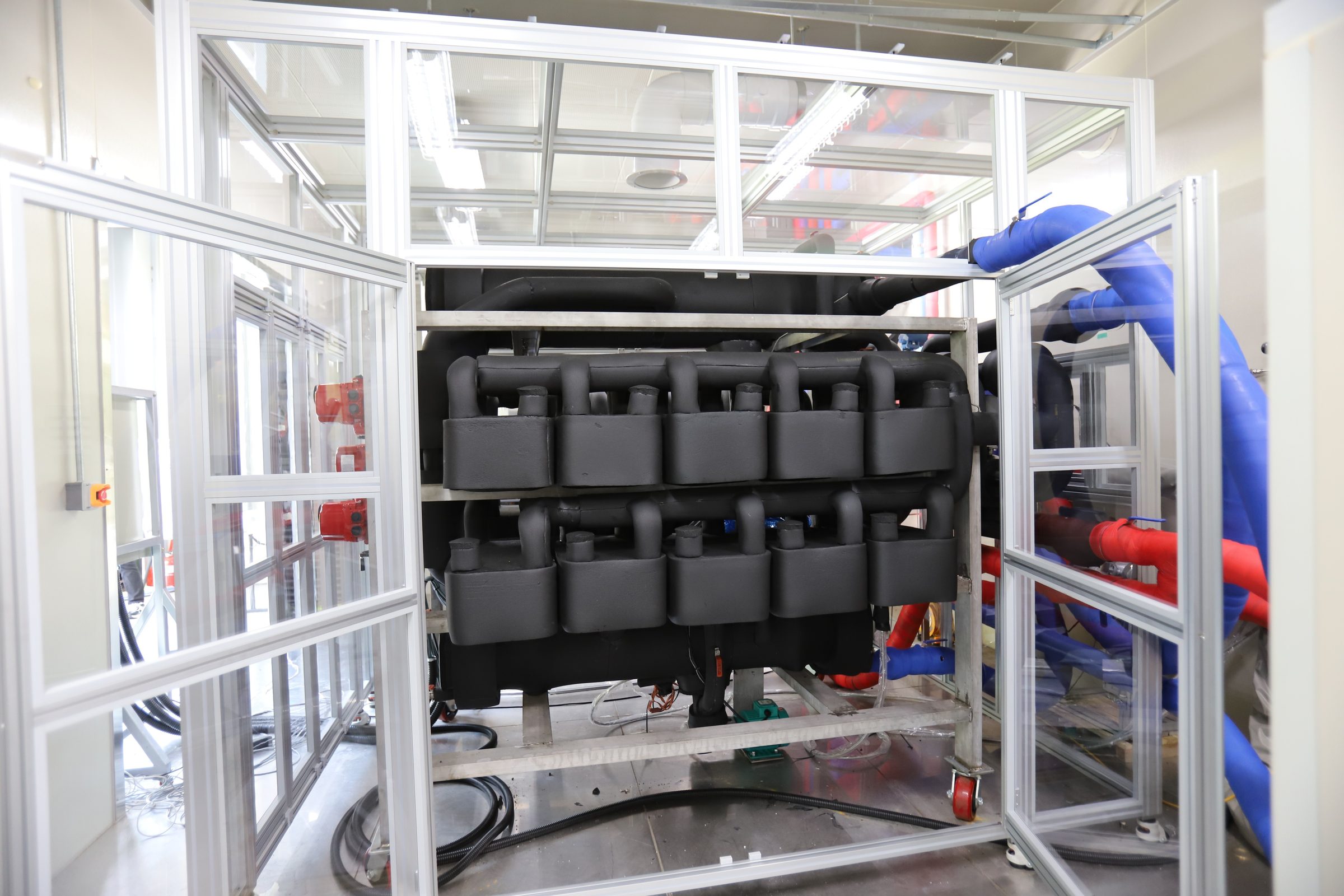
A heat source barely warmer than a hot tub can now drive an air conditioner, according to the Korea Institute of Machinery and Materials (KIMM). The government-funded institute announced on August 5, 2026 that a team led by principal researcher Young Kim of its Heat Pump Research Center demonstrated a chemical adsorption heat pump that provides cooling from waste heat of approximately 40°C, the grade that factories and data centers discard in bulk. Conventional adsorption cooling systems require heat sources above 70°C, per the release.
Samjung Tech Co., Ltd. manufactured the 10 kW-class prototype, and Chung-Ang University professors Minseong Kim and Dongkyu Kim contributed an electrochemical compressor with no mechanical moving parts. The work ran under the Alchemist Project, funded by the Korea Institute of Energy Technology Evaluation and Planning (KETEP); KIMM says the research team produced 74 SCI papers, 67 patent applications, and 29 registered patents through the project.
How a 40°C heat source makes cold
Conventional air conditioners burn electricity to compress refrigerant. In KIMM's system, per the release, waste heat is the energy source: heat drives ammonia out of a chemical adsorption bed, and the electrochemical compressor raises the vapor's pressure further by pumping it through an ion-conducting membrane, as trade outlet Natural Refrigerants describes the cycle. From there the ammonia behaves like any refrigerant, condensing, expanding, and evaporating, and the evaporation supplies the cooling.
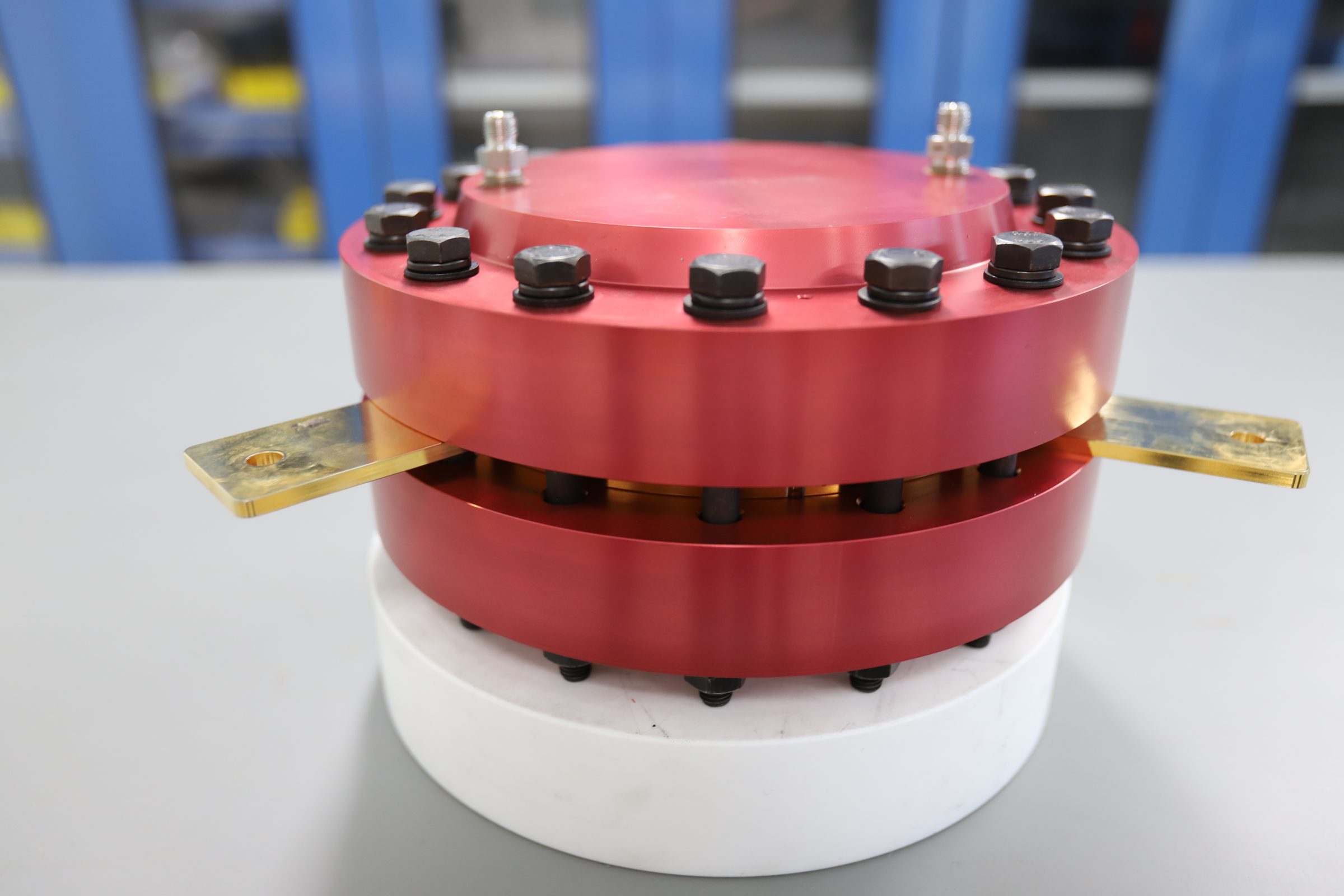
The adsorption bed is where KIMM claims its record. The institute says the redesigned bed achieves a specific cooling power of 346.5 W/kg, which it calls more than twice the performance of comparable international technologies. Because the compressor has no mechanical moving parts, KIMM says it uses less energy than mechanical compression and runs with virtually no noise or vibration, suiting hospitals, schools, and residential areas. The release also notes the working fluid is ammonia, a natural refrigerant, which it says keeps the system compliant with international refrigerant regulations.
What KIMM has not said
The release states no efficiency figure: there is no coefficient of performance for the prototype, and the 346.5 W/kg number describes the redesigned bed, in the release's own framing, rather than whole-system performance. Natural Refrigerants notes that KIMM has not specified the prototype's cooling-side configuration or output temperature, nor the material in the redesigned bed. Young Kim says the team is running demonstration tests with the 10 kW-class prototype and plans further research toward a field demonstration; no commercialization timeline is given.
Why data centers keep coming up
Both KIMM and its trade coverage frame the device around data centers, and the temperatures explain why. Air-cooled data centers typically shed waste heat at around 25 to 35°C, below even this system's threshold, while liquid-cooled facilities can produce waste heat as high as 50°C, according to Natural Refrigerants, which notes that coolant leaves the cold plates of NVIDIA's new Rubin AI servers at 55°C. Heat in that range has few takers today; a machine that turns it into chilled water would let a server hall help cool itself.
Regulation is beginning to demand exactly this kind of reuse. The European Union's revised Energy Efficiency Directive (2023/1791) requires member states to ensure that data centres with a total rated energy input exceeding 1 MW "utilise the waste heat or other waste heat recovery applications" unless they can show it is not technically or economically feasible.
Heat pumps usually enter The Duck Curve's coverage as home appliances, most recently in California's heat pump permitting bill. KIMM's machine points the same thermodynamics at industrial waste streams, and in the opposite direction: where a home heat pump spends electricity to move heat, this one spends discarded heat to make cold.
Sources
Primary
- Waste Heat Becomes Cooling Energy… KIMM Develops Next-Generation Heat Pump System · Korea Institute of Machinery and Materials (KIMM)
Supporting
- Directive (EU) 2023/1791 on energy efficiency (recast) · EUR-Lex (Official Journal of the European Union)
- KIMM Demonstrates Ammonia-Based Adsorption Heat Pump for Cooling Using 40°C Waste Heat · Natural Refrigerants (ATMOsphere)
Copies of cited sources are retained where available. If a link no longer resolves, request a copy at contact@theduckcurve.com.