 The Duck Curve
Brazil sets its first battery capacity auctions for December 2 and 4
ANEEL approved the auction notices on October 27, 2026: 15-year contracts for new storage from August 2028, with the domestic-content auction held first.
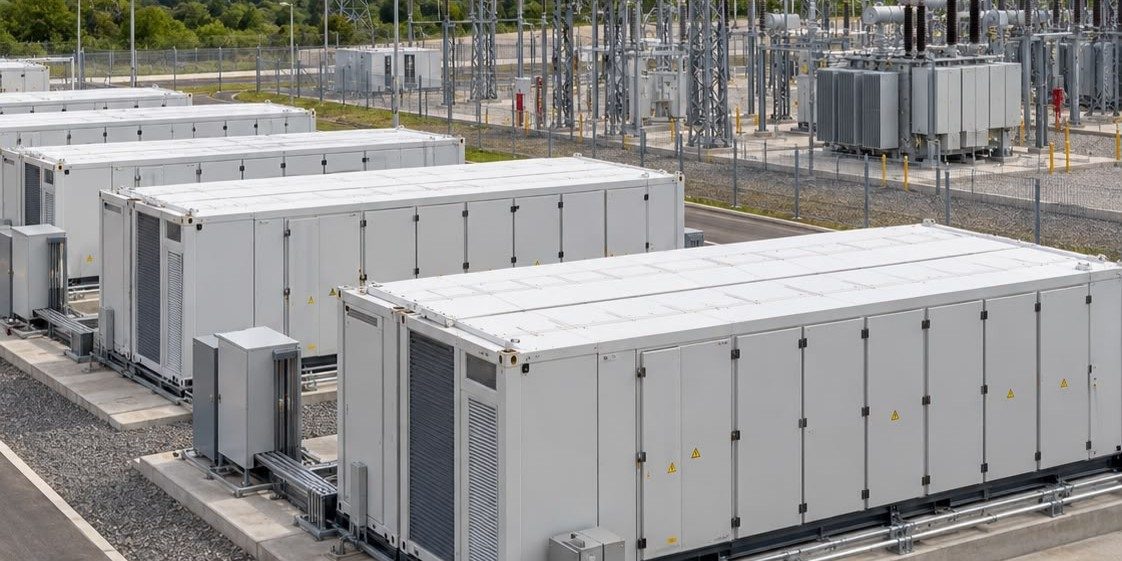
Brazil will auction capacity from grid batteries for the first time on December 2 and 4, 2026. The board of the electricity regulator ANEEL approved the notices for both auctions, editais 05/2026 and 06/2026, at an extraordinary public meeting on October 27, the agency said. Each buys power availability in megawatts from new battery systems, on 15-year contracts with supply starting August 1, 2028, and both will be held entirely online.
The first auction is the protected one, and the stricter one. Notice 05/2026, for December 2, sets domestic-content criteria for the equipment and minimum technical requirements; notice 06/2026, for December 4, has no such provision, according to ANEEL. Under the guidelines the Ministry of Mines and Energy published on June 3 (Portaria Normativa 136/2026), the domestic auction goes first and has priority in meeting the demand, subject to Brazil's measured domestic manufacturing capacity and the quantity set for the grid's capacity needs. Content qualifies through accreditation in the CFI system of the development bank BNDES, and a winner in that auction signs its contract only after presenting BNDES paperwork proving it.
What the batteries must do
The ministry's June guidelines list the main technical requirements as at least 30 MW of availability, continuous operation for at least four hours, total efficiency of at least 85%, a full recharge within six hours, and grid-forming capability among the connection requirements set by grid operator ONS and EPE. ANEEL's release does not say how that list applies to the December 4 notice, which it says has no such provision. The product is sold as power, but four hours at full output means each contracted megawatt comes with at least four megawatt-hours behind it, by our arithmetic (power versus energy).
Winners in both auctions sign up to deliver maximum power for four hours per cycle, up to two cycles a day and no more than 366 cycles a year, and to recharge fully, from 0% to 100%, within six hours, according to ANEEL. They charge and discharge on ONS's orders, both in daily scheduling and in real-time operation, per the ministry. By our arithmetic, the annual cap works out to about one cycle a day on average, so every day with two cycles has to be balanced by a day without one.
Payment is a fixed annual revenue, in reais per year, paid in twelve monthly installments that can be cut based on operating performance in earlier months. Projects connected at points on the grid that EPE and ONS studies show add system benefits can receive a locational bonus, which counts only for competing in the auction, per the ministry.
Cheaper on paper, and the generators pay
The draft notices drew nearly 2,500 suggestions in public consultation, and the final ones arrive with a lower cost basis. ANEEL updated its costs to the PDE 2035 ten-year plan, which it calls the most recent official reference, and cut the reference investment from R$9.8 million per MW to R$6.0 million per MW, 39% less by our arithmetic. The bid guarantee (R$60,000 per MW) and the performance guarantee (R$600,000 per MW) fell with it, as did the minimum net worth required, which ANEEL says lowers the barrier to entry. Guarantees are calculated on contracted power availability; for a project at the ministry's 30 MW minimum, the bid guarantee comes to R$1.8 million, by our arithmetic.
The bill goes to generators. ANEEL says the cost of the capacity contracts will be split only among electricity generators, under its regulations. The ministry pitches the batteries partly as a way to manage surplus renewable output; we read the generators-only split as putting the wind and solar plants producing that surplus among the payers.
297 GW at the door
Sellers are not scarce. EPE closed registration with 6,091 projects totaling 296,807 MW, the planning agency said on August 3, a record for Brazilian power-sector auctions. That averages about 49 MW per project by our arithmetic, comfortably above the ministry's 30 MW floor. Registration ran from June 15 to July 31, 2026, per the ministry.
EPE is careful to say what the number is not. Registered projects are not the ones fit to compete; each now goes through EPE's technical qualification, and only after that will the count and capacity eligible for the auctions be known. EPE calls the process the first Brazilian auction dedicated to buying large-scale battery storage.
Other countries have run first battery tenders of their own: Saudi Arabia's ended in August with signed agreements for 2,000 MW of four-hour storage (Saudi Arabia signs 2 GW of battery storage deals in its first BESS tender). Brazil's will be settled over two days in December, with the first contracted megawatts due on August 1, 2028.
Sources
Primary
- Editais Nº 05/2026 e Nº 06/2026 dos leilões de Armazenamento de Energia são aprovados pela ANEEL · Agência Nacional de Energia Elétrica (ANEEL)
Supporting
- MME publica diretrizes para leilão inédito de armazenamento de energia em baterias no Brasil · Ministério de Minas e Energia (MME)
- LRCAP Armazenamento 2026: EPE registra recorde de projetos cadastrados · Empresa de Pesquisa Energética (EPE)
Copies of cited sources are retained where available. If a link no longer resolves, request a copy at contact@theduckcurve.com.