 The Duck Curve
Ember wants India to subsidise batteries for rooftop solar homes
In Ember's model, a 5 kWh battery on a 3 kW home system cuts daytime exports 85–90% but stretches payback from 3.3 years to around nine; a 50% battery subsidy brings it to 6.3.
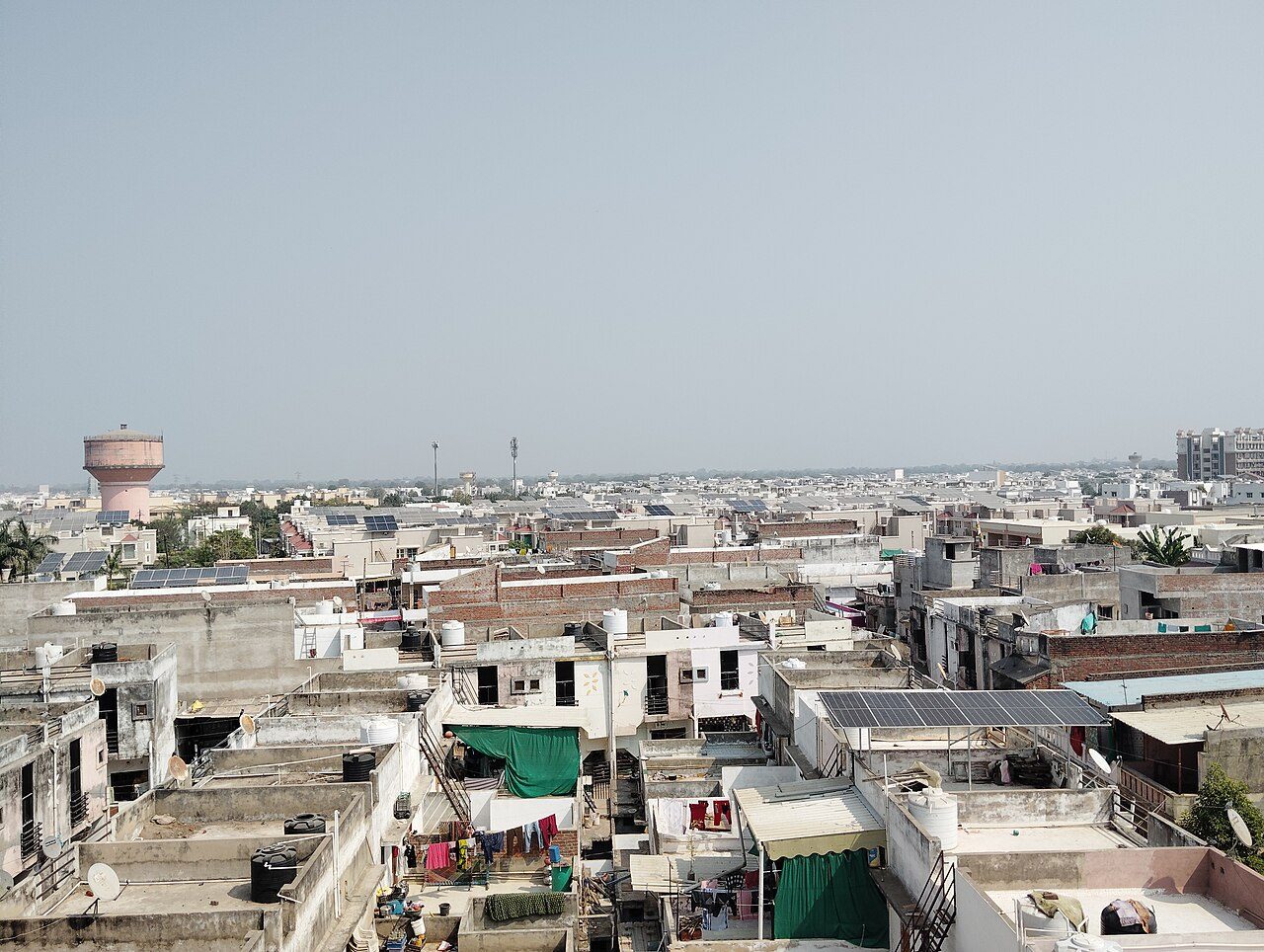
Adding a 5 kWh battery to a typical 3 kW rooftop solar system on an Indian home would cut the electricity it sends to the grid during the day by 85–90%, according to an analysis Ember published on October 22, 2026. Under India's net metering rules the household would gain nothing from it: in the think tank's model, the battery stretches the system's payback from 3.3 years to around nine.
The household, in effect, already has a battery. Ember describes the grid as a "nearly free virtual battery" for residential rooftop owners: surplus solar goes out at midday, comes back after dark, and net metering credits the two units one for one. A home battery does the same job at the owner's expense. (The 3 kW is the panels' power rating and the 5 kWh is the energy the battery holds; kW vs kWh covers the difference.)
The volumes are getting large enough to matter. India's rooftop solar capacity reached 30.7 GW by July 2026, nearly 19% of the country's 165 GW of installed solar, up from around 6% in fiscal 2019, per Ember. Residential systems under PM Surya Ghar: Muft Bijli Yojana, the central subsidy scheme launched in 2024, account for 14.9 GW of that across 5 million households. Homes use little power at midday and more in the evening, so they export a larger share of their output than commercial and industrial owners, who size systems to their own load.
Kerala shows where that leads. Its 2.3 GW of rooftop solar equals 35% of the 6.48 GW evening peak it recorded between April and July 2026, against 11% nationally, and because that peak falls outside solar hours, Ember says the panels lower daytime demand while "providing no support in serving the evening peak." It is the What is the duck curve? arriving one roof at a time.
Who pays for the free battery
Net metering's costs land on the distribution companies, and partly on customers without panels. On India's day-ahead market, Ember says, prices fall to the floor, about INR 1.56 per unit in July 2026, during hours of high solar output and rise roughly six-fold to the INR 10 cap in the evening. A distribution company may therefore credit cheap daytime exports against evening power it has to buy at a much higher price.
Tariff slabs add a second leak. Because household tariffs rise with consumption, the units netted off a bill are the most expensive ones. In Ember's Maharashtra example, a household using 450 units a month pays INR 16.64 per unit in energy and wheeling charges for its last 150 units; a 3 kW system generating about 350 units drops its billed consumption to around 100 units, charged at INR 5.56 per kWh. Ember says the resulting revenue loss is partly borne by consumers without rooftop solar, "many of whom are lower-income households unable to install it."
The scheme's own pitch included those exports. The government's March 13, 2025 release marking 1 million homes listed among the scheme's benefits that households would "have the opportunity to earn extra income by selling surplus power generated by their rooftop solar systems to DISCOMs." Ember's proposal for the scheme's next round is equipment for selling less of it.
The subsidy Ember wants
Ember's model household uses around 350 units a month. Its 3 kW system costs INR 165,000, or INR 87,000 after the INR 78,000 PM Surya Ghar subsidy, and pays back in 3.3 years. In Ember's model, the battery and a hybrid inverter cost the owner INR 140,000 more, raising the household's cost after the solar subsidy from INR 87,000 to INR 227,000, and under net metering they earn the owner nothing extra. They shift 1,600–1,800 units a year from daytime exports to evening use. "The consumer receives no incremental financial benefit, while the grid gains a substantial operational benefit," the analysis says. Payback nearly triples, to around nine years in the model ("over nine" in Ember's summary and press release). A 50% subsidy on the battery's capital cost, INR 70,000 in the model, brings it to 6.3 years.
Ember proposes delivering that subsidy through the next tranche of PM Surya Ghar. Subsidising hybrid systems for half of the current scheme's 10 million target, 5 million households, would create 15–25 GWh of distributed storage for around INR 280 billion, by its estimate. States could follow Tamil Nadu and Bihar, which top up the central subsidy, but aim the top-up at the battery cost gap rather than at solar alone.
Ember's case for building now also leans on rules that might change. As banking is capped, it says, "the value of storing surplus daytime generation would increase," and batteries would prepare households for such changes. Its two reform scenarios cut both ways for the owner. With a 40% cap on banked exports and the rest paid at INR 2/kWh, a solar-plus-battery system pays back in 9.4 years unsubsidised and 6.5 years with the 50% battery subsidy, slightly longer than the around nine and 6.3 years under current net metering. If banked solar could not be drawn between 6 and 10 pm and a 20% peak surcharge applied, payback would shorten to 8.3 years without a subsidy and 5.7 years with one. Batteries would also let households take part in demand response programmes, Ember says.
Some of that is already in motion. Ember says Kerala and Maharashtra have begun exploring rooftop solar-plus-battery systems, Uttar Pradesh issued a tender for hybrid rooftop systems on government buildings, and the Central Electricity Authority suggested in early 2025 that distribution companies could mandate two hours of storage alongside rooftop solar. The CEA's September 2026 draft storage mandate applies to ground-mounted solar and onshore wind plants. Ember also points to California, which paired a move from net metering to net billing with storage incentives; Berkeley Lab found batteries paired with 74% of new California home solar systems in 2025.
Outlook
The current scheme's household goal runs to 2026-27, per the government's March 2025 release, so the shape of any next tranche is the decision Ember is trying to influence. Of the two rule changes it modelled, only the peak-hour restriction with a surcharge makes the subsidised battery pay back faster than under current net metering, at 5.7 years against 6.3. A banking cap would leave it slightly slower, at 6.5 years, which makes the cap an argument for batteries as preparation rather than as a better deal for the owner. Both reforms are scenarios in Ember's model, which describes them as possible future changes.
⚠ The Outlook extrapolates from the PM Surya Ghar target year in the government's March 13, 2025 release and from the payback figures Ember's October 22, 2026 analysis gives for current net metering and for its two reform scenarios.
Sources
Primary
Supporting
- PM Surya Ghar: India's Solar Revolution; Muft Bijli Yojana Crosses Milestone of 10 Lakh Installations · Press Information Bureau, Government of India (Ministry of New and Renewable Energy)
- Home batteries could cut Indian households' daytime rooftop solar exports by 85–90%, but would need incentives to make it financially viable · Ember
- Rooftop solar plus battery model (accompanying Excel sheet to Plugging storage into India's rooftop solar revolution) · Ember
Copies of cited sources are retained where available. If a link no longer resolves, request a copy at contact@theduckcurve.com.