 The Duck Curve
India drafts storage mandate for ground-mounted solar and onshore wind
The Central Electricity Authority's draft would require ground-mounted solar and onshore wind plants commissioned after July 1, 2027 to carry co-located storage of at least 10% of capacity for two hours, four hours for those commissioned from July 1, 2029 through June 30, 2031; every renewable plant commissioned after July 1, 2027 would also need grid-forming control on at least 15% of its inverters.
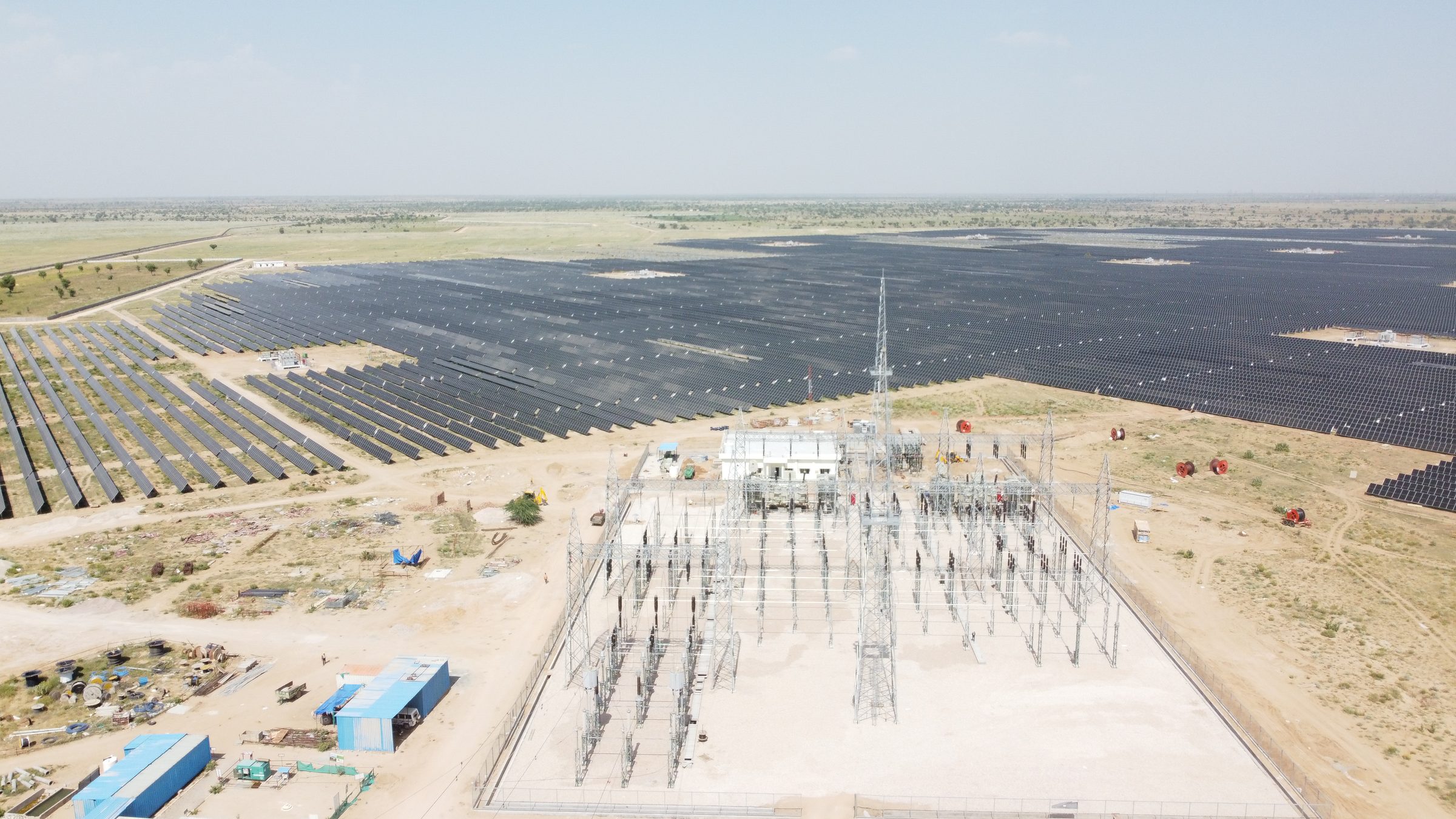
India's Central Electricity Authority published a draft second amendment to its Technical Standards for Construction of Electric Plants and Electric Lines on September 3, 2026 that would require every ground-mounted solar plant and onshore wind plant commissioned after July 1, 2027 to be equipped with co-located energy storage of at least 10% of the plant's installed capacity, with a minimum duration of two hours. The draft's own worked example: a 100 MW solar plant would need at least 10 MW of storage for two hours, which is 20 MWh (kW vs kWh). For plants commissioned between July 1, 2029 and June 30, 2031 the minimum duration rises to four hours at the same 10% of capacity. Comments are due by October 4, 2026.
The same new clause, regulation 106B(20), would also require renewable energy power plants commissioned after July 1, 2027 to have at least 15% of their inverters under grid-forming control, and every power conversion system of a battery energy storage system to be grid-forming, to meet the technical requirements in the CEA's connectivity standards. A final proviso lets the Authority change either percentage "from time to time." The notification, file number CEA-TH-17/1/2021-TETD, is made under clause (e) of section 177(2) of the Electricity Act, 2003; it says the draft will be taken into consideration after 30 days from the date copies of the gazette notification are made available to the public, and the accompanying public notice sets the October 4 deadline for objections and suggestions. The principal regulations date from December 23, 2022, and the amendment would come into force on the day the final version is published in the Official Gazette.
The four-hour tier is the only one with an end date. It covers plants commissioned from July 1, 2029 through June 30, 2031, and the draft does not say whether that tier is to be extended past June 2031 or what replaces it. The two-hour proviso has no end date: on its plain text it reaches any ground-mounted solar or onshore wind plant commissioned after July 1, 2027, in 2032 as much as in 2028, so the 10% floor stands whether or not the four-hour step is renewed. The only other clause on the subject is the one reserving the Authority's right to revise the percentages from time to time.
The mandate hardens a recommendation. In February 2025 the CEA issued an advisory on co-locating storage with solar projects; according to a Ministry of Power statement released through the Press Information Bureau on March 30, 2026, that advisory recommended storage of at least 10% of installed solar capacity for a minimum duration of two hours "to improve dispatchability of solar power." The draft turns the recommendation into a construction standard, extends it to onshore wind, and adds the four-hour step. The reason for pairing storage with solar is the shape the duck curve describes: output that peaks at midday and is gone by the evening demand peak. The ministry statement, which describes its list as measures to promote the development and deployment of energy storage, also sets out the demand side: the CEA's National Electricity Plan projected a need for 208 GWh of battery storage by 2030, 35.8 GWh of battery storage was under construction as of March 2026, two viability gap funding schemes launched in March 2024 and June 2025 support about 43 GWh, and inter-state transmission charges are waived for co-located battery projects commissioned up to June 2028.
The fleet the rule would apply to is large. PV Tech reported, citing JMK Research & Analytics' second-quarter 2026 update, that India had 288 GW of renewable capacity as of June 30, 2026, including 162 GW of solar and 57 GW of wind, with a further 149 GW of solar, wind, hybrid and storage projects in the pipeline. PV Tech also pointed to a June 2026 Solar Energy Corporation of India tender for 1,200 MW of firm and dispatchable renewable capacity backed by 4,800 MWh of co-located storage, which works out to four hours at full output, and to a 1 GW round-the-clock renewable tender the agency awarded in August 2026, for which PV Tech gives no storage figure. Per megawatt, the June tender's storage requirement is 20 times the draft's two-hour minimum.
Outlook
If SECI's June tender is representative of what the central buyer already asks for, the mandate's bite falls elsewhere: on ground-mounted solar and onshore wind procured without any storage requirement, whether by state utilities, open-access and captive buyers, or merchant developers. The draft draws no distinction among them; it attaches to the plant, not the contract. The 10% figure is also the one the CEA has told itself it can change from time to time, and the schedule already builds in one increase, to four hours, for plants commissioned from July 2029. Ember's August 2026 report on batteries and solar estimated that the world's expected 2026 battery additions could shift up to 34% of new daily solar generation into non-sunny hours; a two-hour, 10% pairing shifts far less than that per plant, which reads as a floor meant to establish the habit rather than the amount. Comments close on October 4, 2026. The draft's own text marks where it expects pressure: the one element the Authority reserves the right to change is the pair of percentages.
⚠ The Outlook extrapolates from the draft regulation's own text, PV Tech's account of SECI's June and August 2026 tenders, and Ember's August 2026 report on batteries and solar.
Sources
Primary
- Draft Central Electricity Authority (Technical Standards for Construction of Electric Plants and Electric Lines) 2nd Amendment, Regulations, 2026: public notice and draft notification · Central Electricity Authority, Government of India
Supporting
- Advisory on co-locating Energy Storage Systems with Solar Power Projects to enhance grid stability and cost efficiency · Central Electricity Authority
- Development of Battery Energy Storage Systems (Ministry of Power, Press Information Bureau) · Press Information Bureau, Government of India (Ministry of Power)
- India's CEA proposes mandatory storage for new solar, wind projects from 2027 · PV Tech
Copies of cited sources are retained where available. If a link no longer resolves, request a copy at contact@theduckcurve.com.