 The Duck Curve
South Coast AQMD adds $60.2 million to GO ZERO with lower home rebates
The October 2, 2026 vote funds a second round of rebates for heat pumps, and now solar water heating, from furnace and water heater mitigation fees, after the $21 million pilot's single-family portal closed on September 4, 2026.
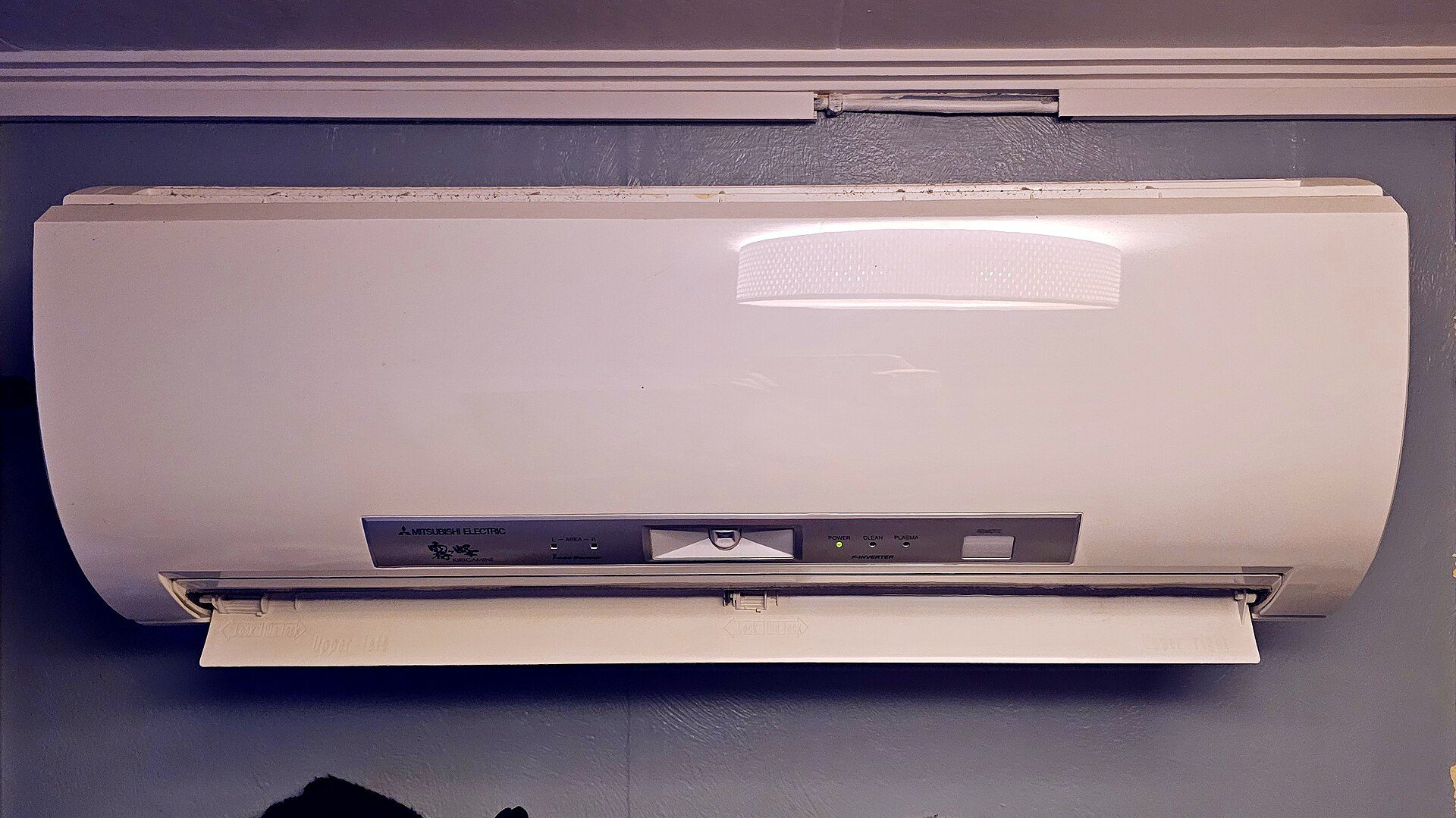
The South Coast Air Quality Management District's Governing Board approved Phase 2 of its GO ZERO rebate program on October 2, 2026, with up to $60.2 million for replacing gas furnaces and water heaters with heat pumps for single-family homes, multifamily properties and small businesses, the district announced the same day. The money comes from the appliances the program exists to retire. Per the board letter for agenda item 11, it is drawn from mitigation fees collected under the alternative compliance options of Rule 1111 and Rule 1121, the district's nitrogen oxide rules for gas furnaces and water heaters, and held in the Air Quality Investment Fund. Every single-family and multifamily line of the Phase 2 rebate table is lower than the $21 million pilot's.
GO ZERO launched on September 3, 2025, and its multifamily rebates were fully reserved within two weeks, per the board letter. The single-family and small business programs were paused on February 6, 2026 for program evaluation, resumed on August 28, 2026, and the single-family portal closed again on September 4, 2026 as the reopened funding ran down. The pilot incentivized over 3,000 single-family installations and over 700 multifamily installations; the small business rebate, by contrast, had received two applications and is still taking them. Board Chair Michael A. Cacciotti said GO ZERO showed "just how eager our communities are to move away from polluting gas appliances" when the district makes it more affordable to do so, per the release.
The allocation, the rebates and the fees behind them
The board letter allocates up to $20 million to the Electric & Gas Industries Association to continue the single-family rebate program, up to $20 million to Willdan Energy Solutions to continue the multifamily program, and up to $20 million more for the Executive Officer to allocate in $5 million increments among single-family, multifamily and small business rebates or outreach as each is depleted; the release describes that third $20 million more narrowly, as money "to allocate to either category based on demand." Community Connections, LLC gets up to $200,000 for outreach, which the letter describes two ways it does not reconcile: the recommended action says "to continue outreach in all four counties," while the proposal section says the money would "Expand Community Connections, LLC's outreach to include Riverside and San Bernardino Counties." The district reimburses its General Fund for administration at up to five percent of Phase 2 funding, not to exceed $3,010,000. At least 75 percent of the single-family and multifamily rebate funding is dedicated to applicants from overburdened communities identified under Senate Bill 535.
The per-unit amounts fall. In the board letter's table, a single-family heat pump water heater goes from $1,000 in the pilot to $500, and from $2,000 to $1,000 in overburdened communities. Single-family heat pump HVAC goes from $1,500 to $500 for systems under 3 tons and $1,000 over 3 tons, and in overburdened communities from $3,000 to $1,000 and $2,000. Multifamily heat pump water heaters go from up to $2,100 to $500, and multifamily HVAC from up to $2,000 to $500 under 3 tons and $1,000 over, under a $300,000 cap per property; a table footnote keeps lower rebate levels for common areas. The letter's stated reasons cover two of those cuts, aligning the multifamily water heater rebate with single-family and reflecting the lower cost of smaller systems "including mini-split heat pumps and window heat pumps"; the table lowers the rest as well. The release frames the same numbers as $500 to $1,000 for most single-family households, $1,000 to $2,000 in overburdened communities, and $500 to $1,000 per unit for multifamily.
Three other changes come with the money. Solar water heating, zero-emission only, becomes eligible at a similar rebate level to heat pump water heating. Multifamily reservations will require a project already initiated, with a signed sales agreement, and a contractor will be able to apply for up to three properties every six months, a limit the letter says is meant to stop any single entity from reserving most of the funds. And the installation eligibility date moves: the board letter allows only units installed after September 4, 2026, the date pilot funding was depleted, while the release's footnote says units installed on or after September 4, 2026 will be eligible. The program page says the single-family and multifamily portal relaunch is forthcoming and that new applications are not currently being accepted; the release says the reopening date will be posted there.
The board approved $60,200,000 whose Rule 1111 contract line its own agenda and board letter state differently. The meeting agenda puts the Rule 1111 contract authority at $58,360,719 and the board letter at $55,350,719, each beside $4,849,281 from Rule 1121; by our arithmetic the board letter's pair sums to $60,200,000 and the agenda's does not, even though the agenda's own item names $60,200,000 in the sentence before.
The district is buying heat pumps with fees that gas-appliance makers paid to skip a NOx limit, most of them under an option that has since closed. Rule 1111 let a manufacturer of fan-type central furnaces "elect to pay a per unit mitigation fee in lieu of meeting the 14 nanogram/Joule NOx emission limit" in its Table 1, but only until the end dates in its Table 2: September 30, 2019 for condensing and non-condensing furnaces, September 30, 2021 for weatherized furnaces, and September 30, 2030 for mobile home furnaces, the one category still open. Rule 1121 defines its mitigation fee as monies collected from water heater manufacturers, placed in a restricted fund and used to fund emission reduction programs targeted at equivalent NOx reductions, sets it at $3.00 per water heater sold on and after January 1, 2005, and gives it no end date. Phase 2 draws first on the Rule 1121 money and then on Rule 1111, per the board letter. The district used the same mechanism on September 4, 2026, when its board opened up to $73,135,300 of warehouse mitigation fees to zero-emission trucks. GO ZERO rebates may be combined with other eligible incentives, the release says; the state's heat pump permitting law, SB 222, signed September 28, 2026, requires asynchronous inspections for heat pump installations statewide beginning July 1, 2027.
Sources
Primary
- Board Letter, Agenda No. 11: Approve Phase 2 of GO ZERO Incentive Program (Governing Board meeting of October 2, 2026) · South Coast Air Quality Management District
- South Coast AQMD Expands Popular GO ZERO Program with $60 Million in New Funding · South Coast AQMD via PR Newswire
Supporting
- Rule 1121, Control of Nitrogen Oxides from Residential Type, Natural Gas-Fired Water Heaters · South Coast Air Quality Management District
- Rule 1111, Reduction of NOx Emissions from Natural-Gas-Fired, Fan-Type Central Furnaces · South Coast Air Quality Management District
- Agenda, Hybrid Governing Board Meeting, October 2, 2026 · South Coast Air Quality Management District
- GO ZERO: Incentive Program for Zero-Emission Space and Water Heating Appliances · South Coast Air Quality Management District
Copies of cited sources are retained where available. If a link no longer resolves, request a copy at contact@theduckcurve.com.