 The Duck Curve
Colorado Springs votes 7-2 for grid access or demand charges on new solar
Residential and small commercial agreements from April 1, 2027 pay a $1-a-day Grid Access Charge or a per-kW demand charge; Utilities puts the average residential net metering bill about $38 a month above the frozen 2027 rates either way.
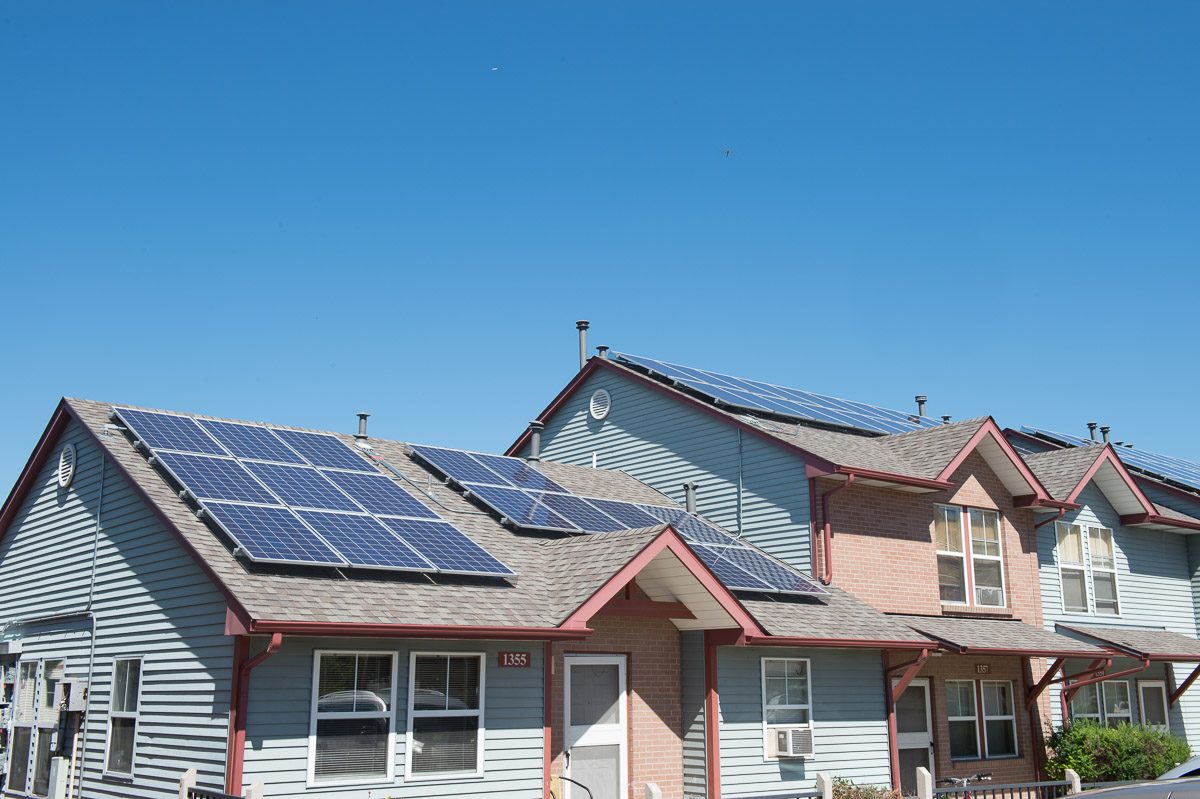
The Colorado Springs City Council voted 7-2 on September 22, 2026 to adopt Resolution 81-26, rewriting Colorado Springs Utilities' net metering rates. Residential and small commercial customers with net metering agreements dated on or after April 1, 2027 will be served under one of two new options, an Energy Wise time-of-day rate with a $1.00-per-day Grid Access Charge or a demand-charge rate; medium and large commercial net metering customers take the demand option, and industrial net metering customers on frozen rates move to the Energy Wise standard options. Earlier residential and commercial agreements can stay on the current frozen rates until April 1, 2032, and the eligible system cap rises from 120% to 200% of annual kilowatt-hour usage on the new options. Councilmembers Nancy Henjum and Kimberly Gold voted no, per the roll call; companion Resolution 82-26 on the utility's rules passed by the same count. Colorado Springs Utilities is a city enterprise regulated by the council rather than the Colorado Public Utilities Commission, per the city attorney's office in the 2025 proceeding.
Two ways to pay for the evening peak
The difference a solar customer can act on is which charge a battery can dodge. The Grid Access Charge is billed each month, in the adopted tariff's words, "regardless of net consumption and excess production"; Tristan Gearhart, Utilities' Chief Planning and Finance Officer, told the August 25, 2026 public hearing that "a solar customer with a battery would be able to avoid the demand charge when selecting the Net Metering Demand Option." The default for new residential and small commercial customers, the Energy Wise Net Metering Standard Option, stacks a $0.7269-per-day Access and Facilities charge, the $1.00-per-day Grid Access Charge, on-peak and off-peak per-kWh charges aligned with non-net metering rates and the standard fuel adjustments, per the adopted Decision & Order; exports are netted against consumption within on-peak and off-peak periods and credited monthly, with no rollover.
The alternative Net Metering Demand Option charges $0.8265 per day, $0.0294 per kWh, the same standard fuel adjustments, and $0.3608 per kW per day in summer or $0.2462 in winter on the greatest 15-minute net load during on-peak hours in the billing period; it keeps the one-for-one energy exchange and monthly rollover of excess kWh (see kW vs kWh). Utilities told the hearing that for residential net metering customers either option raises the average bill by approximately $38 per month compared with the approved 2027 rates under the frozen option; the Grid Access Charge rises to $1.0650 per day in 2028 and $1.1342 in 2029.
The default option drops a rollover state law requires; the city attorney's office has a theory for why that is lawful. Per the Decision & Order, Christopher Bidlack of the City Attorney's Office told the hearing the statute requires that net metering customers be able to roll credits over month to month, one for one, but does not prohibit alternate options: the Demand Option meets the state standard, so the obligation is met and the Standard Option is not in violation. Legality was among the public-comment themes.
The cost shift, in three sizes
The rationale is the evening peak: Utilities' page for solar customers says the old flat rate did not reflect the higher cost of electricity during peak hours, typically 5 to 9 p.m. on weekdays, when solar production is typically low or nonexistent, and puts the difference at about $400 per year per solar customer, covered by non-solar customers: the duck curve, priced into a residential tariff.
How big the shift is depends on the benchmark rate and the population. The Brattle Group estimated in the July 2026 rate case filing a 2025 cost shift of $4.3 million across Springs Utilities' approximately 11,000 net metering customers against a cost-reflective three-part rate, roughly $393 per solar customer; against the ETR time-of-use rate the Standard Option is built on, the same study puts the annual shift for all 11,000 at about $3.2 million. The Decision & Order puts the median at approximately $400 a year, or $33 a month, and the total at an estimated more than $4,400,000 annually; Gearhart told the hearing $4.5 million a year goes uncollected under current net metering rates and is paid by other customers.
The 2025 version, recorded in the council's Decision & Order 25-02 (E), put the median subsidy at approximately $600 annually, or $50 per month, across over 9,000 net metering customers, for an estimated total exceeding $5,500,000.
Second attempt, after an October 2025 rejection
The council rejected the first version at its October 14, 2025 rate hearing by a poll of four in favor and five opposed, per Decision & Order 25-02 (E). That proposal would have moved all residential and commercial net metering customers to the new rates on January 1, 2027, with no grandfathering. Gearhart told that hearing that grandfathering existing net metering customers "would eliminate Utilities' ability to remove the cost shift that is taking place, and is thus not a proposal that Utilities felt was appropriate." An October 1, 2025 supplemental filing made two changes, averaging each day's highest 15-minute on-peak demand and raising the per-kWh charges, which together cut the projected median increase to approximately $25 per month from $50 under the original approach. The adopted version returns to the single highest interval, which Henjum objected to on August 25, and adds five-year grandfathering. Councilmembers David Leinweber, Brandy Williams and Roland Rainey opposed the 2025 changes in that poll and voted aye on September 22, 2026; Henjum and Gold were opposed both times.
Public comment ran one way: the Decision & Order records 36 citizens speaking on August 25, all in opposition, and Henjum's motion to hold the effective date until Utilities establishes a council-approved distributed energy program failed 3-5. The draft minutes for September 22 record Henjum saying she still does not support the rate case because distributed battery storage is not in place yet, and Rainey saying solar customers feel penalized but that battery storage solutions will be offered to them early in 2027. Utilities CEO Travas Deal said they were looking to start that program around March 2027, The Gazette reported.
Gearhart confirmed at the hearing that the elimination of federal tax incentives has reduced solar installations. The same meeting cut the Electric Cost Adjustment from $0.0233 to $0.0211 per kWh effective October 1, 2026, 9-0, under Resolution 83-26.
Outlook
The sequencing is now the story. Gearhart told the hearing that Utilities could not evaluate funding a battery program for solar customers until the full cost of the rate was being collected; the rate takes effect April 1, 2027 and the reported target for the battery program is around March 2027. If it slips past April, the first customers on the new rates choose an option without the battery Gearhart said would let them avoid the demand charge. Grandfathered customers have until April 1, 2032, when the tariff says their transition runs "according to a schedule determined by Utilities"; Utilities' page still carries a TBD workshop for solar providers and advocacy groups and TBD open-house meetings for solar customers.
⚠ The Outlook extrapolates from Gearhart's August 25, 2026 hearing statements on sequencing a battery program after the rate change and on a battery avoiding the demand charge, The Gazette's report of CEO Travas Deal's March 2027 target, the adopted tariff sheets' April 1, 2032 transition clause, and the TBD workshop and open-house items on Utilities' net metering page.
Sources
Primary
- Resolution No. 81-26: A Resolution Setting Certain Electric Rates within the Service Area of Colorado Springs Utilities and Regarding Certain Changes to the Electric Rate Schedules (signed, with Decision & Order 26-02 (E) and adopted tariff sheets) · Colorado Springs City Council
Supporting
- Decision & Order 25-02 (E), In the Matter of the Revision of the Electric Tariff of Colorado Springs Utilities (2026 Rate Case; October 14, 2025 hearing; dated October 28, 2025) · Colorado Springs City Council
- July 2026 Net Metering Rate Case (filing of July 7, 2026, with The Brattle Group report 'Understanding the Cost Shift Created by Net Energy Metering', worksheets and tariff sheets) · Colorado Springs Utilities
- City Council September 22, 2026 meeting: event items with draft minutes notes (Legistar event 2801) · City of Colorado Springs (Legistar Web API)
- Draft Decision & Order 26-02 (E), In the Matter of the Revision of the Electric Tariff of Colorado Springs Utilities (council item 8.C attachment) · Colorado Springs City Council / City Attorney's Office, Utilities Division
- Resolution No. 82-26: A Resolution Regarding Certain Changes to Colorado Springs Utilities' Utilities Rules and Regulations (signed) · Colorado Springs City Council
- Resolution No. 83-26: A Resolution Setting the Electric Cost Adjustment Rates Effective October 1, 2026 · Colorado Springs City Council
- Electric rate decrease, net metering hikes approved for Colorado Springs Utilities · The Gazette
- Roll call, City Council event item 111755 (Resolution 81-26), September 22, 2026 · City of Colorado Springs (Legistar Web API)
- Approved changes for solar customers (net metering changes page) · Colorado Springs Utilities
Copies of cited sources are retained where available. If a link no longer resolves, request a copy at contact@theduckcurve.com.