 The Duck Curve
#incentives
NCDOT awards $14.4M in NEVI funds for 14 corridor charging sites
The North Carolina Department of Transportation announced on September 11, 2026 its second round of National Electric Vehicle Infrastructure awards: $14.4 million to eight businesses to build and operate charging stations at 14 locations along major travel corridors, including Asheboro, Columbus, High Point, Kinston, Raleigh, Wadesboro, and Weaverville. NCDOT's awards page puts the round at $14,405,524 and lists five round-one stations under construction, after nine conditional awards announced in September 2024; in January 2026 NCDOT cut its planned second-round corridor sites from 41 to 16.
SEIA/WoodMac: residential solar fell 12% in Q2 2026, utility-scale up 61%
The Q3 2026 US Solar Market Insight from SEIA and Wood Mackenzie puts Q2 2026 residential solar at 995 MWdc, down 12% year over year and 10% from Q1, the quarter in which the report says interconnection data began to reflect the end of the Section 25D credit; the authors now expect a 23% residential contraction in 2026. Utility-scale solar installed 9.6 GWdc, up 61% year over year, as developers placed safe-harbored projects into service.
Pennsylvania opens $11M NEVI round for chargers in 26 central counties
The Pennsylvania Department of Transportation announced on September 8, 2026 that $11 million in federal National Electric Vehicle Infrastructure funding is available for public EV chargers in a 26-county central region, the third of four regional Community Charging rounds; applications are accepted until March 12, 2027. PennDOT says the rounds direct over $100 million in federal funding on top of $58 million already invested in corridor charging, and counts nearly 50 NEVI-funded stations built.
Wisconsin awards $25M in NEVI grants to 42 fast-charging sites
Gov. Tony Evers and the Wisconsin Department of Transportation announced on September 8, 2026 that 42 sites will receive $25 million in National Electric Vehicle Infrastructure grants through the WEVI Connecting Corridors program, for fast chargers on U.S. and state highway corridors the release says were not previously considered for WEVI funding. WisDOT's award list shows Universal EV LLC on 25 sites and Kwik Trip on eight; the release lists federal shares from $396,800 to $930,849, and the governor's office counts approximately $62 million awarded across 120 projects to date.
South Coast AQMD opens $73.1M of warehouse fees to zero-emission trucks
The South Coast Air Quality Management District board approved on September 4, 2026 a program offering up to $73,135,300 in mitigation fees paid by warehouse operators under Rule 2305 for zero-emission Class 4 to 8 trucks, yard trucks, and charging and hydrogen fueling infrastructure serving warehouses. Caps are $120,000 per battery-electric Class 8 truck and $240,000 per hydrogen fuel cell Class 8; applications run October 13 to December 15, 2026, first come first served within the Source Receptor Area where the fees were paid, or an adjacent one in the same county if none qualify there.
California budget bill carries no 2027 money for its DSGS home-battery VPP
California's end-of-session budget bill AB 113, passed by the Senate on September 1, 2026 with the Assembly concurring the same day, contains no appropriation for the Demand Side Grid Support program, the California Energy Commission's virtual power plant of home batteries, smart thermostats and demand response that the CEC estimated at 1,145 MW enrolled in April 2026. The bill adds $20 million for the sister Distributed Electricity Backup Assets program; a Senate proposal to shift $70 million of CalSHAPE interest into DSGS was not included, and Advanced Energy United says the program is funded only through the end of 2026.
MnDOT opens $41.2M NEVI round for fast chargers in Greater Minnesota
The Minnesota Department of Transportation announced on September 1, 2026 its third and largest National Electric Vehicle Infrastructure funding round: up to $41.2 million in federally funded grants for fast-charging stations in Greater Minnesota, split 80% federal and 20% grantee. Proposals are due November 2, 2026; MnDOT intends to make up to 40 awards, one per eligible cluster, and to announce conditional awards by a tentative December 30, 2026.
MGE Energy buys into Realta Fusion to explore 200-MWe Wisconsin plant
Realta Fusion and Madison Gas and Electric announced a strategic partnership on September 2, 2026 to explore joint development of a 200-MWe fusion power plant in Wisconsin. MGE Energy made a direct equity investment of undisclosed size in the first phase, and the utility agreed to provide equipment, engineering, and technical support plus help with siting, permitting, interconnection, and financing; Realta CEO Kieran Furlong told Wisconsin Public Radio the mid-2030s is a reasonable target.
Ontario airport gets nearly $4.15M FAA grant for electric ground equipment
Ontario International Airport received a $4,147,752 FAA Voluntary Airport Low Emissions grant, announced August 26, 2026, its third and largest in three years. The award covers 75% of a $5.53 million project to install charging infrastructure for electric ground support equipment at Terminals 2 and 4.
PSE&G pays $5,000 toward home batteries in new VPP pilot
PSE&G launched the GridSmart Battery Program, announced August 26, 2026: a $5,000 incentive toward a qualifying home battery plus up to $25,000 in interest-free on-bill repayment. Participating systems may be called on during scheduled GridSmart Battery Events under the utility's residential virtual power plant pilot in New Jersey; the release names no megawatt target or program size.
Boise School District launches eight electric school buses for 2026-27
Boise School District unveiled eight IC Bus electric school buses and charging infrastructure at an August 26, 2026 ribbon-cutting, deployed with Durham School Services and Highland Electric Fleets and supported by a $2.76 million EPA Clean School Bus Program award. The buses begin serving students in the 2026-27 school year.
PG&E expands V2X program to Nissan, Volvo, Polestar, and Kia EVs
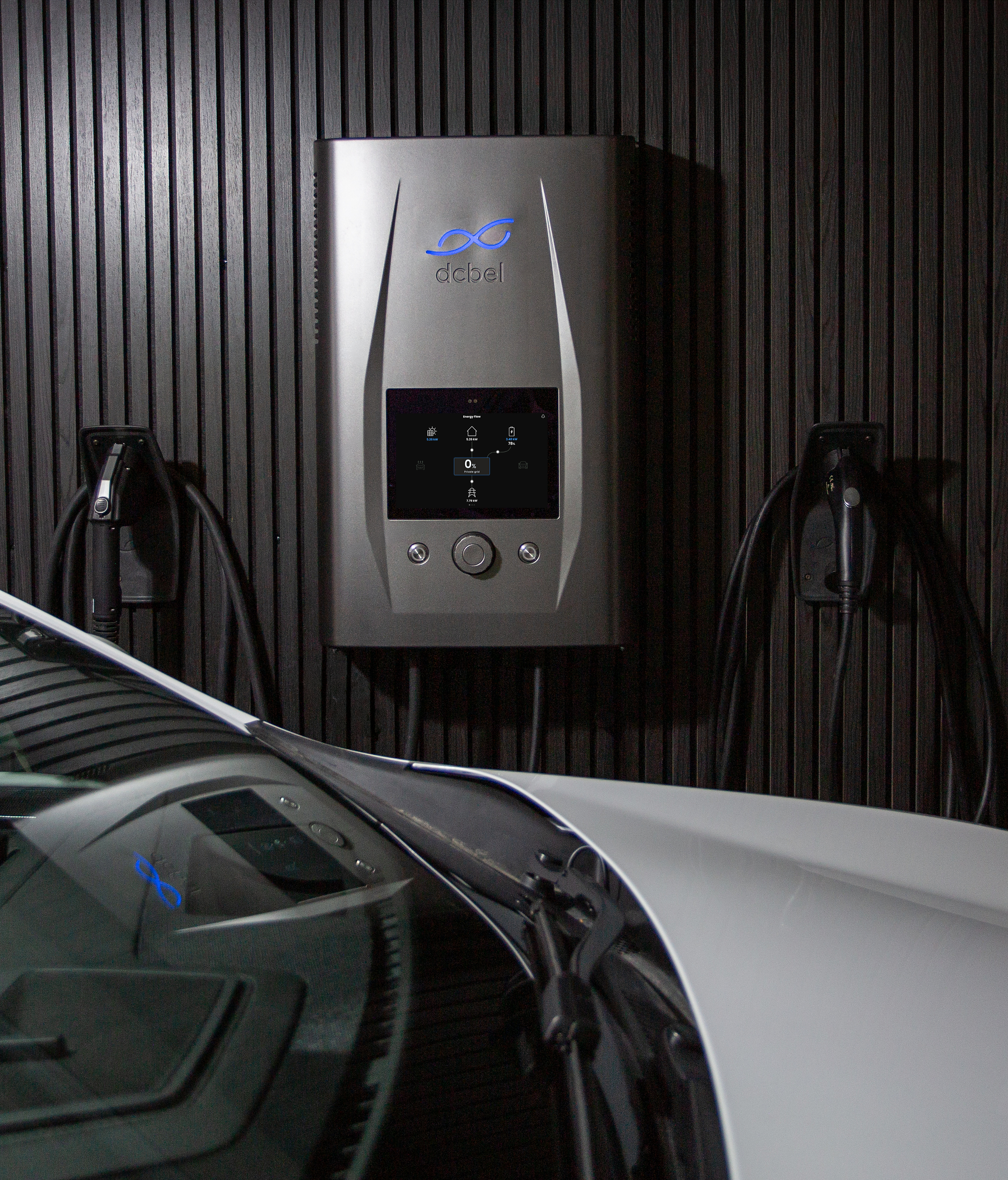
PG&E expanded its Vehicle-to-Everything program on August 24, 2026: the Nissan Leaf, Volvo EX90, and Polestar 3 with dcbel's Ara charger, and the Kia EV9 and EV6 with the Wallbox Quasar 2, are now eligible alongside new partners Bidirectional Energy and PowerFlex. Residential incentives run $2,500 to $4,500, PG&E says the new vehicle-and-charger combinations qualify for up to $13,000 in California Energy Commission grant funding subject to additional eligibility requirements, and enrollment stays open through June 30, 2027.
11 GW-plus Northwest plan, Austria's storage pivot, Walmart's 100th charger
Three developments from August 13 to 21, 2026: the Northwest Power and Conservation Council's draft Ninth Power Plan calls for more than 11 GW of new generation and more than 5 GW of storage by 2032; Austria plans to redirect residential solar subsidies toward battery storage from 2027, guided by a ministry-commissioned study that finds up to 8 GW of market-oriented battery capacity economically useful by 2030; and Walmart's company-owned fast-charging network, delivering up to 400 kW, reached 100 stores across 20 states.
New Jersey proposes 10-year payments for up to 150 MW of home batteries
The New Jersey Board of Public Utilities released a straw proposal on August 19, 2026 for Phase 2, Block 1 of the Garden State Energy Storage Program: up to 150 MW of behind-the-meter home batteries earning performance-based payments of up to $200 per kilowatt-year over 10 years, administered by the state's four electric utilities, with enrollment targeted to open by July 2027.