 The Duck Curve
FERC approves SPP plan to reroute power around grid congestion
Starting October 1, 2026, market participants can ask SPP to switch the grid's configuration when rerouting flows beats redispatching generators.
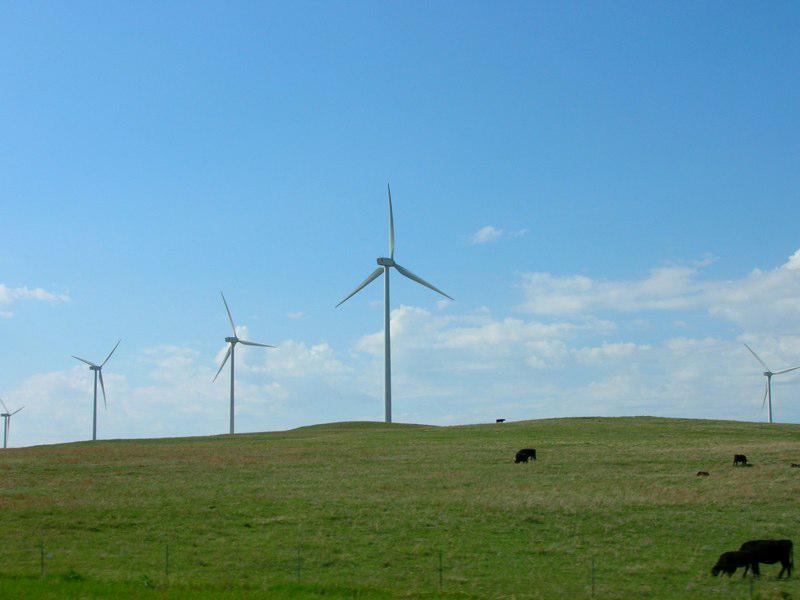
The Federal Energy Regulatory Commission accepted Southwest Power Pool's economic topology optimization tariff on August 19, 2026, letting market participants, or SPP itself, formally request reconfigurations of the transmission network when rerouting power around congestion beats paying generators to work around it. The letter order in docket ER26-2592 makes the new rules effective October 1, 2026. Both dates are exactly what SPP asked for: its May 21, 2026 filing requested an order "not later than August 19, 2026," and FERC delivered on the day.
What the new tariff sections do
The revisions add three sections to Attachment AE of SPP's tariff. A topology optimization request names a target flowgate, the operational actions proposed, their expected duration, and the conditions under which they apply; SPP may also cap how many requests it studies each month, a provision the order says exists so staff are not overwhelmed to the point where studying requests becomes infeasible. Each request is analyzed for its effect on system reliability, regional production cost, and funding of the Transmission Congestion Rights market. Reliability harm kills a request outright, and production-cost savings must outweigh any damage to congestion-rights funding. A request that passes SPP's analysis then goes to the local transmission operator whose lines would be reconfigured, which runs its own reliability assessment and holds the approval; it can re-evaluate a live reconfiguration as conditions change, with SPP able to revert the system to its prior state.
Congestion management has traditionally treated the network as fixed and adjusted the generators instead, an approach SPP's filing says drives up production and congestion costs. Topology optimization adjusts the wires, or more precisely the switches: breakers that operators already open and close for reliability get used to reroute flows for economics.
The congestion arithmetic
Commissioner David Rosner's concurrence supplies the numbers. SPP averages over $1.6 billion a year in congestion costs, and a 2018 SPP pilot with topology optimization software found congestion cost savings of $18 to 44 million annually. In MISO, which established a similar process in June 2023, Rosner credits the program with $113 million in congestion savings in 2025. He calls the tool "no magic wand obviating the grid infrastructure investments essential to powering our economy" but urges other ISOs and RTOs to consider similar tariff revisions. Commissioner Judy Chang's separate concurrence points at SPP's particulars: recurring congestion on its most frequently binding constraints, high wind output whose curtailments reconfiguration can reduce, and the winter storms (Uri, Elliott, and Fern) that have pushed the system into emergency operations.
Second of three, with more invited
SPP is the second US grid operator to formalize the process, on a schedule that will make it three. MISO went first in June 2023; SPP's transmittal letter counts 32 reconfiguration requests submitted there in 2024 and 2025, nine of which were implemented. ERCOT, which already runs topology optimization software inside its constraint management, has set its own market mechanism for the first quarter of 2027. SPP's proposal cleared the company's stakeholder working groups between February and April 2026, drew supportive comments at FERC from Advanced Energy United and the WATT Coalition, and faced no protests.
Outlook
The volume question is open. MISO's nine implemented reconfigurations in two years suggest a tool used sparingly, and SPP's tariff lets it cap monthly requests, so the near-term effect depends on how many proposals survive the three-part analysis. The adoption pattern is less ambiguous: with MISO running since 2023, SPP live on October 1, 2026, and ERCOT scheduled for early 2027, formal topology optimization will span the central US markets within a year, and Rosner's concurrence reads as an open invitation to the rest. A February 2024 RMI analysis cited in SPP's filing estimates the software could cut the cost of alleviating 72 studied overloads in PJM by $273 million, a modeled figure, but one that suggests where the next docket like this could open.
⚠ The Outlook extrapolates from the MISO implementation counts and ERCOT timeline in SPP's filing, the request-cap provisions of the approved tariff, Commissioner Rosner's concurrence, and the RMI PJM analysis cited in SPP's transmittal letter.
Sources
Primary
- Letter order accepting Southwest Power Pool's revisions to implement economic topology optimization (196 FERC 61,142, Docket No. ER26-2592-000) · Federal Energy Regulatory Commission
Supporting
- Submission of Tariff Revisions to Implement Economic Topology Optimization (Docket No. ER26-2592-000) · Southwest Power Pool, Inc.
Copies of cited sources are retained where available. If a link no longer resolves, request a copy at contact@theduckcurve.com.