 The Duck Curve
UK energy bill lets ministers mandate wind and solar community payouts
The Energy Independence Bill, introduced November 4, 2026, would also let ministers set minimum community ownership offers of up to 20% of capital costs and lift levies from exported power; Great British Grid comes later, by amendment.
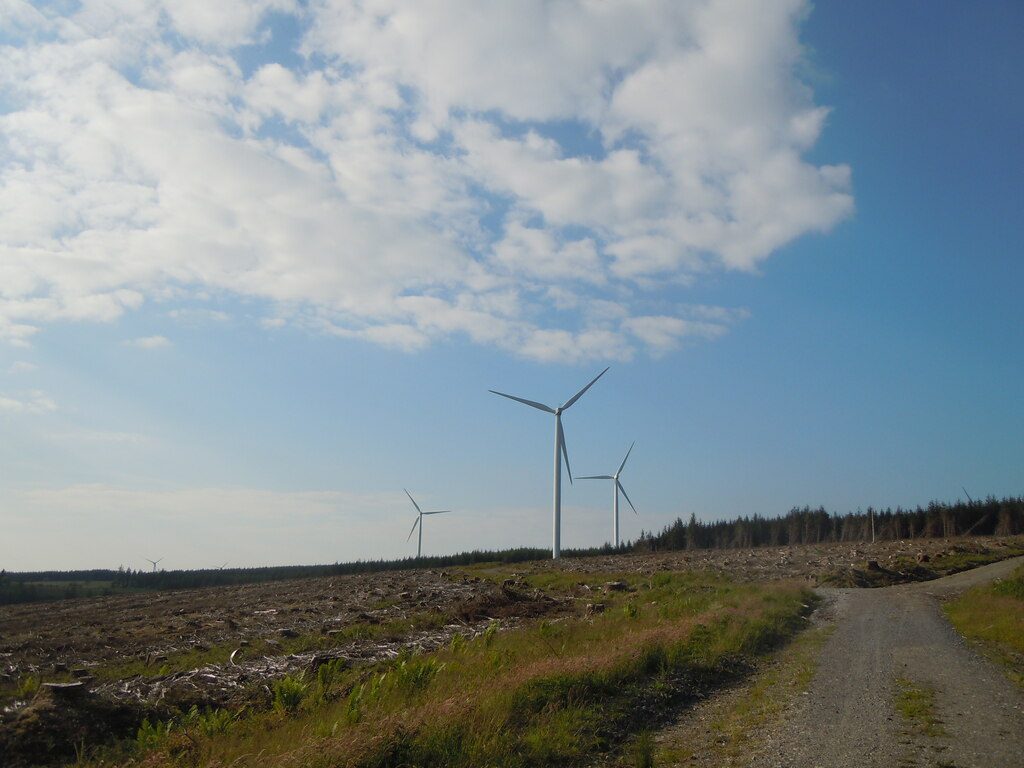
The UK government introduced the Energy Independence Bill in the House of Commons on November 4, 2026, and the parts that touch electricity are mostly powers for ministers to use later. The 342-page bill would let the energy secretary require operators of onshore wind and ground-mounted solar generating stations to sign legally binding community benefit agreements, set a minimum community ownership offer of up to 20% of capital costs on renewable projects of 1 MW or more, and rewrite network charging, balancing and trading rules outside the usual code process. The Department for Energy Security and Net Zero (DESNZ) says its "minded to" minimums are £5,000 per MW per year for eligible onshore wind projects and £700 per MW per year for eligible ground-mounted solar.
That is the shape of much of the bill, which runs to 14 Parts and 10 Schedules and leans heavily on regulations still to be made. The department's overview factsheet puts the net social benefit of the primary legislation at £3.2 billion and says the secondary legislation needed to implement it is expected to unlock a further £19.3 billion. Most of the payoff, in other words, sits in instruments not yet written.
Great British Grid and the end of gas standing charges, two headline items in DESNZ's announcement, are not in the bill yet. The release says Great British Grid, the public network investor the government announced in September, will be established in law "through an upcoming amendment", and that amendments to scrap standing charges on household gas bills will follow too. The bill as introduced mentions neither. It had its first reading on November 4, and Parliament's bill page shows no second reading date.
Communities get a legal claim on the projects
Hosting a wind farm would come with a statutory payout. Clause 117 inserts a new section 38E into the Electricity Act 1989 letting the Secretary of State make regulations requiring "the operator of a relevant generating station to enter into a community benefit agreement", where relevant means onshore wind or ground-mounted solar, though ministers could widen that list by regulations approved by both Houses. The bill sets no size threshold or rate. The community benefits factsheet says the regulations will cover new projects over 5 MW and that "the required levels of benefit will be set in secondary legislation." At present such funds are voluntary, and DESNZ says provision "varies between projects and locations."
Ownership gets the same treatment. Clause 120 makes three edits to the Infrastructure Act 2015's community electricity right: "5 megawatts" becomes "1 megawatt" twice, and "5%" becomes "20%". DESNZ's release says the bill is "requiring developers to offer communities up to a 20% stake"; its shared ownership factsheet is more careful, describing a power to require a minimum offer "of up to the equivalent of 20% of the capital costs", with the actual percentage left to secondary legislation. The power being amended is a decade old. The factsheet says it was meant as a backstop if voluntary shared ownership failed and "was not taken forward following the change in administration in 2015." The bill raises the ceiling on a power no government has yet used.
A third clause lets the Secretary of State require designated electricity suppliers to offer to contract with eligible community energy groups, which the explanatory notes say is meant to address market failures that have kept such groups from securing viable deals to sell what they generate.
Market rules, wires and batteries
Part 6 is the plumbing for Reformed National Pricing, the government's market redesign. It lets Ofgem modify licences, industry codes and related documents on network charging, balancing and trading, and lets the Secretary of State do the same for balancing and trading. The minister's power lapses five years after it takes effect, extendable by regulations to six. The explanatory notes say Ofgem's existing code processes "can be lengthy, complex" and that code governance reform "will not be fully implemented in time" for the market reforms. The bill also creates new licence types for power exchanges, which the notes say could carry all physical trading under some forms of unit-bidding, and for dedicated network services.
Network builders get faster permissions. Part 7 rewrites consents, wayleaves and land access rules for network works, and lets ministers grant transmission licence exemptions by direction rather than by statutory instrument. The transmission exemption factsheet says 11 of 14 offshore wind projects between 2016 and 2023 needed time-limited exemptions, including cases "caused or exacerbated by delays to the tender process rather than developer performance." Onshore, the explanatory notes say exemptions are how the government can let generation, storage or demand developers "construct and own their high voltage connection assets", the self-build route DESNZ promised to expand in September. The factsheet commits to less: faster exemptions could make it easier to facilitate alternative delivery models "should government choose to enable such approaches in future."
Part 8 reaches into homes. Clause 146 lets the Secretary of State exempt electricity that meets conditions set in regulations from supply-based charges, the per-unit levies behind the Renewables Obligation, Contracts for Difference, the capacity market and nuclear financing among others. The flexibility factsheet says the target is power re-exported through batteries or vehicle-to-grid systems and demand that rises to soak up surplus renewables, and puts household savings from vehicle-to-grid exports alone at around £200 million cumulatively between 2025 and 2040. Clause 145 lets ministers extend the smart-appliance mandate to battery storage systems, which DESNZ's draft smart-appliance regulations define but leave without a smart mandate. Part 11 sets up revenue support contracts for hydrogen-fuelled power stations, which the notes say could be funded by an obligation on electricity suppliers or through other routes, including Exchequer money.
The bill money
The near-term bill effects in the release are smaller and mostly already banked. Per the release, the bill puts the Exchequer's funding of 75% of domestic Renewables Obligation costs, which it says has already removed around £90 a year from average household bills, on an enduring legal footing to March 2029. DESNZ presents the bill as building on the October 28 Budget, which also put £100 million into cheaper public EV charging. The gas standing-charge plan, once its amendment arrives, would leave around 60% of gas account holders an average of £45 a year better off, by DESNZ's estimate.
Sources
Primary
- Energy Independence Bill (Bill 176 2026-27, as introduced) · UK Parliament (House of Commons)
Supporting
- Energy Independence Bill: bill page and stages · UK Parliament
- Energy Independence Bill Explanatory Notes (Bill 176-EN) · Department for Energy Security and Net Zero (via UK Parliament)
- Energy reforms to cut bills and put power back in people's hands · Department for Energy Security and Net Zero (GOV.UK)
- Energy Independence Bill overview (factsheet) · Department for Energy Security and Net Zero (GOV.UK)
- Transmission license exemption reform (factsheet) · Department for Energy Security and Net Zero (GOV.UK)
- Mandatory Community Benefits for generation (factsheet) · Department for Energy Security and Net Zero (GOV.UK)
- Community energy: shared ownership (factsheet) · Department for Energy Security and Net Zero (GOV.UK)
- Removing charges to unlock energy flexibility (factsheet) · Department for Energy Security and Net Zero (GOV.UK)
Copies of cited sources are retained where available. If a link no longer resolves, request a copy at contact@theduckcurve.com.