 The Duck Curve
LA Metro reports 49 of 85 assigned BYD electric buses out of service
Staff say BYD has not provided an adequate root cause analysis or long-term fix for a reducer defect on 26 K9MD buses; Metro's ENC contract and pending Solaris order carry 2028 delivery estimates.
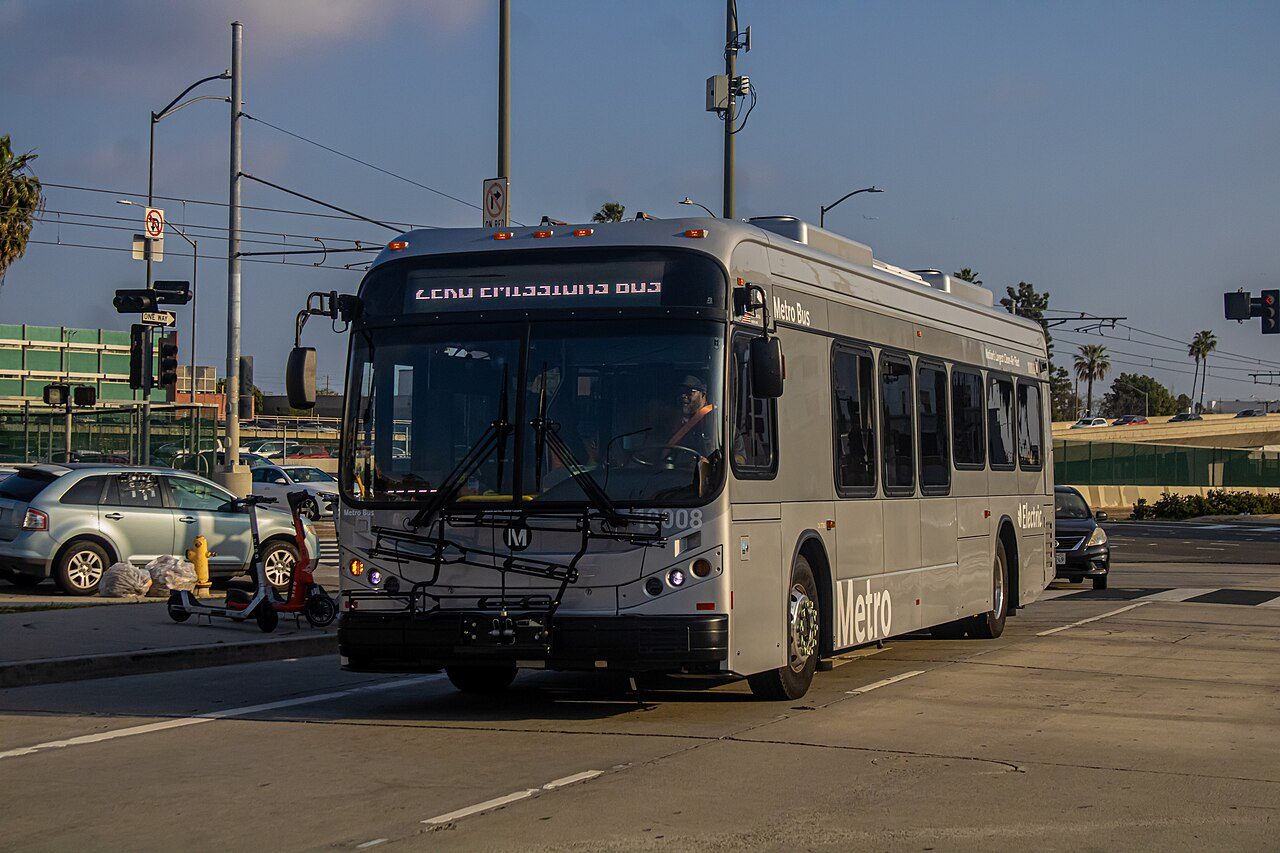
Los Angeles Metro had 49 of the 85 BYD K9MD battery-electric buses assigned to its bus divisions out of service at the end of October, according to the zero-emission bus program update staff prepared for the board's Operations, Safety, and Customer Experience Committee meeting on November 19, 2026. The report lists reducer issues, door problems, structural defects and other mechanical failures as the causes. By The Duck Curve's subtraction, 36 of the 85 were not out of service.
One component gets most of the report's attention. Shortly after the K9MDs entered revenue service in December 2025, several reducer failures exposed a fleet defect affecting 26 buses; the reducer is the gearbox that turns high-speed motor output into wheel speed and torque. Fifteen buses have been fixed with replacement reducers, but the report says more problems have been found, "including oil transfer/contamination and the axle components not being centered." Then it turns to the manufacturer: "BYD has not provided an adequate root cause analysis or a long-term solution for this critical system issue."
Metro's account hardened between July and November. The July 2026 update described a mechanical problem with the BYD buses that paused battery-bus service in January 2026, said staff had worked with BYD to determine the cause, and reported repairs in progress with buses returning to the J Line. The November report names the part, counts the buses and says BYD's answer has fallen short.
The J Line carries the cost. Metro installed all of the line's charging infrastructure in 2025, and the report calls K9MD repairs a priority to restore the line's electrification fully. About 50% of weekday service and 70% of weekend service on the J Line is currently zero-emission, per the report; the staff presentation puts it at an average of 50% electric service daily. The chargers are in; the buses are what is missing.
Metro has contract penalties to work with. The presentation's slide on BYD deliveries lists liquidated damages "for delayed buses, buses out of service over 30 days and manuals," without a dollar figure, and says 93 of 95 K9MDs have arrived; the report lists the other two as pending delivery. "Staff continues to focus on warranty support and resolving issues with the new BEBs," the slide adds.
The new orders are 2028 deliveries
Metro owns 143 zero-emission buses, 6.7% of its bus fleet, up from 140 and 6.46% in the July update. One addition is secondhand: 19 New Flyer battery buses from Lane Transit District, with an average age of four years, due in fiscal 2027 pending final regulatory approvals.
The board authorized the 220-bus ElDorado National (ENC) contract in September; the November report says the contract was awarded in October, for a base order of 220 forty-foot battery buses with options of up to 1,600. The presentation estimates delivery in the second or third quarter of calendar 2028 and lists design and production meetings with ENC as an upcoming activity. BYD bid for that contract too: its U.S. subsidiary, RIDE Mobility, scored 633.57 of 1,000 points to ENC's 833.92 and New Flyer's 769.26, the lowest of the three, according to the procurement summary.
The state-contract order came in smaller and later than July's plan. In July, Metro said it was "leveraging the Washington State Department of Enterprise Services contract to procure up to 40 BEBs targeting delivery to begin by the end of FY27." The November report says Metro is in the process of placing an order for 26 forty-foot battery buses with Solaris Bus and Coach North America through that contract, and the presentation estimates delivery in the fourth quarter of 2028.
Chargers, and the money for the rest
Depot charging is in commissioning at Division 9 in El Monte, which the July update said would be fully electrified in late 2026. Two of its four charging clusters have been commissioned, releasing 60 charging positions, and commissioning continues through the end of the calendar year, per the November report. Divisions 18 (Carson) and 7 (West Hollywood) are approaching 30% design for charging that will power more than 400 battery buses between them.
After those three divisions, the money is not there yet. Funds for Division 2 in Los Angeles, the next in the sequence, and the divisions after it "have not yet been secured," and the report says funding shortfalls "represent a schedule risk for program delivery." If full electrification of Division 2 is short of funds, the project could be scaled to available funding. Staff also released a request for proposals in September for a pilot testing whether grid-independent batteries can power bus chargers, so they stay available during a grid outage.
California's Innovative Clean Transit regulation, as the report describes it, requires large transit agencies to make 50% of bus purchases zero-emission by 2026 and 100% by 2029, and the report says "Metro has met all state-mandated program requirements." Metro's own plan, prepared in September 2024, targets a fully zero-emission fleet by 2035, with all bus divisions electrified no later than that year. The 2035 target starts from 6.7%.
Sources
Primary
- Board Report, File 2025-0667: Zero Emission Bus (ZEB) Program Update (Operations, Safety, and Customer Experience Committee, November 19, 2026) · Los Angeles County Metropolitan Transportation Authority (Metro), via Legistar
Supporting
- Board Report, File 2025-0436: Zero Emission Bus (ZEB) Program Update (Operations, Safety, and Customer Experience Committee, July 16, 2026) · Los Angeles County Metropolitan Transportation Authority (Metro), via Legistar
- Attachment B - Procurement Summary, Bus Acquisition of 40' Battery Electric Buses / OP118576(2)000 · Los Angeles County Metropolitan Transportation Authority (Metro), via Legistar
- Presentation: Zero Emission Bus (ZEB) Program Update, Operations, Safety, and Customer Experience Committee, November 19, 2026 · Los Angeles County Metropolitan Transportation Authority (Metro), via Legistar
Copies of cited sources are retained where available. If a link no longer resolves, request a copy at contact@theduckcurve.com.