 The Duck Curve
India's revised draft sets a 10 kW default for rooftop solar storage
States would set the threshold and the size, with defaults of 10 kW and storage holding 20% of daily output; the March draft drew the storage line at 500 kW. Comments are due December 23, 2026.
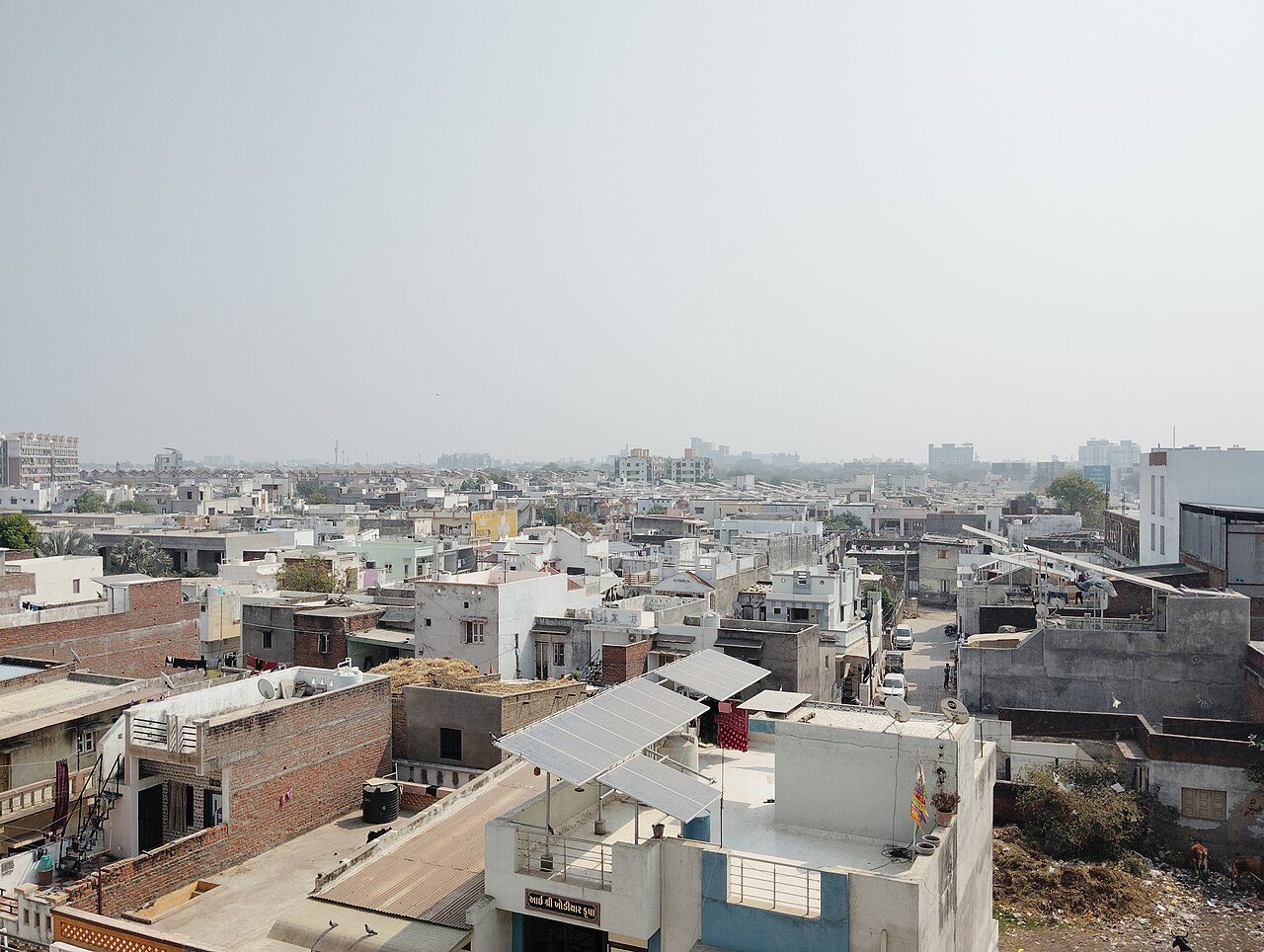
India's Ministry of Power has proposed a 10 kW default line for battery storage on rooftop solar. A revised draft of the Electricity (Rights of Consumers) Amendment Rules, 2026, sent out for comment on November 23, 2026, lets each state electricity regulatory commission require storage on systems above a capacity threshold it sets; where a state's regulations name no threshold, the draft says the requirement applies above 10 kW. The default storage size is 20% of the energy the system generates in a day ("at least twenty per cent" in the draft), and each commission may specify another proportion. The 10 kW fallback would take effect on April 1, 2028, a year after the rest of the rules. Comments are due by December 23, 2026.
The threshold is what moved. The ministry's first draft of the same rules, issued March 12, 2026, let state commissions mandate storage "of appropriate capacity" only where a renewable system exceeded 500 kW. Eight months later the fallback line sits fifty times lower, and the storage comes with a default size.
Who the 10 kW line reaches
Most homes in India's rooftop subsidy scheme sit well under it. Residential systems under PM Surya Ghar: Muft Bijli Yojana totalled 14.9 GW across 5 million households by July 2026, per Ember, which works out to about 3 kW a home by our arithmetic; Ember's own model household in its October analysis has a 3 kW system. The default instead falls on systems more than three times that size, and any state that sets a lower threshold can reach further down. The number already has a job in these rules: an earlier amendment exempted systems up to 10 kW from technical feasibility studies, Ember notes.
The 20% is a share of daily energy, so the battery is sized in kWh, not kW (kW vs kWh covers the difference). In Ember's Maharashtra example a 3 kW system generates about 350 units a month. At that yield, a 12 kW system would make roughly 47 kWh a day and need about 9 kWh of storage at the default 20%, by our arithmetic; yields differ from state to state.
The ministry's explanatory note gives the reasoning. It ties the revision to the deliberations of a Group of Ministers set up to examine the financial viability of distribution companies, and says battery costs have fallen enough over the past two years that pairing storage with rooftop systems "has become economically viable." Storage would shift surplus solar to evening hours and reduce operational stress on distribution companies, the note says, and offer consumers, "especially commercial and industrial users," greater energy independence.
Net metering charges move to the states
Rooftop owners who use the grid as a battery could start paying for the privilege. The revised draft lets state commissions charge for net metering; no charge applies up to a capacity threshold each commission sets; above it, charges may take into account "the imputed cost of energy storage" and network losses. The March draft had fixed that free tier at 5 kW; the revised text drops the figure. It also drops a fallback from the current rules, which the March draft kept, that permits net metering up to 500 kW where a state prescribes no limit. The note says commissions would set those limits instead.
The note's case for the charges is the cost-shift argument. Net metering customers are billed on net consumption and "do not fully contribute to the recovery of fixed costs," it says; under slab tariffs they can stay in cheaper slabs despite higher gross demand, leaving other retail consumers to carry more of the cross-subsidy. Ember made much the same diagnosis in October and proposed paying households to add batteries. The ministry's version lets states price the battery a household did not buy into its net metering charge.
Owners would gain room to build. The draft allows renewable systems on other parts of a consumer's premises besides the roof, and lets their capacity exceed the sanctioned load within limits the commission sets. Exports stay capped at the sanctioned load unless the distribution company authorises more; power injected beyond that without authorisation earns no payment and may draw a penalty.
Time-of-day tariffs, rescheduled again
Time-of-day pricing keeps arriving later. The current rules put commercial and industrial consumers above 10 kW of maximum demand on time-of-day tariffs from April 1, 2024 and all other consumers except agricultural ones from April 1, 2025, according to the note. The March draft moved those deadlines to 2027 and 2028. The revised text applies them to all consumers with maximum demand above 10 kW by April 1, 2028 and to other non-agricultural consumers by April 1, 2029, citing a smart meter rollout the note expects to finish nationwide by April 2028.
States would also get a freer hand with peak and solar-hour pricing. The note says the current framework prescribes minimum gaps between them, and the March draft required peak rates of at least 1.20 times the normal tariff for commercial and industrial consumers and 1.10 times for others, and solar-hour rates at least 20% below normal, with solar hours defined as eight a day. The revision instead tells commissions to weigh their load profile, solar and renewable generation, the cost of power at different times, and the capability of their meters.
The rest of the package
The draft would add municipal corporation areas to the three-day deadline for new connections that metropolitan areas already have, with 7 days in other municipal areas, 15 in rural areas and 30 in hilly rural areas. Bills showing consumption more than five times, or less than one-fifth of, the average of the previous six billing cycles (or other limits a state commission sets) would be reviewed and resolved within 30 days, with no disconnection while the consumer keeps paying the average. Distribution companies would run grievance forums at no fewer than two levels, company and district or municipal, normally deciding complaints within 30 days and never beyond 45, and commissions would write demand response frameworks. The rules as a whole would take effect on April 1, 2027, six months later than the March draft's October 1, 2026.
India's grid planners are writing the same instruction into utility-scale plants: the Central Electricity Authority's September draft would require co-located storage at new ground-mounted solar and onshore wind plants.
Sources
Primary
- Seeking comments on the revised draft Electricity (Rights of Consumer) Amendment Rules, 2026 (cover letter, draft rules and explanatory note) · Ministry of Power, Government of India
Supporting
- Seeking comments on draft Electricity (Rights of Consumers) Amendment Rules, 2026 (March 2026 draft) · Ministry of Power, Government of India
- Plugging storage into India's rooftop solar revolution · Ember
Copies of cited sources are retained where available. If a link no longer resolves, request a copy at contact@theduckcurve.com.