 The Duck Curve
Fervo reports first power from Cape Station's first 33 MW GeoBlock in Utah
The release expects the first GeoBlock to reach its contractual commercial operation date by October 1, 2026 and the other two by January 1, 2027; Fervo's August 10-Q had guided first power to the fourth quarter.
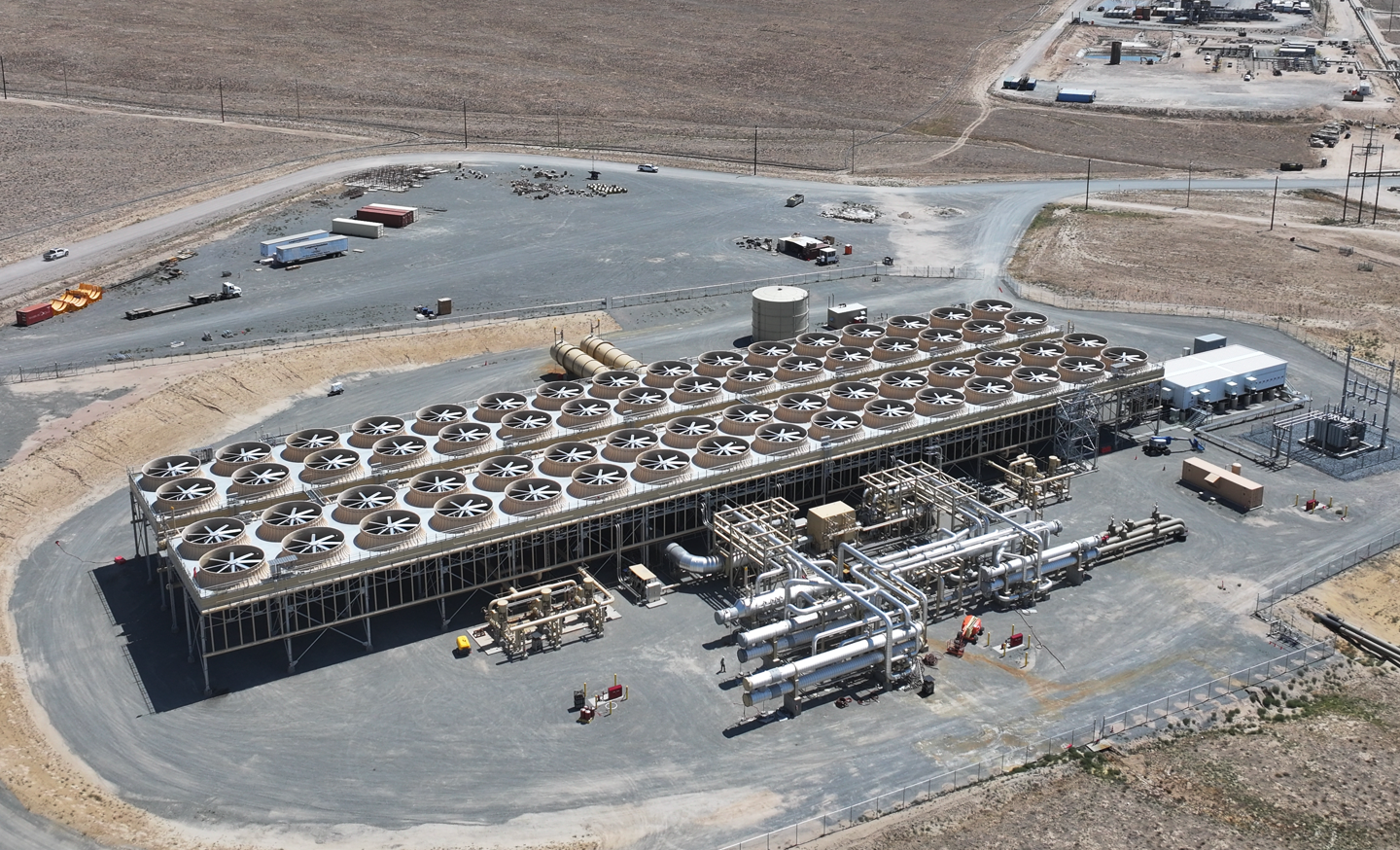
Fervo Energy said on September 24, 2026 that Cape Station, its enhanced geothermal development in Beaver County, Utah, has reached what the company calls First Power: the first of Phase I's three 33-megawatt GeoBlocks is synchronized to the grid and exporting electricity, and Fervo expects it to reach its contractual commercial operation date by October 1, 2026. The release describes Phase I as an approximately 100 MW installation and calls the milestone "the first time a utility-scale enhanced geothermal development has reached this milestone anywhere in the world."
Fervo says it will keep ramping the first GeoBlock as it brings the full well system online while commissioning the other two, which it expects to reach contractual COD by January 1, 2027. The next phase, an additional 400 MW, is under construction with an expected COD in 2028, and the release puts fully contracted offtake at Cape Station at approximately 900 MW, which it says is enough to power the equivalent of nearly 1 million US homes annually. A bullet above the text says the milestone "Marks the first megawatts of a multi-gigawatt development, with 900 MW fully contracted and more than 4 GW of capacity," without saying what the 4 GW counts. "Cape Station works because we treated the subsurface like an engineering challenge," said Jack Norbeck, Fervo's chief technology officer and co-founder, in the release.
The release ties the milestone to Project Red, Fervo's pilot in Nevada that it says has been supplying electricity to the grid since 2023, and calls Cape Station "a significant scale-up of the technology in a greenfield setting." Fervo's quarterly report for the period ended June 30, 2026 lists Project Red at 3 megawatts online. The Duck Curve's coverage of Sage Geosystems' 3 MW Texas plant relayed Canary Media's count, published August 19, 2026, of it as only the third EGS project ever to deliver power to a US grid, after Ormat's 1.7 MW Desert Peak demonstration in Nevada, which came online in 2013 and no longer produces, and Fervo's Nevada project, which Canary put at 3.5 MW. By that count, as of August 19, every EGS project that had delivered power to a US grid was 3.5 MW or smaller; Fervo's world-first claim rests on the qualifiers utility-scale and greenfield.
What the filings said before the release
Fervo's Form 10-Q filed August 13, 2026 said the company expected "to deliver first power from Cape Station by late 2026" and approximately 100 megawatts of operating capacity by early 2027. Its risk factors put the same expectation as first power "in the fourth quarter of 2026" and 100 megawatts "in the first quarter of 2027," adding that there was no guarantee of either. September 24 falls in the third quarter. The filing also reported that 79 of the 80 governmental permits and approvals needed to commence commercial operations at Phase I had been received as of its date, with the last in process. The Duck Curve's September 2 coverage of the Google PPA relayed the 10-Q's late-2026 guidance, and the Sage post above relayed Canary Media's expectation of partial operation at Cape Station in October 2026; first power came before both dates.
The prospectus for Fervo's initial public offering, filed May 14, 2026, defines a GeoBlock as "our standardized, 50-megawatt Organic Rankine Cycle power plants." The release describes Phase I's three GeoBlocks as 33 megawatts each and does not say how the two figures relate. The prospectus says Fervo plans to drill approximately 8 to 10 wells per GeoBlock, and that Phase I's wells were drilled to total vertical depths of approximately 9,000 feet and measured depths of approximately 14,000 feet, with horizontal sections of approximately 5,000 feet, targeting formation temperatures of approximately 400°F. It also states a price: "At approximately $7,000/kW, our first Cape Station project already outcompetes both traditional and small modular nuclear power in overnight capital costs," with an Nth-of-a-kind project cost of $3,000/kW as the stated goal.
The release does not itemize the 900 MW. The prospectus reported 658 megawatts of binding power purchase agreements across the company, naming Southern California Edison, Google / NV Energy, Clean Power Alliance, Desert Community Energy, Calchoice and Shell, and described the Shell contract, a guaranteed capacity of 31 megawatts over 15 contract years with a scheduled commercial operation date in late 2026, as its most near-term PPA. The 10-Q carried the same 658 megawatts as of June 30, 2026, representing approximately $7.2 billion in potential revenue backlog; the 396 MW PPA with Google that The Duck Curve covered on September 2 was signed on August 26, after that date. Which contracts the first GeoBlock serves, the release does not say.
The plant's financing is also on file. Per the 10-Q, two Fervo subsidiaries, Cape Phase I Borrower LLC and Phase I WellCo LLC, entered a senior secured credit agreement in March 2026 with a syndicate of lenders led by MUFG Bank as administrative agent and HSBC Bank USA as collateral agent, the Project Granite Facility, secured on a first-priority basis by substantially all assets of the borrowers, including the Phase I project assets; approximately $212.3 million was outstanding under it as of June 30, 2026. On April 10, 2026, the filing says, Fervo agreed with Liberty Mutual Insurance Company to sell and transfer tax credits generated at Cape Station Phase I. The company reported $2,106.4 million of unrestricted cash as of June 30.
Outlook
The dates to watch are the ones the release sets: a contractual COD by October 1, 2026 for the first GeoBlock and by January 1, 2027 for the other two. If both hold, Phase I would be at contractual COD on the first day of the first quarter of 2027, the window the 10-Q gave for approximately 100 megawatts of operating capacity, though a contractual COD is a date the company is obliged to meet, not a report of what the plant is producing, and the release gives no output figure for the first GeoBlock. If Fervo keeps the 44-day cadence of its August 13 filing, its third-quarter report would land in mid-November 2026; that is where the schedule, the permit count and whether the Shell contract's late-2026 commercial operation date was met would be restated under securities law rather than in a press release.
⚠ The Outlook extrapolates from the contractual commercial operation dates in Fervo's September 24, 2026 release, the guidance and permit count in its August 13, 2026 Form 10-Q, and the Shell PPA terms in its May 14, 2026 prospectus; the mid-November timing of the next quarterly report is The Duck Curve's arithmetic from the August 13 filing date, not a Fervo statement.
Sources
Primary
- Fervo Energy Achieves First Power at Cape Station, a Landmark Moment for the Future of Enhanced Geothermal Systems · Fervo Energy
Supporting
- Fervo Energy Co, Prospectus (Form 424B4) for its initial public offering, filed May 14, 2026 · Fervo Energy Company via SEC EDGAR
- Fervo Energy Co, Form 10-Q for the quarter ended June 30, 2026 · Fervo Energy Company via SEC EDGAR
Copies of every cited source are retained. If a link no longer resolves, request a copy at contact@theduckcurve.com.