 The Duck Curve
Fervo puts Cape Station capacity potential at 8.4 GW as GeoBlock 2 syncs
Fervo says GeoBlocks 2 and 3 remain on schedule for commercial operation by January 1, 2027; it also cut second-half capex guidance to $700–750 million, saying Google-block spending moved later with no change to total investment.
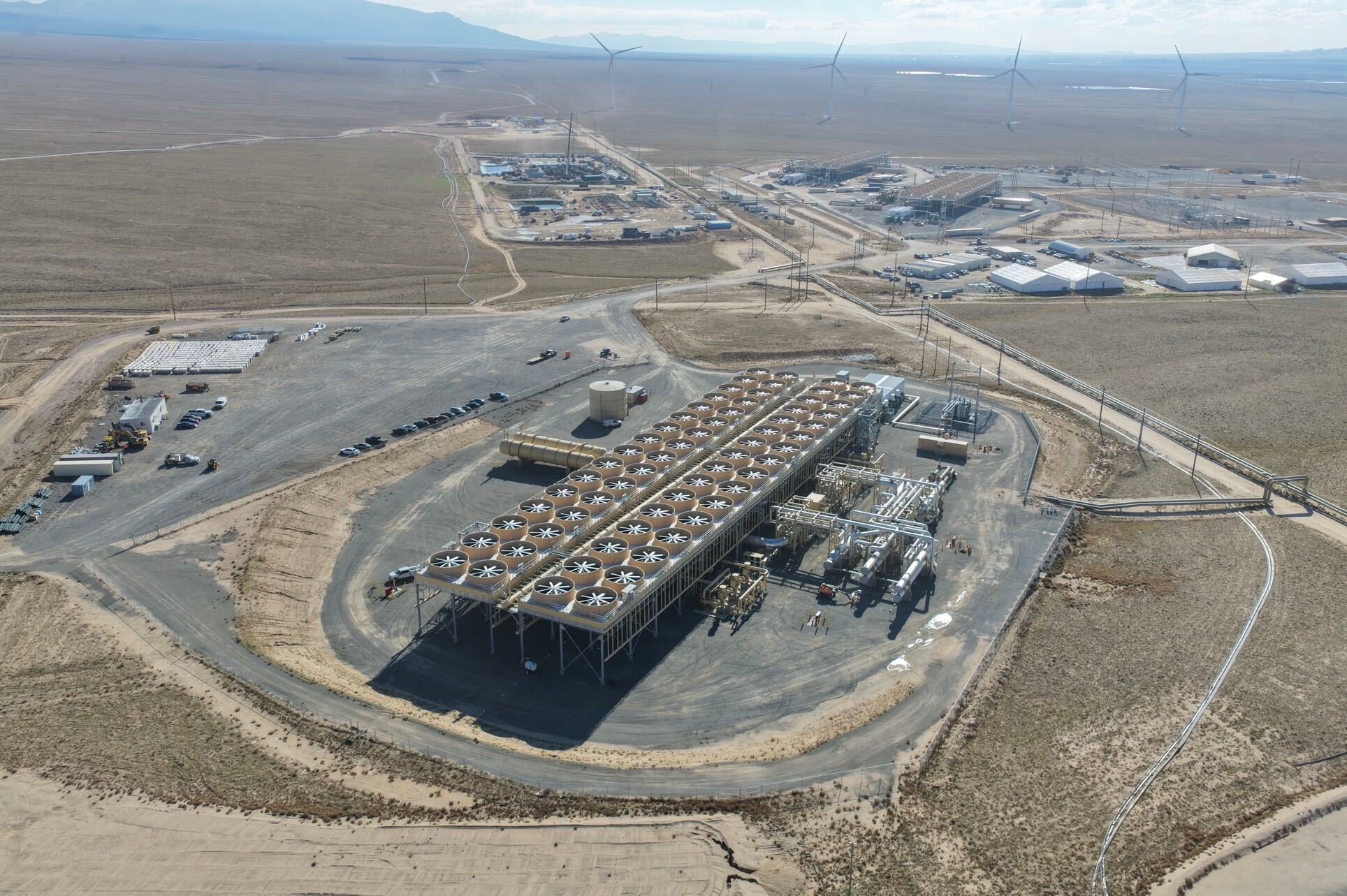
Fervo Energy now says its Cape Station site in Utah could support nearly twice the generating capacity it previously estimated. In third-quarter 2026 results released November 9, the company reports an updated heat-initially-in-place study, commissioned by Fervo and conducted by consulting firm DeGolyer and MacNaughton, that supports approximately 8.4 GW of capacity potential at Cape Station, nearly double the prior estimate of 4.3 GW. Fervo attributes the increase to the greater drilling depths of its 3.0 well design and to incremental lease acquisitions. The same report has the second of Phase I's three 33 MW GeoBlocks synchronized to the grid and exporting test energy, with the third in cold commissioning.
That puts the schedule ahead of where Fervo itself had it in August. Its second-quarter results, released August 12, targeted first power at GeoBlock 1 for the fourth quarter of 2026 and initial power at GeoBlocks 2 and 3 in early 2027. GeoBlock 1 reached first power on September 24 and declared commercial operation on September 30; GeoBlocks 2 and 3 remain on schedule, the company says, and are expected to reach commercial operation by January 1, 2027, completing Phase I's approximately 100 MW. CEO Tim Latimer says the company is focused on "delivering the remaining Phase I GeoBlocks on schedule and building toward geothermal as a reliable, always-on, low-cost source of power." Fervo has also begun installing a small on-site solar array at Phase I to provide station auxiliary power.
The money
Fervo lowered its spending guidance without lowering its total. It now expects fourth-quarter capital expenditures of approximately $450 million to $500 million, for $700 million to $750 million in the second half of 2026, down from $850 million to $900 million. The company says efficiencies in GeoBlock construction and commissioning allowed certain spending on its Google-contracted GeoBlocks "to occur later in the construction cycle, with no change to expected commercial operation dates or total expected investment."
Placing GeoBlock 1 in service moved approximately $514.3 million into property, plant and equipment, a figure Fervo says is not the standalone cost of GeoBlock 1: it includes a larger share of Phase I wellfield costs, shared infrastructure serving all three GeoBlocks, and capitalized interest and financing costs. Expected total cost for GeoBlocks 1 through 3 remains approximately $7,000 per kilowatt, which on roughly 100 MW comes to about $700 million by our arithmetic. Fervo continues to target $5,500 per kilowatt installed for the Google blocks and $3,000 per kilowatt in the long term.
Net income came from almost everything except selling electricity. Fervo reported net income of $11.7 million and a net loss attributable to common stockholders of $20.8 million, or $(0.07) per share. Net income reflected $15.4 million of interest income, an $11.8 million non-cash gain on interest rate swaps and a $29.9 million tax benefit from tax credits earned as Phase I assets were placed in service. Revenue for the quarter was $116,000; interest income was more than 130 times that, by our arithmetic. Fervo expects the fourth quarter to be the first full quarter of revenue from Cape Station and ended September with $1.9 billion in unrestricted cash.
Cape Google 400
The GeoBlocks that serve Fervo's 396 MW contract with Google, numbers 4 through 11, now go by Cape Google 400. Fervo describes the agreement as a 15-year, grid-connected, take-or-pay contract across eight GeoBlocks, with first power expected in mid-2028 and full capacity targeted by year-end 2028. Drilling for these GeoBlocks is approximately 18 percent complete, the first set of 50 MW turbines has passed factory acceptance testing, and over 60 percent of the air-cooled condensers are on site.
Those turbines carry the 50 MW rating that Fervo's securities filings give a standard GeoBlock. Phase I's units are 33 MW each; the August results had already divided the site that way (three 33 MW GeoBlocks in Phase I, eight 50 MW GeoBlocks in the next phase), and neither results release says why the first phase is smaller.
Fervo now reports 1,054 MW under binding power purchase agreements, representing approximately $11.9 billion in contracted revenue, against 658 MW and approximately $7.2 billion at the end of the second quarter. Fervo has committed to offer Google an option on approximately 600 MW more; if accepted, it would be the first qualifying project under the Geothermal Framework Agreement signed in March 2026, which sets a development framework for up to 3 GW through 2033.
Fervo also says appraisal wells it plans in Nevada and Idaho were selected for two potential Department of Energy awards totaling approximately $20.0 million, subject to definitive funding agreements. DOE's own pages listed no per-project amount when it announced those selections in September.
The ground under the plant
The quarter's other numbers are seismic. In a seismic update published November 5, Fervo reported three "Red" events at Cape Station in September 2026, all within about two weeks of each other during stimulation of one of its newer well pads. The company's monitoring vendor measured them at roughly M 3.0 to M 3.3; the University of Utah and USGS catalogs reported M 2.6 to M 3.1 for the same events. Under Fervo's traffic-light protocol, a Red event requires a pause of at least 24 hours; the company says it reduced injection to zero each time and stayed paused for more than 24 hours, and that seismicity returned to normal levels after each event, in some cases within hours.
Fervo says it then changed how it stimulates, including lower injection rates in later stages toward the heel of the wells, an unstimulated buffer around the nearby fault, added tests to verify that stages are isolated, and improved stage-by-stage tracking of seismicity rates and magnitudes. After those changes, Fervo says, it resumed stimulation and seismicity remained within normal operating thresholds. At a seismic station in the nearby town of Milford, every Yellow or Red event registered at Modified Mercalli Intensity I or II, and Fervo says no injuries or damage were reported to it.
The November 9 earnings release does not mention seismicity. Fervo publishes the seismic updates voluntarily and says they are not required by any law, regulation, or permit condition.
Outlook
January 1, 2027 is the next hard date. If GeoBlocks 2 and 3 reach commercial operation by then, as Fervo expects, Phase I's approximately 100 MW would enter 2027 in commercial operation, and the first quarter of 2027 would be the first full quarter with all three units in commercial operation. The 8.4 GW figure is a different kind of number: capacity potential from a heat-in-place study, and the release's own risk language allows that such estimates may prove inaccurate or that Fervo may be unable to produce commensurate electrical energy. With Cape Google 400 drilling about 18 percent complete and Fervo saying it will keep reporting on the September events, the next seismic update would show whether seismicity stays within those thresholds as stimulation continues.
⚠ The Outlook extrapolates from Fervo's November 9, 2026 third-quarter results (the January 1, 2027 Phase I commercial operation expectation, Cape Google 400 drilling progress, and the release's risk language on capacity-potential estimates) and its November 5, 2026 seismic update; the quarter-by-quarter sequencing and the reading of the next seismic update as a check on whether seismicity stays within Fervo's operating thresholds as stimulation continues are The Duck Curve's.
Sources
Primary
- Fervo Energy Reports Third Quarter 2026 Results (Form 8-K Exhibit 99.1, November 9, 2026) · Fervo Energy Company via SEC EDGAR
Supporting
- Fervo Energy Reports Second Quarter 2026 Results (Form 8-K Exhibit 99.1, August 12, 2026) · Fervo Energy Company via SEC EDGAR
- October 2026 Insights on Seismic Behavior at Cape Station · Fervo Energy
Copies of cited sources are retained where available. If a link no longer resolves, request a copy at contact@theduckcurve.com.