 The Duck Curve
Austria's 2027 home battery grant bill sets a €52 million floor, no rate
The coalition's amendment limits funded storage to 15 kWh for households, sets a 10% base cap on the grant before top-ups, and needs Green or FPÖ votes for its two-thirds majority.
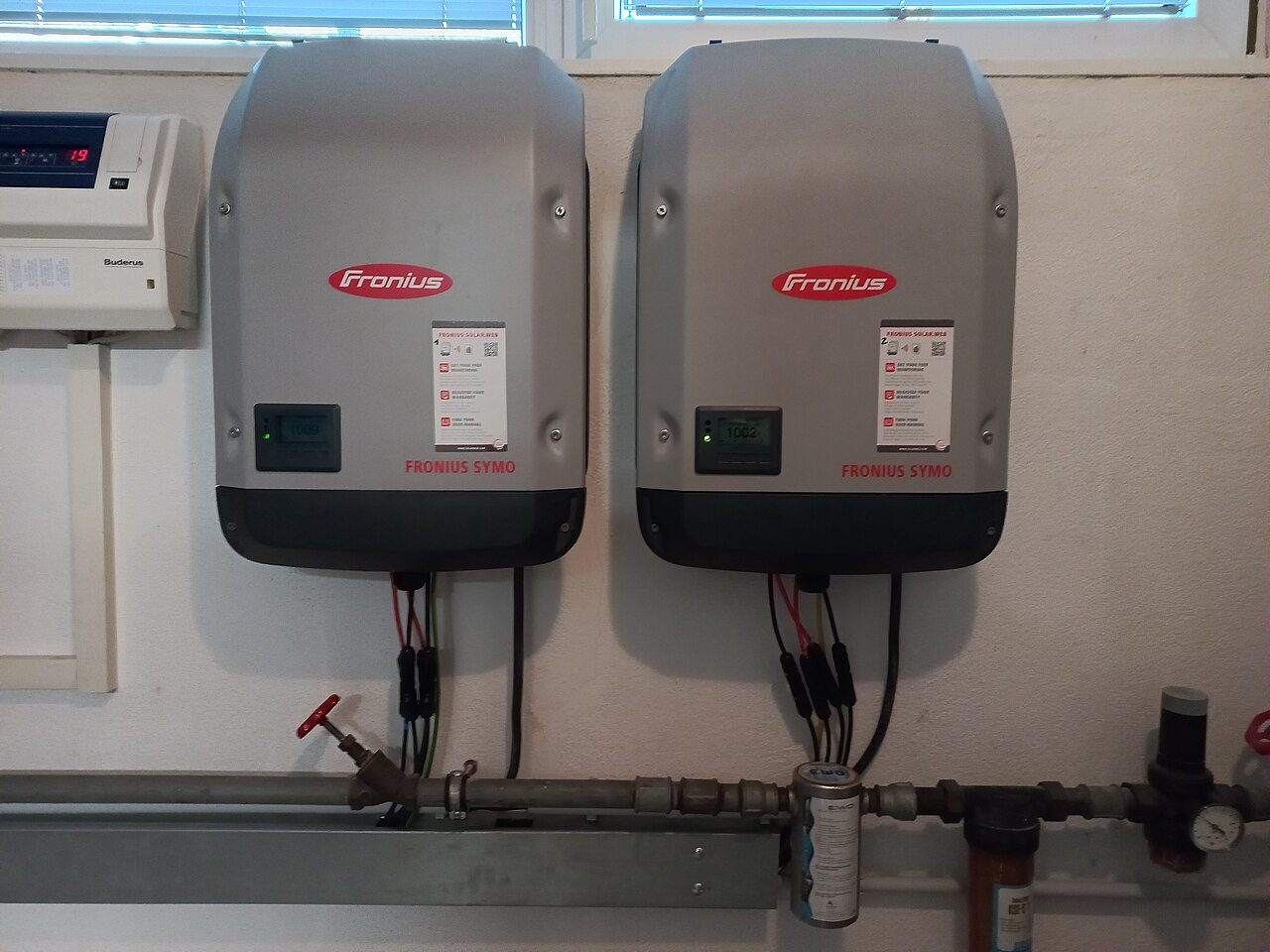
Austria's governing parties have written their 2027 home battery grant into a bill. Their motion, filed in the Nationalrat on November 18, 2026, would fund new or expanded batteries attached to solar arrays with at least €52 million a year, with funded capacity limited to 15 kWh for households and 50 kWh for businesses, and the grant is capped in principle at 10% of the investment, before EU state-aid top-ups. The euro-per-kWh rate is left to a later ordinance, per the bill text.
The motion (1195/A), from ÖVP, SPÖ and NEOS members Laurenz Pöttinger, Alois Schroll and Karin Doppelbauer, has been assigned to the Committee for Economy, Industry and Energy, which has not yet begun deliberations, per the parliament's record. It contains constitutional provisions and needs two-thirds of the votes cast. It arrived in the week the ministry had targeted, which answers the timing question left open in our October report on the plan. The new grant sections would take effect on January 1, 2027.
What a battery has to do
The bill rewrites section 56a of the Renewable Expansion Act (EAG) as a standalone investment grant for storage. A battery qualifies only if it is connected to a solar array that is not a balcony plant, and coupled to an automated energy management system that can communicate. An ordinance will set its minimum functions; the bill's examples include following third parties' power instructions and responding to time-variable or dynamic prices and grid tariffs.
The battery must also serve the wider system, contributing to what the bill calls "systemic effects." Its examples include a dynamic feed-in or supply contract, a contract with a flexibility provider, a static cap on the power exchanged with the grid, and dynamic operation inside an energy community.
Then there is sizing. Total storage must reach at least 1.5 kWh per kWp of the connected array. By our arithmetic, a 10 kWp roof needs at least 15 kWh, which is exactly the household cap; a household may build more, but only 15 kWh is funded. Once the transition described below ends, the 10 kWp array with a 10 kWh battery that our October report priced under the old rates would not qualify.
The European rule from the October cornerstones survives, with an opening. Where the array and battery are built new together, the inverter must come from European value creation (the EEA and Switzerland), and the ordinance is to add partner countries where that serves the grant's aims. Batteries retrofitted to an existing array are not bound by it.
Money, and the order it goes out in
Batteries get at least €52 million a year; the ministry put total 2026 funding for solar and storage at about €128.5 million. The €52 million is a floor, "subject to any reductions" under two other sections of the act, and the rate per kWh, which may vary by size class, comes later. The 10% ceiling applies in principle: top-ups under the EU's block exemption regulation are left untouched, and a rewritten section 6a lets an ordinance add up to 20% to the grant for plants built with European components, within the EU's limits.
The panel grant itself goes. Section 56 becomes a grant for "multifunctional" solar only, including building-integrated panels, parking canopies, noise barriers and agrivoltaics, for arrays up to 1,000 kWp, with at least €8 million a year, up to 45% of the investment and at most €150,000 per application; agrivoltaic arrays must also have an innovative feature, such as vertically mounted or elevated modules. Those are the niche arrays that, as our October report noted, went unmentioned in the ministry's releases of October 6 to 8; they now get a base ceiling of 45% against the batteries' 10%. By our arithmetic, the two new minimums add up to €60 million a year.
Applications can be filed all year, within 12 months of the battery starting up, and are ranked by the time they arrive. On November 11 the ministry said the first-come, first-served principle was to be abolished. The bill swaps a funding call that ran out after 29 seconds for systems up to 10 kWp for a year-long queue. An application turned down because the year's money is gone can be refiled in the following calendar year and still counts as on time, the explanatory notes say.
The November 1 cohort
Batteries started up from November 1, 2026 until the 2027 ordinance takes effect can apply within three months of it, and are exempt from the energy management, European inverter, 1.5 kWh per kWp and systemic-effect conditions. The capacity caps and the link to a solar array still apply. The ministry had said on November 11 that smart-storage projects started from that date should be able to apply "provided they meet the new funding conditions"; the bill waives most of them. The October cornerstones covered projects invoiced or commissioned from that date; the bill's wording is batteries put into operation.
The industry association Photovoltaic & Battery Austria (PV&B) wants those projects to get a separate, adequately funded pot. It also objects to the ten-day consultation it says the ministry set on November 18. "Ten days are clearly too short for legal changes of this kind," managing director Vera Immitzer said (quotes are our translations from German).
The surcharge holiday and the votes
The bill also carries part of the government's household relief. The ministry said on November 11 that it would create the legal basis to set the renewable flat-rate charge to zero for 2027, alongside an intended suspension of the renewable support contribution; a household using 3,500 kWh a year could save €53.42 gross against 2026. The bill text gives the minister power to adjust the flat-rate charge for the following year by ordinance when a financing forecast justifies it. The SPÖ's parliamentary club said in a release quoting Schroll that the amendment is meant to suspend both charges and that the government needs at least one opposition party to pass its energy packages.
The FPÖ, the largest opposition party, dismisses the relief. Its energy spokesperson Paul Hammerl said in a Nationalrat debate, per his party's November 18 release, that the government was selling a one-year pause as a €50 gift, but that it was "only virtual money," because with the surplus already in the fund the contribution could not lawfully be collected anyway. By our October count the coalition's clubs hold 109 of 183 seats, short of two-thirds of a full chamber, so the Greens or the FPÖ hold the votes the bill needs.
Whoever supplies them will be approving a lower base cap than Poland's. Poland's home battery grant covers up to 30% of eligible costs, for batteries of at least 10 kWh and at least twice the solar array's peak power, plus a bonus of up to PLN 2,000 for EU-made equipment; Austria's base cap is 10%, and its rate is not yet set.
Sources
Primary
- Erneuerbaren-Ausbau-Gesetz und Ökostromgesetz 2012 (1195/A) · Parlament Österreich
Supporting
- Zehetner/Schmidt/Doppelbauer: Schluss mit 33-Sekunden-Fördercall: PV-Förderung wird Systemförderung für Speicher & intelligente Steuerung · Austrian Federal Ministry for Economy, Energy and Tourism (via OTS)
- Zehetner: Heute um 17 Uhr noch einmal schnell sein - 38,5 Millionen Euro für letzten PV-Fördercall · Austrian Federal Ministry for Economy, Energy and Tourism (via OTS)
- Zehetner: 7.007 Förderzusagen beim letzten PV-Call – Neugestaltung der EAG-Förderung in Vorbereitung · Austrian Federal Ministry for Economy, Energy and Tourism (via OTS)
- FPÖ – Hammerl: Strom darf nicht zum Luxusgut werden – Regierung kassiert bei Haushalten und Betrieben kräftig ab · Freiheitlicher Parlamentsklub (via OTS)
- 1195/A XXVIII. GP: Antrag betreffend ein Bundesgesetz, mit dem das Erneuerbaren-Ausbau-Gesetz und das Ökostromgesetz 2012 geändert werden · Parlament Österreich
- PV&B Austria kritisiert Vorgehen des Energieministeriums: Kurzbegutachtung für EAG-Novelle wird zur Alibi-Beteiligung · Bundesverband Photovoltaic & Battery Austria (via OTS)
- SPÖ-Schroll zu Energie-Paket: „Wir greifen in die Preise ein und sorgen vor“ · SPÖ-Parlamentsklub (via OTS)
Copies of cited sources are retained where available. If a link no longer resolves, request a copy at contact@theduckcurve.com.