 The Duck Curve
US storage passes 200 GWh installed as Q3 additions slip 1% on the year
SEIA and Benchmark count 14.3 GWh added in Q3 and 48.3 GWh through September, up 20% on the year, and raise their 2030 forecast to 708 GWh cumulative.
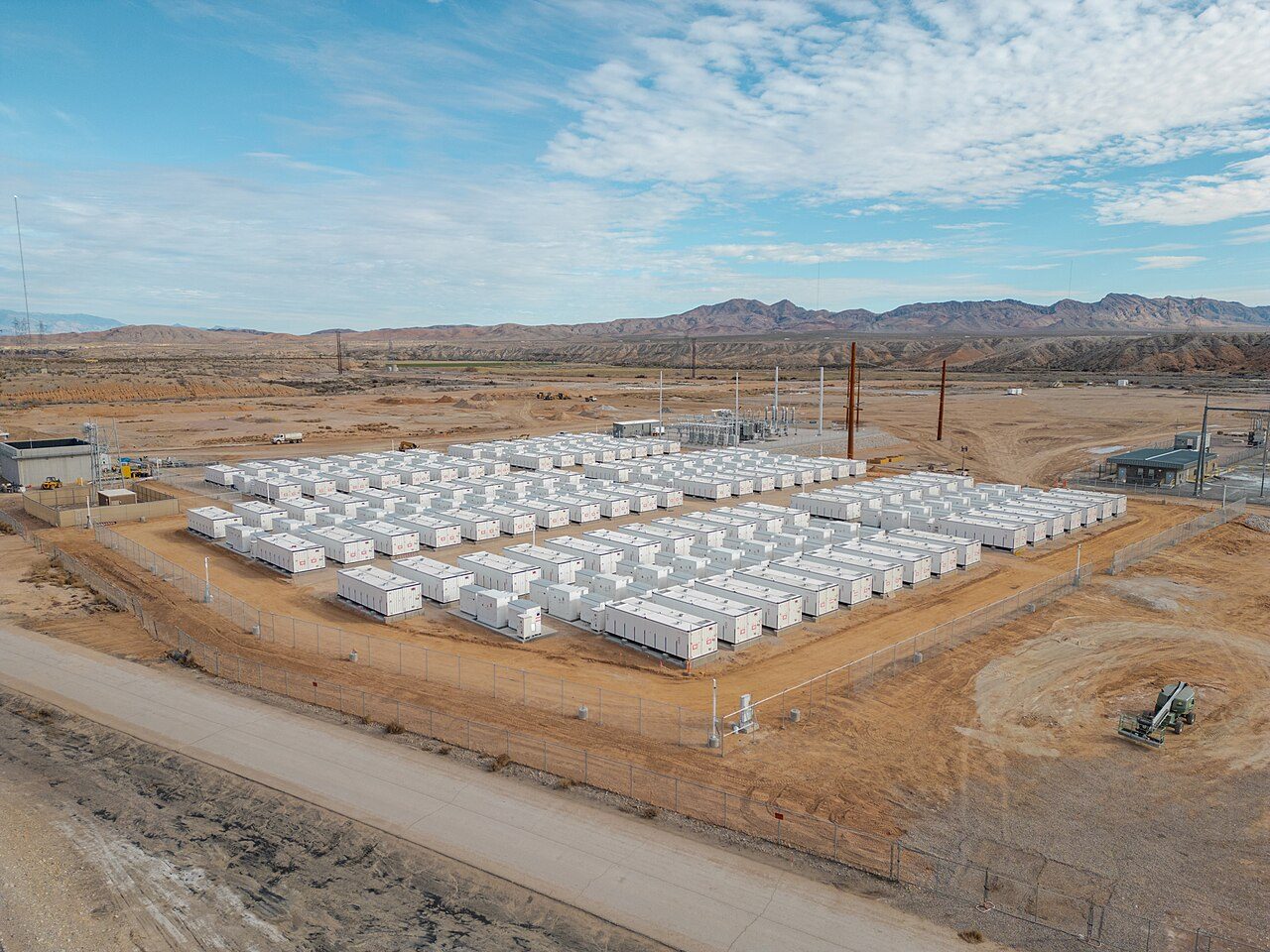
The United States has now installed more than 200 GWh of energy storage, the Solar Energy Industries Association (SEIA) said on November 17, 2026, after adding 14.3 GWh in the third quarter. That brings 2026 installations through September to 48.3 GWh, 20% more than in the same nine months of 2025, according to the U.S. Energy Storage Market Outlook that SEIA publishes each quarter with Benchmark Mineral Intelligence.
The quarter itself was not a record. The report's summary page puts Q3 2026 at 14.3 GWh, "down 1% compared to Q3 2025," a comparison SEIA's release, which leads with the milestone and the 20% gain, leaves out. Utility-scale projects supplied 12.2 GWh of the quarter across 45 projects, commercial and industrial (C&I) systems 1.3 GWh and homes 746 MWh. All of those are counted in energy, not power (kW vs kWh); the Energy Information Administration's count of the utility-scale fleet, nearly 52 GW at the end of June, is the other unit.
Texas did the heavy lifting, leading utility-scale deployment through Q3 with 12.3 GWh, followed by Arizona with 7.7 GWh and California with 6.8 GWh, per the release. It names 11 states that beat their previous annual installation records in Q3 "even with three months remaining in 2026": Colorado, Massachusetts, Utah, Michigan, Georgia, Mississippi, Virginia, Iowa, Montana, Alabama and Illinois. The report page's tally of the largest projects is harder to follow. It says the utility-scale market brought online "three gigawatt-scale projects in just the first three quarters of 2026," then that "three gigawatt-scale projects came online" across Q3, "four in Arizona, two in California and one in Utah."
The analysts expect more. They raised their forecast for cumulative US deployment by 2030 by 3.7%, to 708 GWh across grid and behind-the-meter (BTM) systems. By our arithmetic, getting there from just over 200 GWh means adding roughly 500 GWh by 2030, more than 100 GWh a year on average; the first nine months of 2026 produced 48.3 GWh.
Behind the meter
Home batteries had their largest third quarter on record, per the report page: 746 MWh, up 16% from Q3 2025 and the second straight quarter-on-quarter increase. The year is still behind. Residential installations through September were 12% below the same period of 2025, "when capacity was pulled forward ahead of the removal of 25D," the federal residential clean energy credit, though the analysts call the recovery "faster than expected" and now see just under 3 GWh for 2026, an 8% decline from 2025. A record quarter inside a down year is what the end of a tax credit looks like.
What holds the market up, in the report's telling, is third-party ownership supported by Section 48, higher electricity costs, changes to net metering, outage concerns, and state support through virtual power plants and demand response programs. It counts California's SB 913 as "a long-term, market-based pathway" for customer-owned batteries in VPPs to qualify for resource adequacy. The law itself is more modest on timing: it gives the state's utility commission until June 30, 2028 to enhance existing pathways for aggregations to count as capacity.
C&I and uninterruptible power supply (UPS) systems, which the report counts together, reached 1.3 GWh in Q3, up 29% year over year, bringing 2026 installations to 5.4 GWh, already above the 4.8 GWh installed in all of 2025. The report ties the segment to data centers and "the growing difficulty of securing sufficient grid capacity," with developers pairing batteries with on-site or co-located solar and wind in what it calls "bring your own generation."
Factories, tariffs and policy
Both of the release's new factories are EV cell plants learning a new chemistry. SEIA's release says domestic battery cell manufacturing capacity reached 92.4 GWh, "a 50% increase," after "a new battery cell manufacturing facility opened in Tennessee" in July and a new cell facility opened in Indiana in October. The report page describes the same two events as conversions: Ultium Cells, the LG Energy Solution and General Motors venture, began LFP cell production for stationary storage at Spring Hill, Tennessee in July, and Samsung SDI, whose 16 GWh order from Jupiter Power will be made in Indiana, began LFP production at its StarPlus Energy facility there in October, as "the conversion of EV cell manufacturing capacity to LFP for BESS continued." The page expects LFP to account for 92% of lithium-ion battery storage deployments in 2026, up from 77% in 2023.
Chinese batteries carry a higher tariff this year. From January 1, 2026, the Section 301 tariff on Chinese non-EV lithium-ion batteries rose from 7.5% to 25%, "stacking on the existing 23.4% base," per the report page, which adds that there is still no final guidance on the method for calculating the Material Assistance Cost Ratio.
Demand is also arriving through state contracts. "States are moving from targets to centralized procurements," Pete Tillotson, a senior analyst at Benchmark, said in the release. The report page cites New York's first Bulk Energy Storage solicitation, which contracted eight projects totaling about 950 MW, and Illinois, which secured around 600 MW of four-hour storage in its first procurement under the Clean and Reliable Grid Affordability Act against a 1,038 MW target.
SEIA used the report to lobby. "Voters made it clear that they want lower prices, and the growing deployment of energy storage is helping make that happen," said Tim Pawlenty, SEIA's chief executive, urging Congress to pass the Bipartisan American Affordability and Jobs Act (BAAJA), the Senate permitting bill. The release asks lawmakers to send it "to the President's desk." It is not there yet. The Senate invoked cloture 70-27 on the Capito substitute amendment to H.R. 2347, the bill's legislative vehicle, on November 16, and resumed consideration of H.R. 2347 the next morning.
Sources
Primary
- REPORT: U.S. Exceeds 200 GWh of Energy Storage Capacity Installed to Date · Solar Energy Industries Association
Supporting
- Roll Call Vote 119th Congress - 2nd Session, Vote Number 264 (On the Cloture Motion, S.Amdt. 6883 to H.R. 2347) · U.S. Senate
- Energy Storage Market Outlook Q4 2026 · Solar Energy Industries Association and Benchmark Mineral Intelligence
- Tuesday, November 17, 2026 · U.S. Senate Press Gallery (Senate Daily Press)
Copies of cited sources are retained where available. If a link no longer resolves, request a copy at contact@theduckcurve.com.