 The Duck Curve
PJM expects enough winter supply for a record peak near 147,500 MW
Generator outages ran above PJM's projection in the 2025–26 winter; this year's stress case of up to 152,200 MW leans on demand response, and the outlook gives no reserve-margin figure.
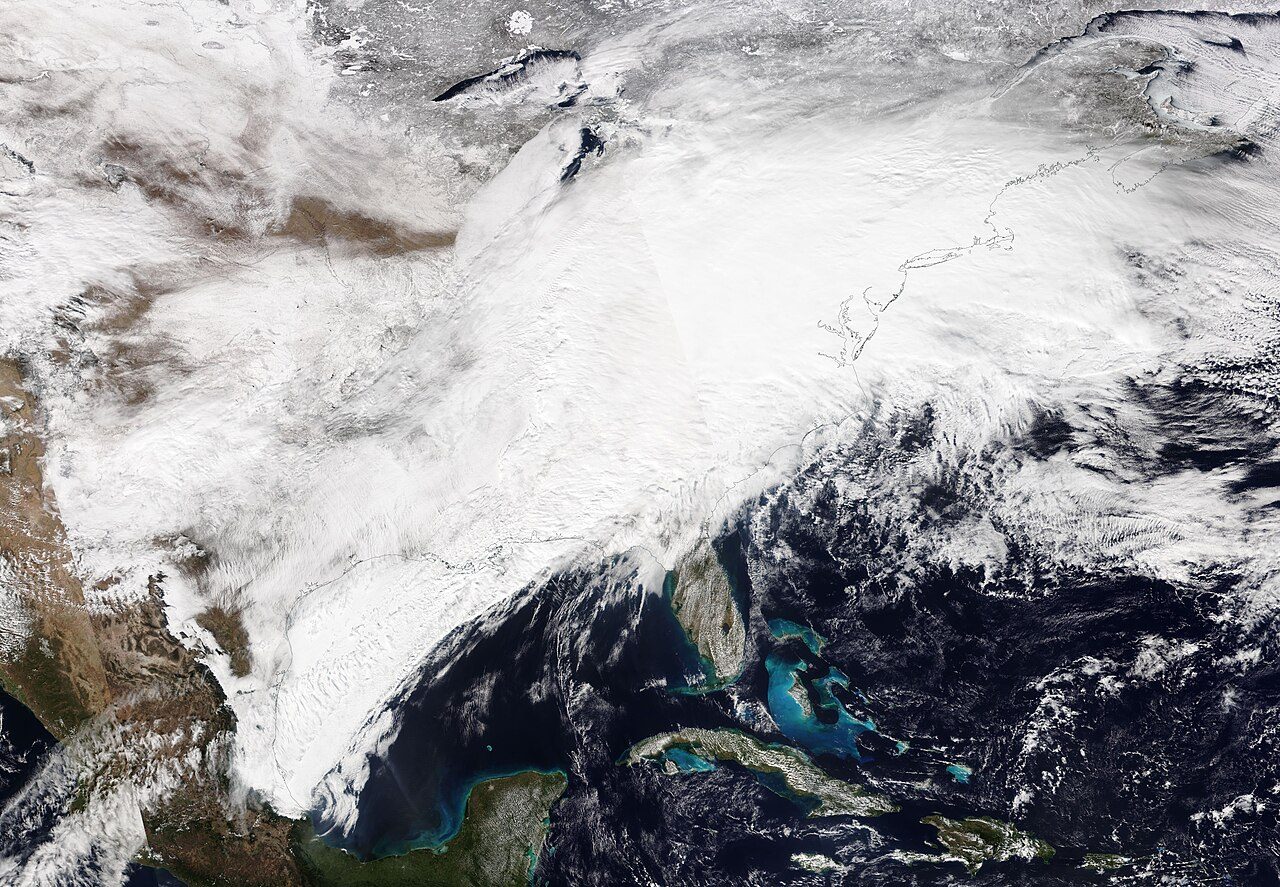
PJM Interconnection expects 182,426 MW of operational capacity this winter against a forecast peak of about 147,500 MW, plus an average of about 3,200 MW of exports to neighboring systems, and says it has sufficient resources to meet demand under expected conditions. That peak would set a new winter record if reached, according to the winter outlook the grid operator for 13 states and the District of Columbia published on November 5, 2026. The same outlook says reserve margins continue to tighten as demand outpaces new supply, and that reliable operations will depend on strong generator performance, particularly in extreme cold.
The record to beat is 143,700 MW, set on January 22, 2025. PJM forecast a record for the 2025–26 winter too: its November 2025 outlook put the peak at about 145,700 MW, 2,000 MW above that mark. The record held. Late January 2026 brought Winter Storm Fern and what PJM calls the most prolonged period of extreme cold it has experienced since the 1990s, but temperatures in the heart of the arctic wave came in significantly warmer than forecast, and school, government and office closings pulled demand down further, PJM said in its February review. The system ran at hourly peaks of 130 GW and above for eight consecutive days, January 26 to February 2, without setting a record.
Supply was the weak side in 2025–26
What fell short of plan that winter was the generators. PJM's seasonal projections had forecast 15.9 GW of generator outages during peak conditions; during Fern and its aftermath the fleet averaged 18–19 GW of outages, with plant equipment failures by far the most commonly cited cause, the February review says. Tight gas supplies and inflexible gas scheduling forced additional actions that cost about $798 million in out-of-market uplift from January 24 to February 1, by PJM's preliminary figures. "Generator performance is more critical than ever as we operate with less room for error," David Souder, PJM's executive director of system operations, says in this year's outlook.
The headline numbers leave less room than they look. Take the forecast peak and exports out of operational capacity and about 31,700 MW remains, by our arithmetic, before any allowance for generator outages. The 2025 outlook published the figure left after expected generation outages, exports and other factors: a reserve margin of 7,500 MW, down from 8,700 MW the winter before. This year's outlook gives no megawatt figure, saying only that PJM forecasts "adequate generator reserve margins under the most probable scenario, after taking into account expected generation outages, electricity exports and other factors." The outage level PJM cites as its danger case, roughly 46,000 MW during Winter Storm Elliott in 2022, is larger than that whole 31,700 MW.
Transmission concentrates the risk. PJM names the BGE, Pepco and Dominion zones in Maryland, Virginia and the District of Columbia as places where constraints limit deliveries from the rest of the system. Those are the zones where PJM told the Energy Department outages were felt most acutely in October, when outages during a warm maintenance-season spell led PJM to seek an emergency order covering 38 units and backup generation.
The stress case leans on customers
This year's bad-weather case comes with a condition attached. PJM studied less likely, higher-stress scenarios with less generation available, from outages or weather-related poor renewable performance, and customer demand of up to 152,200 MW. Those studies show PJM can maintain reliability by implementing both its Pre-Emergency and Emergency Demand Response programs. The 2025 outlook's stress scenarios reached 150,300 MW, and that outlook said reliability was maintained "under most scenarios, including expected outages."
Demand response, which pays customers in advance to cut their use when asked, has been activated 15 times in 2025 and 2026, PJM says, against eight times in the previous eight years: nearly twice the old eight-year total in under two years. PJM also says it will seek Energy Department emergency orders, as appropriate, that let designated generators run beyond their permitted emission levels, as it did in January 2026, when 15 generators were dispatched under such an order for a total of 1,035 run hours and provided 5.2 GW of capacity. It has also requested and received authority to direct data centers and other large loads onto their backup generators as a last resort, and says it has never had to use it.
Demand keeps moving the target
New load, especially data centers and other large loads, is driving steady increases in annual demand, PJM says, and its forecast winter peak has risen about 7,500 MW, or 5%, since 2022. Year on year, the outlooks put operational capacity up 1,626 MW and the forecast peak up about 1,800 MW, by our arithmetic. PJM lists the forces eroding its margins as rising demand, continuing generator retirements and the slow pace of new projects coming online, while the number of flexible resources that can respond quickly to its directions is falling.
The forward capacity market shows the same squeeze. PJM's 2027/2028 and 2028/2029 auctions both cleared at the FERC-approved price cap and fell short of its reliability requirement by 6,517 MW and 6,831 MW, and on November 3 Exelon asked FERC to replace the three-year-forward auction with a prompt one.
For the winter itself, PJM is leaning on preparation. Site visits with ReliabilityFirst, which oversees reliability and compliance for much of the footprint on NERC's behalf, have grown from under 10 before 2023 to an expected 30–35 this year, and PJM says generators that hosted one have seen reduced outage rates compared with those that have not. It is starting a similar program with SERC for the rest of the footprint, and will test generators that have not run for several weeks heading into winter.
The National Weather Service predicts a slightly warmer winter for all of the PJM footprint, the outlook notes. In November 2025 it predicted a slightly warmer winter for the Atlantic seaboard, and January 2026 then delivered PJM's longest cold stretch since the 1990s.
Sources
Primary
- PJM Winter Outlook: Power Supplies Available to Serve Expected Cold Weather Conditions · PJM Interconnection (Inside Lines)
Supporting
- PJM Winter Outlook: Adequate Power Supplies Available To Serve Growing Demand Under Expected Conditions · PJM Interconnection (Inside Lines)
- PJM Reviews January Cold Weather Operations · PJM Interconnection (Inside Lines)
Copies of cited sources are retained where available. If a link no longer resolves, request a copy at contact@theduckcurve.com.