 The Duck Curve
Britain's energy price cap rises 26% in January as gas outpaces power
Ofgem's January to March 2027 cap lifts the average Direct Debit electricity rate to 32.69p/kWh and gas to 10.96p, with standing charges almost unchanged and no VAT on electricity.
Britain's energy price cap will rise 26% for January 1 to March 31, 2027, Ofgem announced on November 25, 2026. For a typical household paying for gas and electricity by Direct Debit, the annualised figure goes from £1,723 to £2,166. The regulator puts the rise down to "the continued conflict in the Middle East pushing up international gas prices." The cap applies to around 20 million households on standard variable tariffs; around 10 million on fixed deals are unaffected while those deals last.
Gas carries most of the increase. The average Direct Debit gas unit rate goes from 7.97p to 10.96p per kWh, including 5% VAT, and electricity from 26.32p to 32.69p, according to Ofgem's table of unit rates and standing charges. That is 37.5% for gas and 24% for electricity, by our arithmetic. Standing charges barely move: 54.83p to 54.77p a day for electricity, 29.68p to 29.65p for gas. Ofgem's notes put the typical gas bill up 33% and the electricity bill up 19% against the October cap, and the regulator gives the reason itself: "Gas prices are increasing by more than electricity prices, reflecting the growing shift in electricity generation away from gas fired power stations to renewables."
The headline would have been bigger under the old yardstick. In July 2026 Ofgem lowered the typical consumption it uses to set the cap, because households now use around 7% less electricity and 17% less gas than at the last review. Measured against the 2023 values, the January figure would be £2,451, up from £1,935. The typical household got smaller before the bill got bigger, which takes £285 off the headline, by our arithmetic. The cap itself limits unit rates and standing charges, not total bills; what people pay depends on how much they use.
The gap between the two fuels narrows
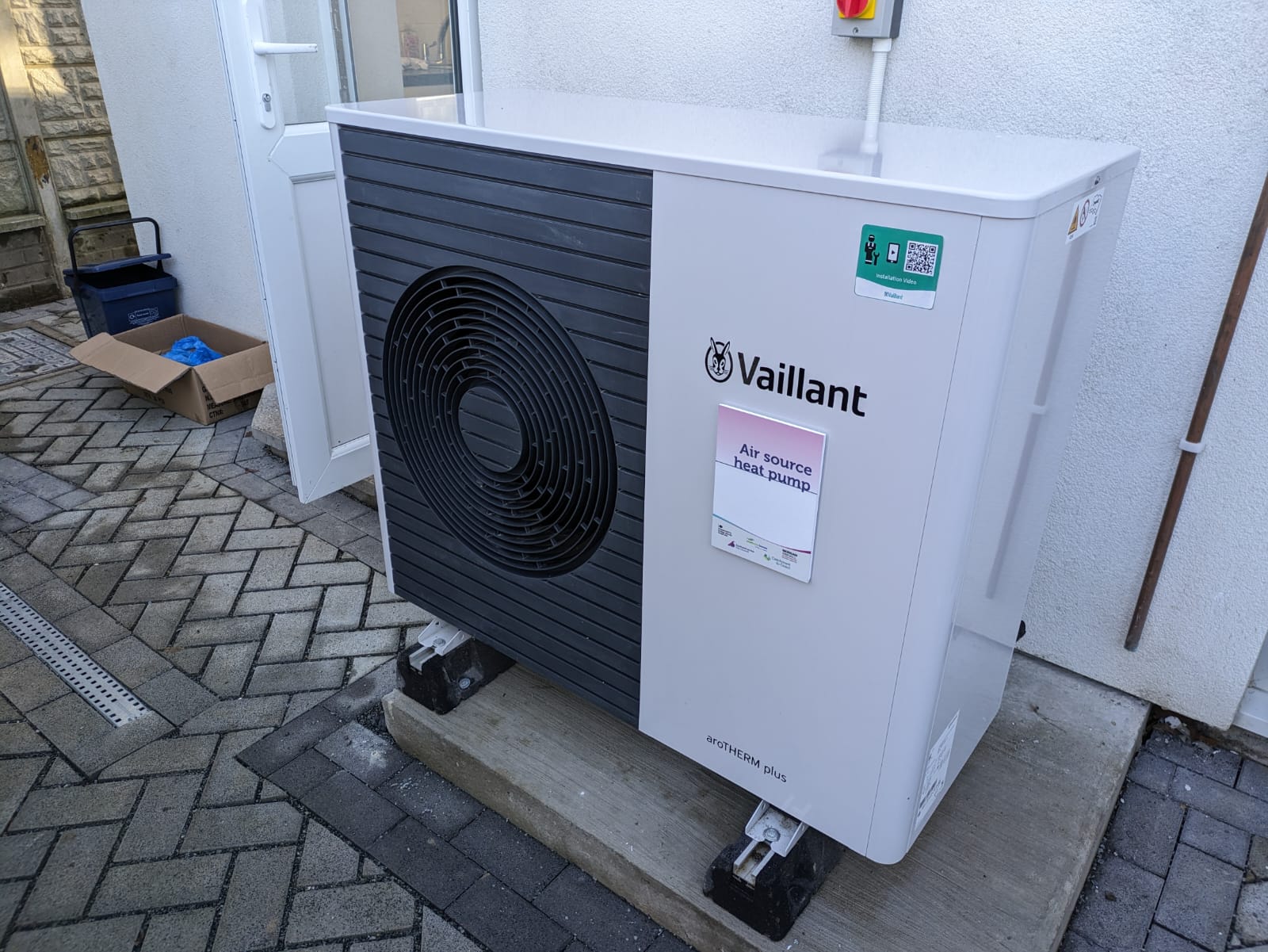
For a household weighing a heat pump against a gas boiler, the running-cost comparison comes down largely to what a kWh of electricity costs against a kWh of gas. Under the October cap, electricity cost about 3.3 times as much per kWh as gas; from January it costs about 3.0 times as much, by our arithmetic from Ofgem's Direct Debit averages. The heat pumps did not get any better; gas got dearer faster than electricity. Demand was already climbing before the announcement: heat pump grant applications in England and Wales hit a record in October, as we reported.
Part of that ratio is tax. The government removed VAT from household electricity bills on October 1, 2026, and is extending the cut until July 2027, saving households an average of £45 a year, according to the Department for Energy Security and Net Zero. Ofgem's figures carry no VAT on electricity for the cap periods from October 1, 2026 to June 30, 2027, and 5% on gas. The government's clean electrification roadmap says the VAT cut and an average of £150 taken off household bills from April 2026, mostly from electricity bills, "aim to make clean electricity more affordable, let consumers benefit from using it flexibly, and make better use of existing networks so that system costs stay down, while keeping investment in clean power attractive."
The next lever is aimed at gas. The government has asked Ofgem to remove standing charges from household gas bills as early as 2027; the costs those charges cover "will move to the unit rate," the department says. Ofgem says it is working on options and will share details later.
What it means for EV owners
A driver charging at home on a default tariff, paying by Direct Debit, pays 32.69p per kWh on average from January, up from 26.32p. Ofgem's guide to the new cap notes that some suppliers offer electricity at half price or less at quieter times, usually to people with a smart meter or other low carbon technologies. Public charging remains the expensive option: the government's charging review put the average standard public tariff at 54p/kWh, and kerbside electricity carries 20% VAT against none at home, as we reported in October.
Help with the bill
Up to 20 million households in council tax bands A to D in England will receive £100 toward their energy costs, with councils asked to start paying from January 4, the government said on November 24, 2026. The Scottish and Welsh governments have said they will use their extra funding for equivalent or similar schemes. Ofgem has written to suppliers, networks and brokers reminding them to identify struggling customers early and keep repayment plans affordable.
Ofgem will publish the cap for April 1 to June 30, 2027 by February 23, 2027, and may publish earlier "because of external reasons."
Outlook
Two scheduled changes pull the fuel-price ratio in opposite directions. If the VAT cut ends as announced in July 2027, electricity bills would carry VAT again from the cap period that starts then, which would widen the gap with gas. If Ofgem moves the gas standing charge into the unit rate in 2027, as the government has asked, the gas unit rate would rise for gas customers on the cap, which would narrow it. Which comes first, and by how much, depends on designs neither the government nor Ofgem has yet published.
⚠ The Outlook extrapolates from the Department for Energy Security and Net Zero's statements that the electricity VAT cut runs until July 2027 and that gas standing charges will move to the unit rate, and from Ofgem's statement that it is working on options for that change; it makes no forecast of either change's size or timing.
Sources
Primary
Supporting
- What the Autumn Budget 2026 means for your energy bills · Department for Energy Security and Net Zero
- The UK's clean electrification roadmap · Department for Energy Security and Net Zero
- 20 million households to receive £100 payment · HM Treasury, Department for Energy Security and Net Zero, Ministry of Housing, Communities and Local Government
- Energy price cap unit rates and standing charges · Ofgem
- Changes to energy price cap between 1 January and 31 March 2027 · Ofgem
Copies of cited sources are retained where available. If a link no longer resolves, request a copy at contact@theduckcurve.com.