 The Duck Curve
Neoen inaugurates 92 MW Brittany battery to test grid-forming by software
Grid operator RTE is leading a trial to switch the Breizh Big Battery's inverters to grid-forming with a software update alone; its R&D director says the retrofit phase should in theory be done by the end of 2026.
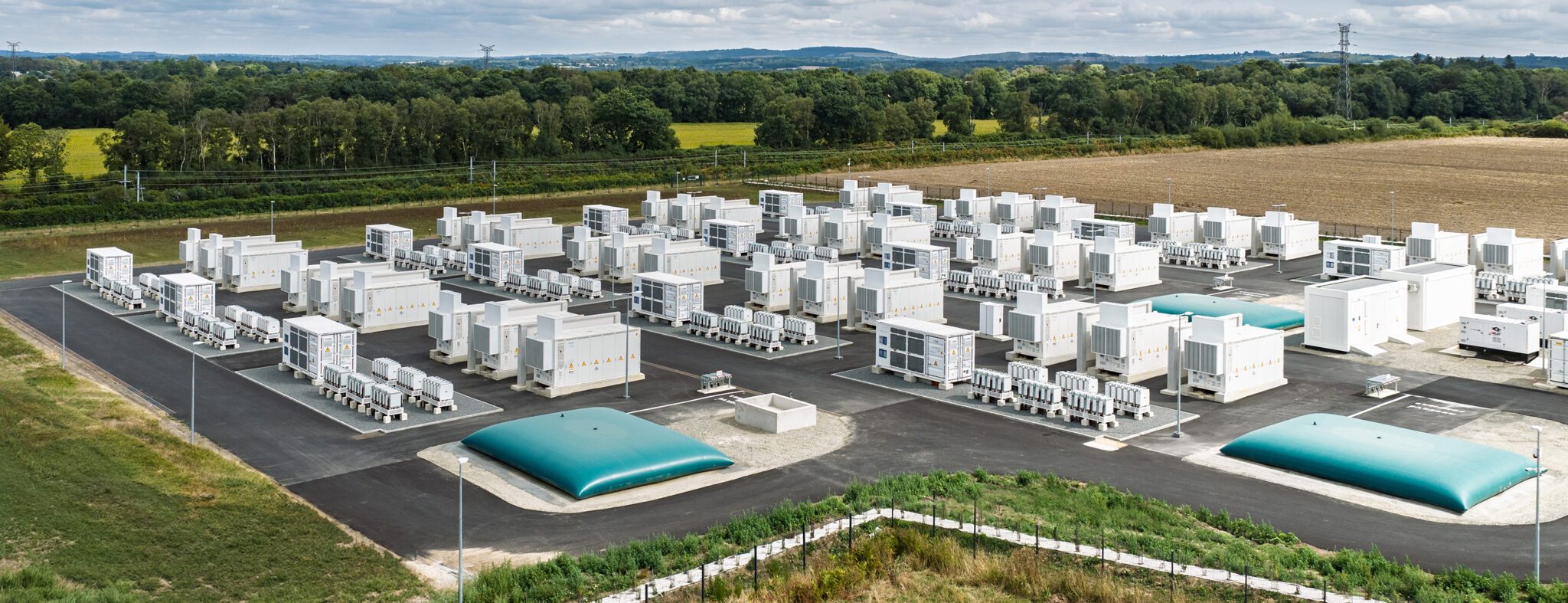
Neoen inaugurated the Breizh Big Battery at Pleyber-Christ, near Morlaix in Brittany, on October 8, 2026: 92 MW / 183 MWh, which the company calls the largest battery in Brittany and one of the most powerful in France (Neoen). The more interesting part is the inverters. Grid operator RTE is leading a trial at the site to switch them from grid-following to grid-forming mode through a software update alone, with no change to the inverter hardware, an experiment Neoen describes as unprecedented in France.
The difference is who sets the rhythm. France's current battery plants operate in grid-following mode, aligning with the voltage of the local network, Neoen says; grid-forming assets generate their own voltage and frequency reference, which lets them react instantly to stabilize the grid when something goes wrong. When the two companies signed the trial contract in January, Neoen put the drawback of the first approach bluntly: as "followers" by design, those systems "offer a slower and more limited response to fluctuations in electricity supply and demand" (Neoen, January 13). The pitch for the retrofit is that the capability sits in the software: the same hardware, told to behave differently.
The trial is not finished. RTE's schedule would, in theory, finish the retrofit phase by the end of 2026, according to Gabriel Bareux, its R&D director, quoted in Neoen's October release. The plan in January was a trial starting in the second half of 2026 and running for at least one year, with the battery expected to start operating over the summer of 2026 (Neoen, January 13). The inauguration came on October 8; the October release gives no date for the start of commercial operation.
How much of the battery is in the trial is less clear. The January release described a trial "to retrofit inverters" in its opening lines and an experiment "to convert an inverter from grid following to grid forming mode" further down; the October release speaks of the inverters, plural. Neither gives a count.
Grid-forming is the experiment; the markets are the day job. Neoen's October release says the battery will provide frequency and voltage regulation services to the grid. On January 21, Austrian optimizer enspired said it and Flexcity, part of the Veolia Group, had been selected to jointly optimize the battery across wholesale and ancillary-service markets once it goes live (enspired). "Breizh Big Battery is one of the largest 2-hour BESS projects in France," Neoen's head of energy management, Christophe de Brance, said in that release. The two-hour figure follows from the ratings: 183 MWh behind 92 MW is about two hours at full output (the arithmetic is in kW vs kWh).
Huawei and Equans built and assembled the battery in 18 months, with up to 50 people working on the site, according to Neoen. Neoen held public meetings with residents during development and has committed to help fund a municipal project putting solar panels on the roof of the town's gymnasium. Christophe Desplats-Redier, Neoen's CEO for France, called it the company's fourth battery in the country; the release headline calls it Neoen's first big one there.
A bigger one is under way. Neoen is building a 248 MW / 496 MWh battery at Vernou-la-Celle-sur-Seine, which it calls the largest in France, and puts its battery portfolio in operation or under construction at 3.5 GW / 10.6 GWh, up from the 2.8 GW / 8.1 GWh it gave in January.
Elsewhere, grid-forming is being designed in from the start, or proposed as a requirement. India's Central Electricity Authority has drafted a rule that would require grid-forming control on at least 15% of the inverters at renewable plants commissioned after July 1, 2027, and on every battery power conversion system (India drafts storage mandate for ground-mounted solar and onshore wind). On Maui, Hawaiian Electric's Waena battery will incorporate grid-forming technology (First six Megapacks installed at Hawaiian Electric's 40 MW Waena battery). The Brittany trial asks a different question: whether a battery built to follow the grid can be switched to forming it with a software update.
Sources
Primary
Supporting
- Neoen and RTE sign a contract to trial grid forming battery services · Neoen
- enspired and Flexcity to optimize Neoen's 92 MW/183 MWh BESS in France · enspired
Copies of cited sources are retained where available. If a link no longer resolves, request a copy at contact@theduckcurve.com.