 The Duck Curve
NASA opens bidding to design a 20 kW reactor for the Moon
Proposals for Lunar Reactor-1 are due December 21; the first task orders cover a design and a non-nuclear test unit, and NASA says the $350 million ceiling may not be enough to buy the flight reactor.
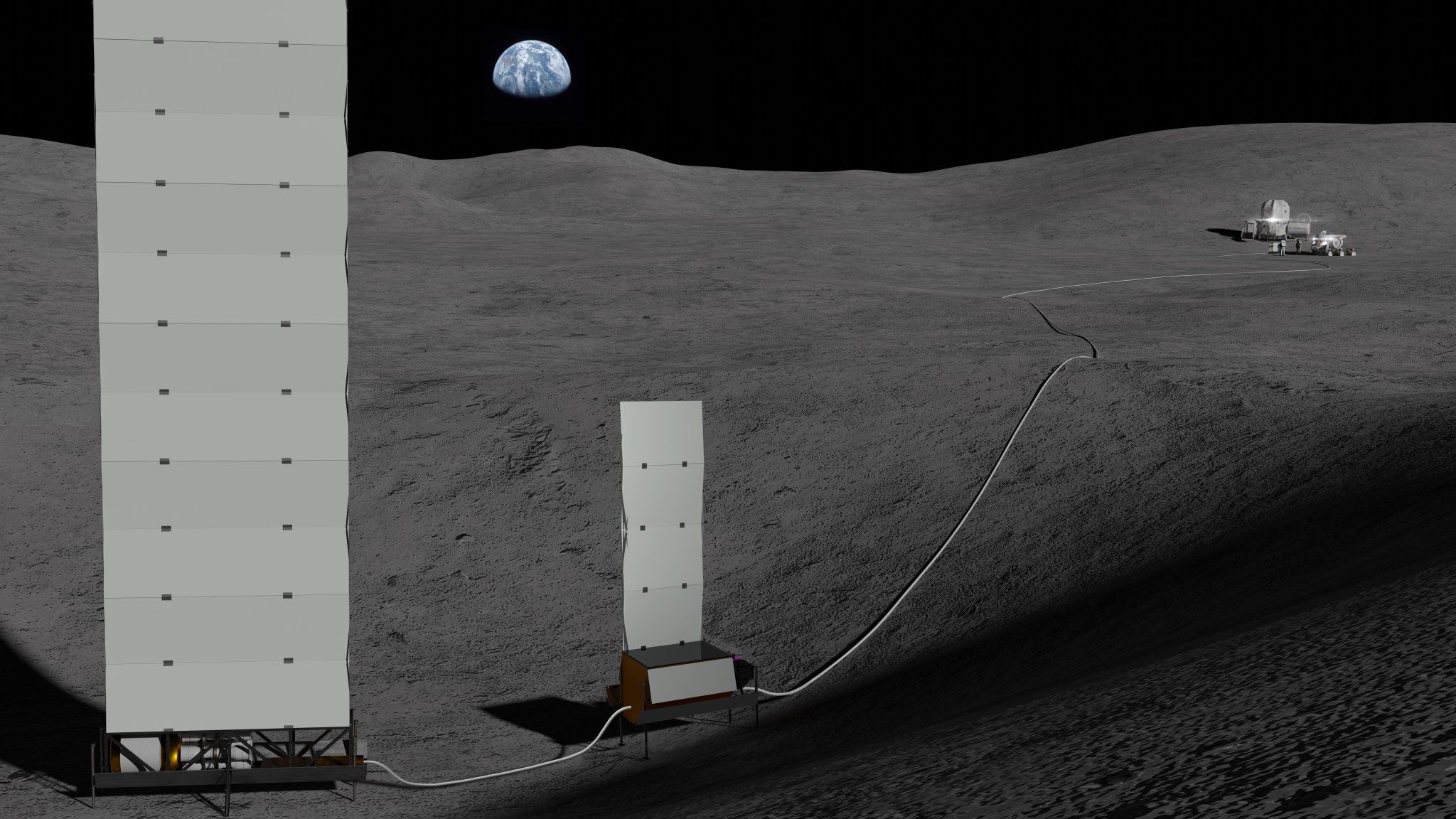
NASA wants a fission reactor on the Moon that delivers at least 20 kilowatts of electricity, runs for five years without maintenance, and is ready for launch by December 2030. NASA's Glenn Research Center posted the Space Power and Reactor Capabilities (SPARC) request for proposals, solicitation 80GRC027R0005, on SAM.gov on November 20, 2026, and the agency announced it on November 23. Proposals are due by 5:00 PM ET on December 21, 2026.
The machine is Lunar Reactor-1 (LR-1), which NASA describes as the first nuclear reactor designed to provide electricity on the Moon. Its 20 kW is, by NASA's comparison, "enough to power approximately 16 average U.S. households annually on Earth." The point is continuity: the release notes that lunar nights last about 14 Earth days, and a reactor does not care.
What NASA is buying first
Less than the 2030 date suggests. The SPARC contracts are multiple-award, indefinite-delivery vehicles with an ordering period from April 15, 2027 to December 31, 2031, and NASA expects to award them on April 15, 2027, per the cover letter. The solicitation sets a $350 million maximum per contract and says NASA anticipates ordering no more than that total across all the contracts it issues from the solicitation.
Bidders compete at the same time for LR-1 Phase 1 task orders; NASA intends to award more than one, all fixed-price, for work estimated to run from April 15, 2027 to October 14, 2028. The Phase 1 statement of work asks for three things: a preliminary-design-review-level design of the flight system, an electrically heated engineering test unit that integrates representative versions of the key subsystems, and component-level radiation testing. "Currently, only a design phase with hardware demonstrations is authorized," the statement of work says, and later phases would come as follow-on tasks "if authorized." It also says LR-1 "has not been chosen for a particular mission"; the planning assumes a first use at the lunar south pole.
The contract is candid about its own size. A clause in the solicitation says NASA "recognizes that the MAIDIQ ceiling value and period of performance of the SPARC contract may not be sufficient to allow for the award of a lunar reactor flight system," and reserves the right to raise the ceiling and extend the term to buy one. The same clause names SPARC as NASA's preferred contract vehicle for a flight-system task order.
The requirements
LR-1 must use a single reactor fueled with high-assay low-enriched uranium (HALEU), closed Brayton cycle power conversion, and must keep delivering no less than 20 kWe after a single failure. It must operate between 84°S and 90°S latitude on slopes up to 10 degrees, weigh no more than 15 metric tons including adapters and harnesses for the lander, and limit dose to 5 rem per year above lunar background at 1 km inside a 36-degree cone toward the notional habitat zone. Power leaves at 2,700 to 3,300 volts, three-phase, at 1,000 Hz, because users will have to carry it at least 1 km. Five years of full-power operation is the minimum, and the document's rationale for it is that 5 years "represents the upper limit of what lunar surface elements can feasibly be expected to perform given the lunar surface environment." The floor and the ceiling are the same number.
The target power has moved around. NASA's industry day presentation from September 14, 2026 lists the prior efforts: three parallel industry-led 40 kWe fission surface power conceptual design studies under a 2021-25 project, then a "100 kWe Commercial FSP Directive" in 2025-26. LR-1 is a 20 kWe minimum. The final solicitation still asks bidders to discuss "extensibility of the LR-1 concept to 100 kWe and higher," so the larger number has become an essay question.
The fuel question
HALEU is the scarce input. The statement of work says NASA has coordinated with the Department of Energy for an allocation of HALEU and that the contractor is responsible for applying through DOE to acquire it. When DOE made its third round of conditional HALEU commitments on July 23, 2026, NASA was a first-time recipient, but that allocation was for SR-1 Freedom, a nuclear electric propulsion mission to Mars that the same Space Reactors Division is developing for a 2028 launch. DOE said then that HALEU "is not currently available from domestic suppliers." Centrus's supply contract with Radiant is one of the commercial deals for it.
LR-1 is not the US government's only space reactor work; DARPA is backing the DARPA-backed Kilopower ground test that SpaceNukes announced on October 21, 2026. NASA's statement of work ties LR-1 to Executive Order 14369 and National Space Technology Memorandum-3, and the release says the solicitation requires the reactor to meet DOE safety standards for nuclear operations.
Outlook
The calendar is tight on paper. If the Phase 1 task orders run their estimated course to October 14, 2028, by our arithmetic about 26 months would remain before the December 2030 launch-readiness target for everything the current contract does not yet authorize: flight-unit fabrication, fueling, testing and integration, for a mission that has not been chosen. If NASA uses the ceiling clause as written, that work would be ordered under SPARC, among its contract holders, rather than through a new solicitation. The next public markers are the December 4, 2026 deadline for written questions, proposals on December 21, and the April 15, 2027 award date.
⚠ The Outlook extrapolates from the dates in NASA's SPARC cover letter and LR-1 Phase 1 statement of work and from the solicitation's clause on raising the contract ceiling for a flight system; the 26-month figure is our arithmetic from those dates.
Sources
Primary
- Space Power and Reactor Capabilities (SPARC) - Final Request for Proposals (RFP), 80GRC027R0005 (cover letter) · NASA Glenn Research Center (SAM.gov)
- SPARC Final RFP 80GRC027R0005 · NASA Glenn Research Center (SAM.gov)
- Attachment J.2-05: LR-1 Phase 1 Task Order Statement of Work · NASA Glenn Research Center (SAM.gov)
- NASA Seeks Partners to Design First Nuclear Reactor for the Moon · NASA
Supporting
- Energy Department to Distribute Third Round of HALEU to NASA and Radiant · U.S. Department of Energy, Office of Nuclear Energy
- SPARC Industry Day Presentation (draft RFP 80GRC026R0009) · NASA Glenn Research Center (SAM.gov)
Copies of cited sources are retained where available. If a link no longer resolves, request a copy at contact@theduckcurve.com.