 The Duck Curve
Mazama says CO2-cooled drilling ran 20% faster in 645°F Oregon rock
The August test at Newberry cooled Mazama's bottom hole assembly to 195°F; a 2024 gap analysis rated CO2 drilling at readiness level 3 and named CO2 supply its main obstacle.
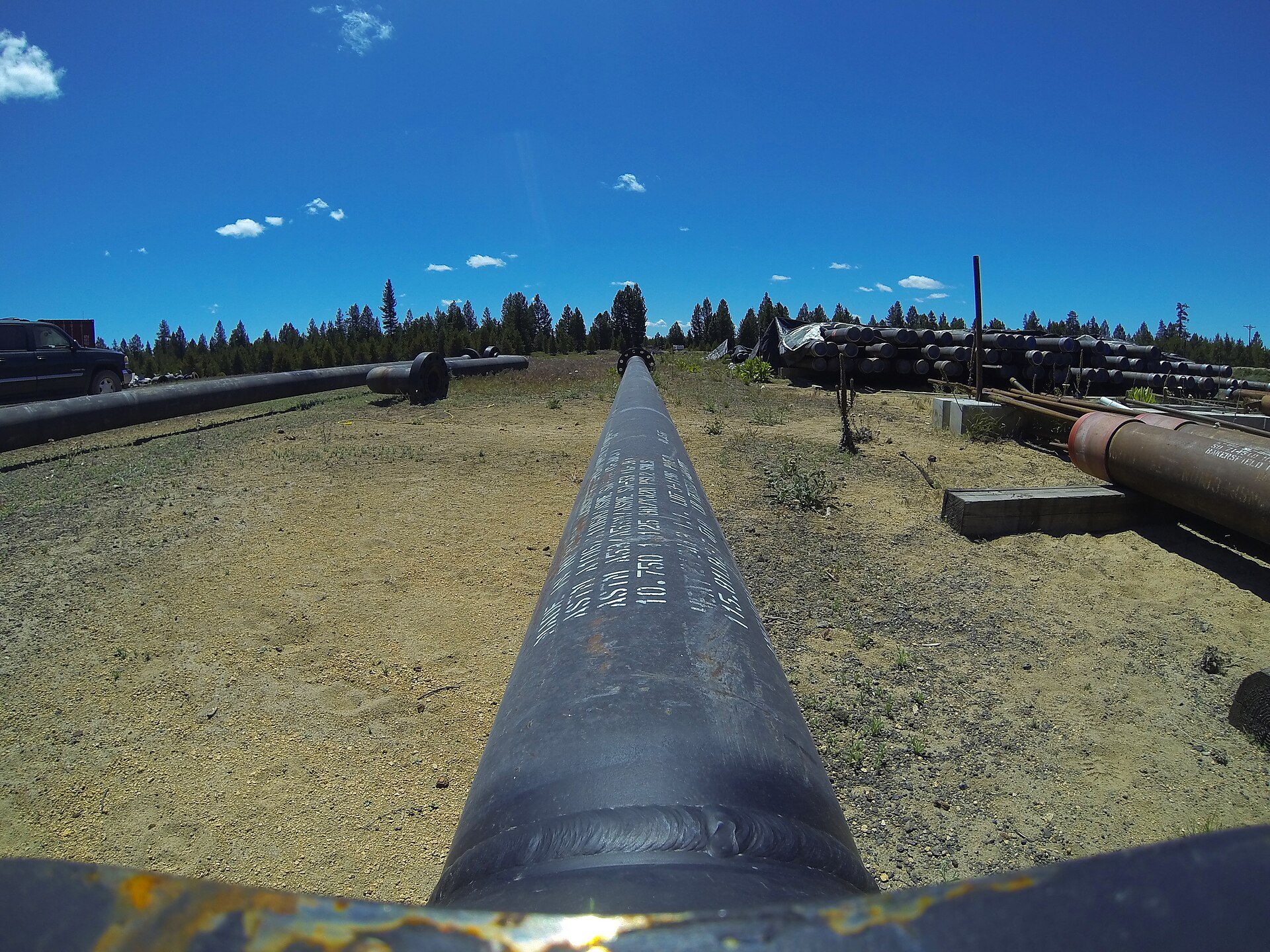
Mazama Energy says it drilled through 645°F rock at Newberry, Oregon in August 2026 while keeping its bottom hole assembly at 195°F, using supercritical carbon dioxide as the drilling fluid. The run, at the company's Athena project, was 20% faster than conventional drilling, at 92 feet per hour, according to Mazama's November 16 release, which calls it "the world's first field use of sCO₂ as a drilling fluid in a deep geothermal well." Mazama calls the system Carbon Chill and describes it as patented.
The problem it goes after is the electronics. Steering a well depends on tools near the bit that report its direction and inclination, and a 2024 technology gap analysis by the Clean Air Task Force and the Cascade Institute found that "most MWD and LWD tools have a maximum temperature rating of 175 oC," about 347°F, "limiting drilling operations to this temperature threshold." Mazama's Carbon Chill page leads with the gap it measured: a 450°F difference between the rock and the equipment. The release says the system kept the steering tools well below their operating limit, protecting the electronics that control the well's path in real time.
How the cooling works
Mazama injects liquid carbon dioxide down the center of the drill string, TechCrunch reported after an exclusive look at the system. In TechCrunch's account, the CO₂ turns supercritical as the surrounding rock heats it, then passes through a valve shaped like a rocket nozzle just before the drill head, where it expands, cools rapidly and absorbs heat from the electronics and the bit. The gas also carries cuttings to the surface. Mazama's page frames the contrast with mud: "Drilling mud is cooled at the surface and warms all the way down," while Carbon Chill "cools at the bit, right where the electronics are, opening a path to hotter resources, more energy per well and lower drilling costs."
Chief executive Sriram Vasantharajan told TechCrunch that high-temperature-rated electronics exist but would be cost prohibitive, and called the cooling a binary: "Without such technologies, I am, today, not able to drill these horizontal wells at super hot rock temperatures." Horizontal wells are the next step at Newberry. Mazama's September 1 release said Project Ceres, with Department of Energy support, "will drill the first ever commercial-scale superhot rock horizontal wells in Q4 2026," a schedule The Duck Curve set out when Mazama raised $135 million in September.
The test rock was hot, but by the release's own definition not superhot. The same release defines superhot rock geothermal as resources "above 705°F (374°C)," and the August run was in rock at 645°F. Athena is drilling toward "temperatures exceeding 750°F," the September 1 release said, and Vasantharajan told TechCrunch that a more recent well has surpassed 700°F. DOE's ARPA-E draws its line at 375°C and 22 megapascals, the floor of the SUPERHOT program under which it picked eight projects on November 12.
The speed and the money
The 20% has a different reference point depending on who describes it. The release measures it against "conventional drilling"; Vasantharajan told TechCrunch, "Our rate of penetration increased 20% over the already very high rates we were achieving." The release gives no depth, duration or rock interval for the run. That matters for the 92 feet per hour, because the September 1 release reported Athena reaching 10,350 feet in 15 drilling days at sustained rates above 130 feet per hour "across extended intervals," with instantaneous rates above 350 feet per hour. By our arithmetic, the conventional baseline implied by the 20% is about 77 feet per hour, well under the sustained rate Mazama reported for the same well in September, a gap neither release explains.
Neither of Mazama's September releases, the one on Athena's drilling speed or the one announcing its $135 million raise, mentioned carbon dioxide, though the test had run in August.
Cost is what the speed is for. The release says Carbon Chill is "designed to enable precise, cost-effective drilling into deeper, hotter rock, reducing the capital required per megawatt of electricity produced," and TechCrunch puts drilling at about 25% to 30% of the total cost of building a geothermal plant. In the September 1 release, Vasantharajan said he expects the first commercial project at Newberry "to achieve $4,500 to $4,950 per kilowatt initial development cost and inform a tangible pathway to $3,200 per kilowatt as the technology scales." The outside voice in the November release is Greg Leveille, introduced as a former chief technology officer of ConocoPhillips and an independent energy consultant, who said the approach "has the potential to considerably enhance the economics of superhot rock geothermal projects, making development viable across a much broader range of locations." ConocoPhillips, the same release notes, is a strategic investor in Mazama's Series B.
What the gap analysis said CO₂ would take
In 2024, CO₂ drilling was still a paper proposition for superhot rock. The gap analysis listed its benefits as the ability to cool the drilling system enough for conventional or high-temperature-rated tools to run with it, lower annular pressures that reduce the risk of losing fluid into natural fractures, and "potential increases in ROP from the thermal impact of hitting SHR with sCO2," the faster drilling Mazama now reports.
It rated CO₂-based drilling fluid at technology readiness level 3 and said "all the components of a sCO2 system exist," but that the whole package still had to be engineered and then tested in the field. "With the right level of investment, this package could be realistically developed and tested in 2-3 years," the authors wrote. Counted from the report's 2024 publication, an August 2026 field test came at the early end of that range.
It also named the catch: "The major obstacle to sCO2 drilling is the supply of CO2." The report adds the environmental impact of potential leaks and the need for crews experienced in drilling with the gas, and says CO₂ production needs to increase to scale the technology up. Mazama's release and product page do not say how much CO₂ the August run used or where it came from.
Outlook
The August run shows the cooling working in 645°F rock; the wells Mazama says need it are hotter and horizontal. If Project Ceres starts its horizontal wells on the Q4 2026 schedule in the September 1 release, those wells will be the first test of Carbon Chill where the CEO says conventional tools cannot go. Vasantharajan told TechCrunch the company hopes by 2027 to complete a single well capable of generating up to 15 megawatts. The 2024 report tied scaling the technology to more CO₂ production, so the supply question it raised grows with each well Mazama drills this way.
⚠ The Outlook extrapolates from Mazama's November 16 and September 1, 2026 releases, the CEO's remarks to TechCrunch published November 16, 2026, and the 2024 Clean Air Task Force and Cascade Institute drilling gap analysis.
Sources
Primary
- Mazama Energy Achieves Drilling Breakthrough That Advances the Economics of Superhot Geothermal · Mazama Energy via GlobeNewswire
Supporting
- Mazama Energy Superhot Rock Drilling Performance Milestone Signals a Turning Point for Engineered Geothermal System Economics · Mazama Energy via GlobeNewswire
- Mazama Energy Raises $135 Million to Scale the World's Hottest Engineered Geothermal System · Mazama Energy via GlobeNewswire
- Mazama Energy has a solution for geothermal's biggest drilling problem · TechCrunch
- Carbon Chill · Mazama Energy
- Drilling for superhot geothermal energy: A technology gap analysis (Version 1.0) · Clean Air Task Force and Cascade Institute
Copies of cited sources are retained where available. If a link no longer resolves, request a copy at contact@theduckcurve.com.