 The Duck Curve
Maryland opens first Megawatts for Maryland round with up to $100M
The state grant auction ranks in-state renewable and four-hour battery projects by the grant they ask per MWh; the governor's office bills the two-year program at $200 million.
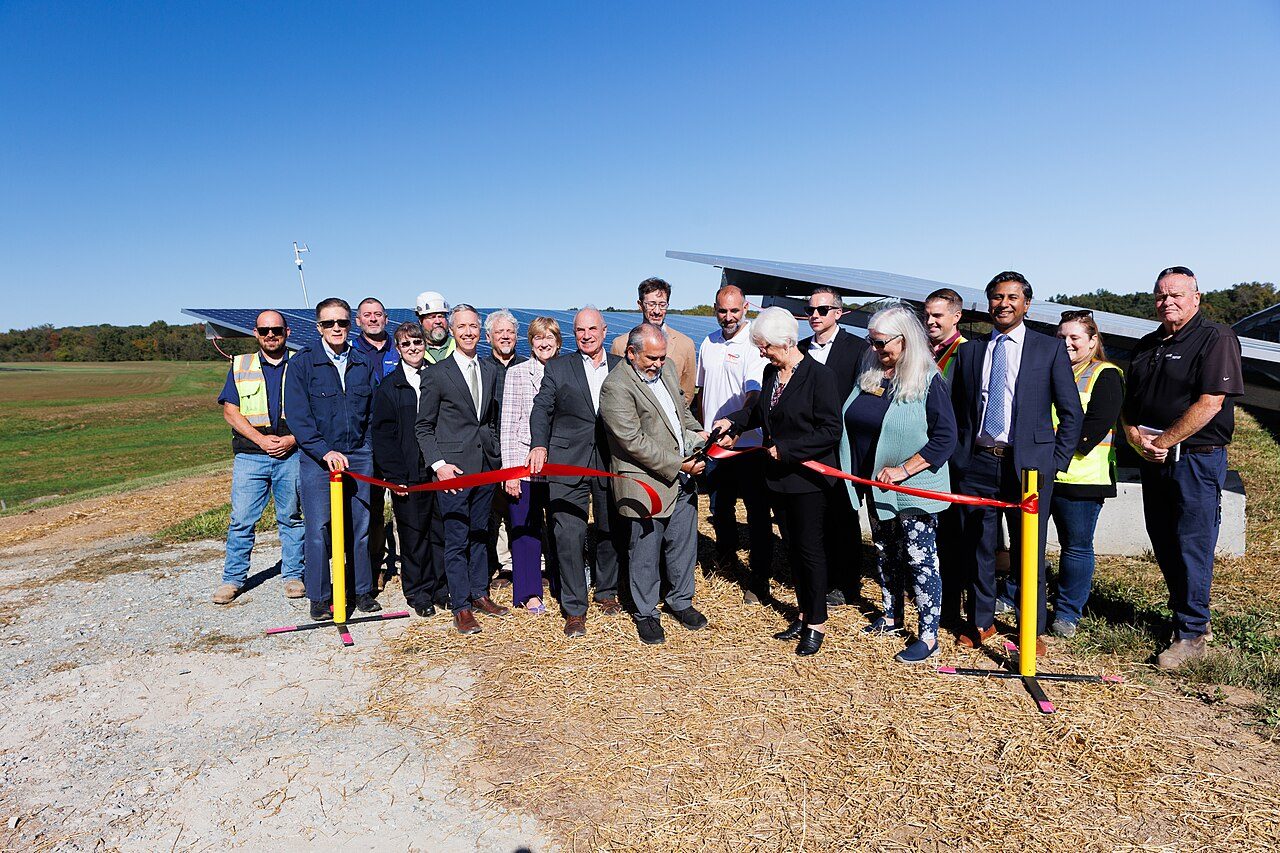
Developers can now bid for Maryland grant money to build solar farms, wind turbines and four-hour batteries inside the state. The Maryland Energy Administration (MEA) opened the first round of Megawatts for Maryland on October 26, 2026, a closed-bid auction that, per its funding opportunity announcement, anticipates up to $100 million for grants in fiscal 2027 and ranks bidders by the grant they ask per megawatt-hour, lowest first. Preliminary applications are due by 3:00 p.m. Eastern on November 30, 2026, binding bids by January 22, 2027, and MEA expects to notify winners in spring 2027.
The headline number is twice this round's anticipated budget. The governor's office launched it as "a $200 million clean energy auction program" running over two years, "drawing on up to $100 million a year" from the state's Strategic Energy Investment Fund. Both figures are right about different things: MEA's program page lists up to $100 million for fiscal 2027, with "an additional $100 million" anticipated for fiscal 2028. The release's own quote from House Speaker Joseline A. Peña-Melnyk calls it "This $100 million investment," which is the number this round's bidders are competing for, and the FOA adds that "the total amount awarded may be more or less."
How the auction works
Price is the whole contest. Stage 1 is an eligibility screen; projects that pass then bid the grant they want per megawatt-hour of AC energy "expected to be delivered to the grid over the commercial lifetime of the Project," and MEA's bid calculator turns that into a total grant amount using fixed assumptions on lifetime and degradation. Bid price carries 100% of the Stage 2 score, with the lowest bid scoring highest. Any bid above "an undisclosed maximum amount" is ineligible.
Grants run from $1 million to $80 million each, "unless the maximum is increased at MEA's discretion." One grant at that ceiling would take four-fifths of the round's anticipated budget. The money arrives late in the project's life: the grant is "fully disbursed upon evidence of the Project achieving its commercial operation date," winners must post a surety bond or equivalent worth 10% of the award, and they get "approximately seven (7) years" from signing to reach operation.
Eligibility is built for utility scale. Projects must be "physically located within the state of Maryland" and interconnecting to PJM transmission or a utility distribution system. Generation must be a Tier 1 renewable of at least 5 MW-ac, a list running from solar and land-based wind to qualifying biomass, landfill and wastewater methane, geothermal, small hydro under 30 MW and poultry litter. Batteries need at least 20 MWh and a discharge duration of at least four hours, stand-alone or co-located (the kW vs kWh distinction, written into the rules). Net-metered generation, including projects in the state's Community Solar Program, is out, and so are projects without site control, without a started PJM interconnection request or state siting process, or already substantially complete. A grant cannot be stacked with the Public Service Commission's energy storage capacity credits or with other MEA or Strategic Energy Investment Fund money for the same scope.
Where the money comes from
The fund's source gives the program a certain symmetry. Under the Utility RELIEF Act, signed May 12, 2026 as Chapter 353, the auction statute directs MEA to award grants "using revenue from alternative compliance fees," and an electricity supplier that falls short of the state's renewable portfolio standard pays such a fee for each kilowatt-hour of shortfall into that fund, per the Public Utilities Article. The fees for missing the renewable standard pay for renewables built in Maryland.
The statute calls for annual auctions in 2027 and 2028, tells MEA to rank bids "from lowest to highest cost per megawatt," and to keep awarding until it reaches a "capacity target": the lesser of the renewable generation still needed to meet the standard and what the available fees can buy. It also tells MEA to prioritize bids for renewable generation and for storage co-located with it, a category that leaves out stand-alone batteries. Within 90 days of executing the grants, MEA must publicly name each winner and the megawatts it will deliver, and by July 1, 2027 it owes the General Assembly a report on the auction, including its cost per megawatt. That report will be the first check on the governor's office's estimate that the program "aims to add hundreds of megawatts of clean, affordable power to the grid, enough to power more than 150,000 Maryland homes per year."
The federal credits it is meant to replace
Federal credits are not all gone, and the rules plan around the ones left. The governor's office pitches the program as filling "investment gaps created when the Trump Administration canceled investment tax credits from the Inflation Reduction Act." The FOA is less final: Stage 2 applicants must include "a declaration of intent to use the PTC or ITC" and explain how the project will qualify.
Both readings fit the federal law. Public Law 119-21, the July 2025 budget law, ends the clean electricity production and investment credits for wind and solar facilities placed in service after December 31, 2027, a cutoff that applies to facilities whose construction began more than 12 months after enactment, which puts the line at July 4, 2026, the same construction-start date that hangs over Arizona's Project Sterling. The investment credit's cutoff "shall not apply with respect to any energy storage technology" placed in service at such a facility. A Maryland solar farm that started construction after that date must be placed in service by December 31, 2027 to claim either credit; a battery does not face that deadline.
Outlook
The first round's shape follows from its arithmetic. If the $80 million ceiling stands and MEA spends near the anticipated $100 million, a single large project could absorb most of fiscal 2027's money, while a round of several mid-sized solar farms and batteries is also possible; the bids will decide which. The statute's disclosure rule means the winners and their megawatts will be public within 90 days of the grants being signed, and the July 1, 2027 report to the General Assembly will give the first cost-per-megawatt figure for the program. Solar projects that missed the July 4, 2026 federal construction date and cannot reach operation by the end of 2027 are the bidders for whom a state grant would most directly stand in for lost federal credits.
⚠ The Outlook extrapolates from the FOA's anticipated $100 million budget and $80 million default grant ceiling, the auction statute's 90-day disclosure and July 1, 2027 reporting requirements, and the wind and solar credit termination in Public Law 119-21.
Sources
Primary
- Funding Opportunity Announcement (FOA): FY27 Megawatts for Maryland · Maryland Energy Administration
Supporting
- Public Law 119-21, sections 70512 and 70513: termination of 45Y and 48E for wind and solar · U.S. Government Publishing Office
- Governor Moore Launches Program to Increase Energy Generation, Lower Electricity Costs · Office of Governor Wes Moore
- Megawatts For Maryland · Maryland Energy Administration
- State Government Article, section 9-20E-02 (alternative compliance fee auction) · Maryland General Assembly
- State Government Article, section 9-20E-01 (definitions) · Maryland General Assembly
- Public Utilities Article, section 7-705 (RPS compliance fees) · Maryland General Assembly
- HB1532 (2026 Regular Session): Utility RELIEF Act · Maryland General Assembly
Copies of cited sources are retained where available. If a link no longer resolves, request a copy at contact@theduckcurve.com.