 The Duck Curve
ISO New England's large-load filing ties firm service to new capacity
Data centers and other loads of 50 MW or more could instead take non-firm service, re-dispatched when local prices top $250/MWh; applications would open June 1, 2027, and service June 1, 2028.
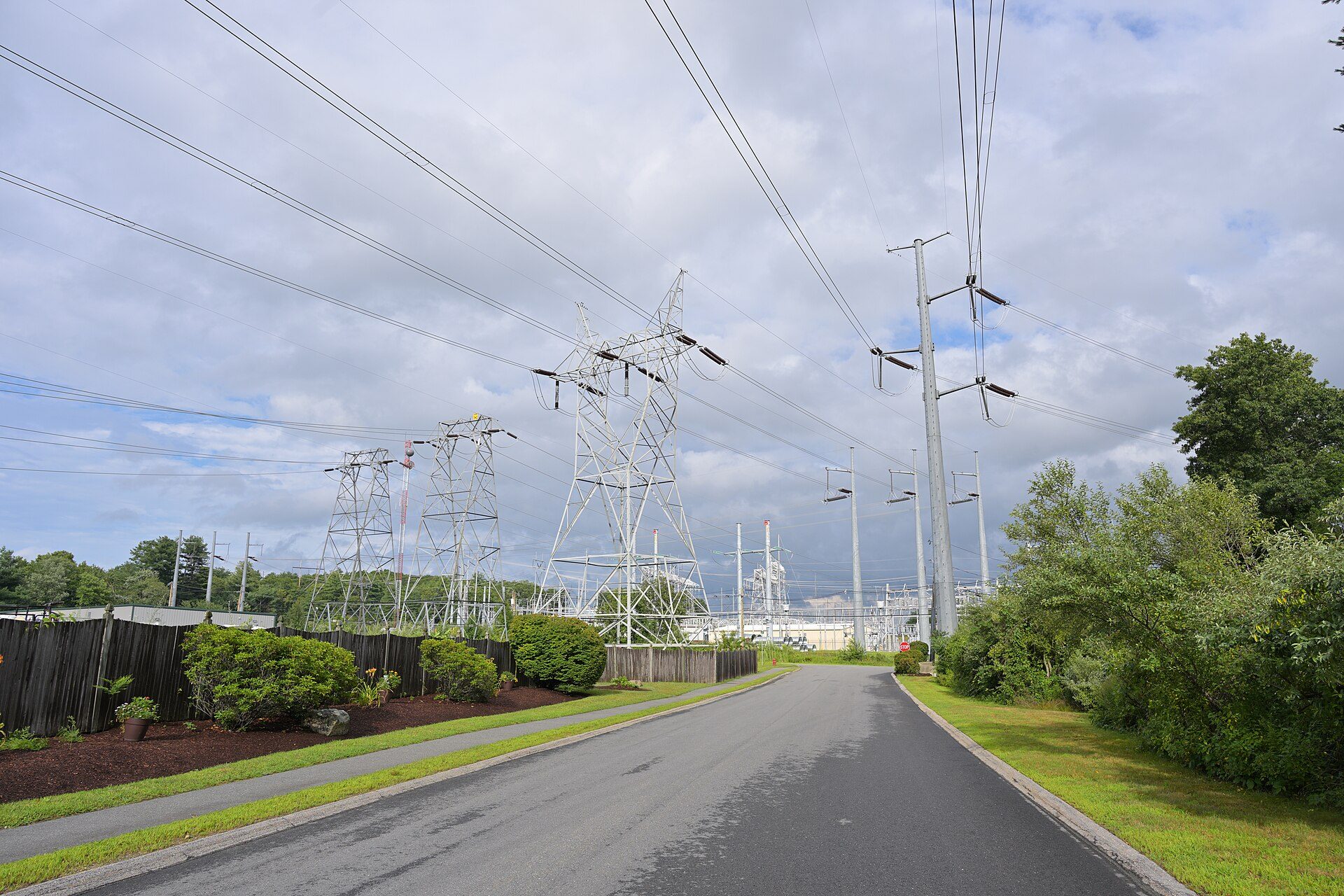
ISO New England wants data centers that expect firm grid service to bring their own new power supply. In a filing at the Federal Energy Regulatory Commission dated November 13, 2026 (docket ER27-484), the grid operator and the region's transmission owners proposed rules for commercial and industrial loads of 50 MW or more connected above 60 kV, with three kinds of service: firm service for loads that designate enough new capacity resources and wait for their network upgrades, interim non-firm service while they get there, and a permanent non-firm option for loads willing to throttle back when power gets expensive. The proposed definition excludes storage; hospitals, major medical complexes and water treatment plants; transportation such as railroads and airports (dedicated EV charging is still covered); and campuses without more than 50 MW of dedicated computational, industrial or commercial process load. The New England Power Pool joined everything except the transmission owners' cost recovery agreement.
The rules are written for customers New England does not have yet. Such loads "have yet to materialize in New England," the filing says, and over the past decade the region's load has been flat or declining. The ISO is answering anyway because FERC told it to: the filing responds to a June 18, 2026 show-cause order, one of six FERC issued that day to every regional grid operator it regulates, and asks FERC to close that proceeding if it accepts the rules. The filers asked for an effective date of November 14, 2026, so developers can plan around the rules. The ISO would start taking applications on June 1, 2027 and start providing the new services on June 1, 2028, when the software to run them is ready, according to the filing.
Three ways onto the grid
Firm Contract Demand Service gives a large load the same priority as all other firm loads, per the ISO's announcement. The price of admission is steep: every network upgrade identified for the load must be in service, and the customer must designate "sufficient new capacity resources" to cover the firm amount it requests, the "bring your own new capacity" requirement. Until both are done, the customer gets Interim Contract Demand Service, which is non-firm and lasts up to seven years or as long as the upgrades take, whichever is longer.
Non-Firm Contract Demand Service is the permanent alternative and needs no designated capacity. Both non-firm services carry the same condition: the ISO re-dispatches all or part of the load's non-firm service whenever its local price exceeds $250/MWh, and the customer either cuts consumption or raises output from an associated generator. In the ISO's market testimony, the Real-Time Hub price topped $250/MWh in 1% of intervals from January 2021 to February 2026; cautioning that history is not necessarily indicative of future outcomes, the testimony says those data suggest such a load "can expect to consume system energy in 99% of hours." The $250 figure matches the price at which the region already forgoes Replacement Reserves, and the ISO commits to reviewing it with stakeholders in 2027.
Two more provisions keep the newcomers from leaning on everyone else. Loads on interim or non-firm service are excluded from the Installed Capacity Requirement, the amount of capacity the region buys through its capacity market. Generators beside or near a large load can take an expedited interconnection path; those that do get zero MW of network resource interconnection service, so they can serve their load and supply its re-dispatch but cannot inject power into the grid or count toward the firm-service capacity requirement. Applicants pay a non-refundable $50,000 fee plus a $150,000 study deposit.
What counts as new capacity is still open. The tariff states the requirement only in broad terms; the working rules, covering what "new" means in "new capacity," how designated resources are accredited and where they must be located, are due in a 2027 filing after stakeholder talks, the ISO says.
Who pays for the wires
A developer whose load triggers network upgrades would pay their net cost monthly while connected and owe their remaining book value if it leaves early. That is the transmission owners' Large Load Cost Recovery Agreement, the piece NEPOOL declined to join, and the owners say it keeps other customers' transmission rates from rising. The monthly Cost Recovery Charge is the upgrades' revenue requirement minus what the load's transmission service already pays, credited against the owner's revenue requirement. If the agreement ends early or the load disconnects, an Exit Fee equal to the upgrades' net book value plus decommissioning costs comes due, backed by credit support. The ISO would also post a running list of large-load network upgrades and their estimated costs.
The owners defend that agreement with PJM's experience. FERC on October 9 rejected PJM's large-load package apart from its load definition and registry, including its own bring-your-own-capacity rules and a service that would have curtailed new large loads in shortages, finding among its reasons that parts of it appeared to intrude on retail rate regulation (our coverage). New England's transmission owners argue their agreement avoids those defects: it contains no curtailment or priority-of-service provision, sets no retail rate, and leaves every decision on the terms of retail service with the distribution utility and the state regulator. Even the non-firm service's name comes from FERC: its PJM order pointed to the Non-Firm Contract Demand service it had floated in its co-located load proceeding and called it "affirmatively a voluntary option, while the product or service here is not."
New England filed three days before two of its peers plan to. California ISO's board approved its own 50 MW large-load rules for a filing scheduled for November 16 (our coverage), PJM plans its show-cause response for on or about the same day, and MISO filed a study process pairing large loads with new generation on October 2; the interconnection reference page tracks the filings across regions.
Outlook
The ISO asked FERC to set comments due December 7, 2026, a 24-day window it says the filing's breadth and the holiday justify. The cost recovery agreement, the one piece the region's stakeholder body did not join, looks like the likeliest target for protests. Even if FERC accepts everything as filed, firm service will depend on a capacity requirement whose working rules the ISO expects to file only in 2027, so applicants arriving on June 1, 2027 may have to choose between non-firm and interim service before the rules say exactly what new capacity firm service requires.
⚠ The Outlook extrapolates from the November 13, 2026 ER27-484 transmittal letter: its request for comments due December 7, 2026, NEPOOL's decision not to join the transmission owners' cost recovery agreement, the ISO's plan to file detailed bring-your-own-new-capacity rules in 2027, and the June 1, 2027 application start. FERC had not set a comment date or acted on the filing as of November 13, 2026.
Sources
Primary
- ISO New England Inc. et al., Revisions to ISO New England Inc. Transmission, Markets and Services Tariff Related to the Integration of Large Loads to the Transmission System, Docket No. ER27-484-000 (transmittal letter and testimony) · ISO New England Inc., NEPOOL Participants Committee and Participating Transmission Owners (filed with the Federal Energy Regulatory Commission)
Supporting
- Order Accepting Tariff Revisions in Part and Rejecting Tariff Revisions in Part, PJM Interconnection, L.L.C., Docket No. ER26-3515-000, 197 FERC ¶ 61,019 · Federal Energy Regulatory Commission
- ISO-NE files proposal with FERC to address 'large loads' · ISO New England (ISO Newswire)
Copies of cited sources are retained where available. If a link no longer resolves, request a copy at contact@theduckcurve.com.