 The Duck Curve
Florida PSC denies Duke's large-load tariff, tells it to file a rate
In the first case under Florida's 50 MW large-load law, the commission found Duke's tariff covered only firm load and had not shown that each customer would bear its full cost of service.
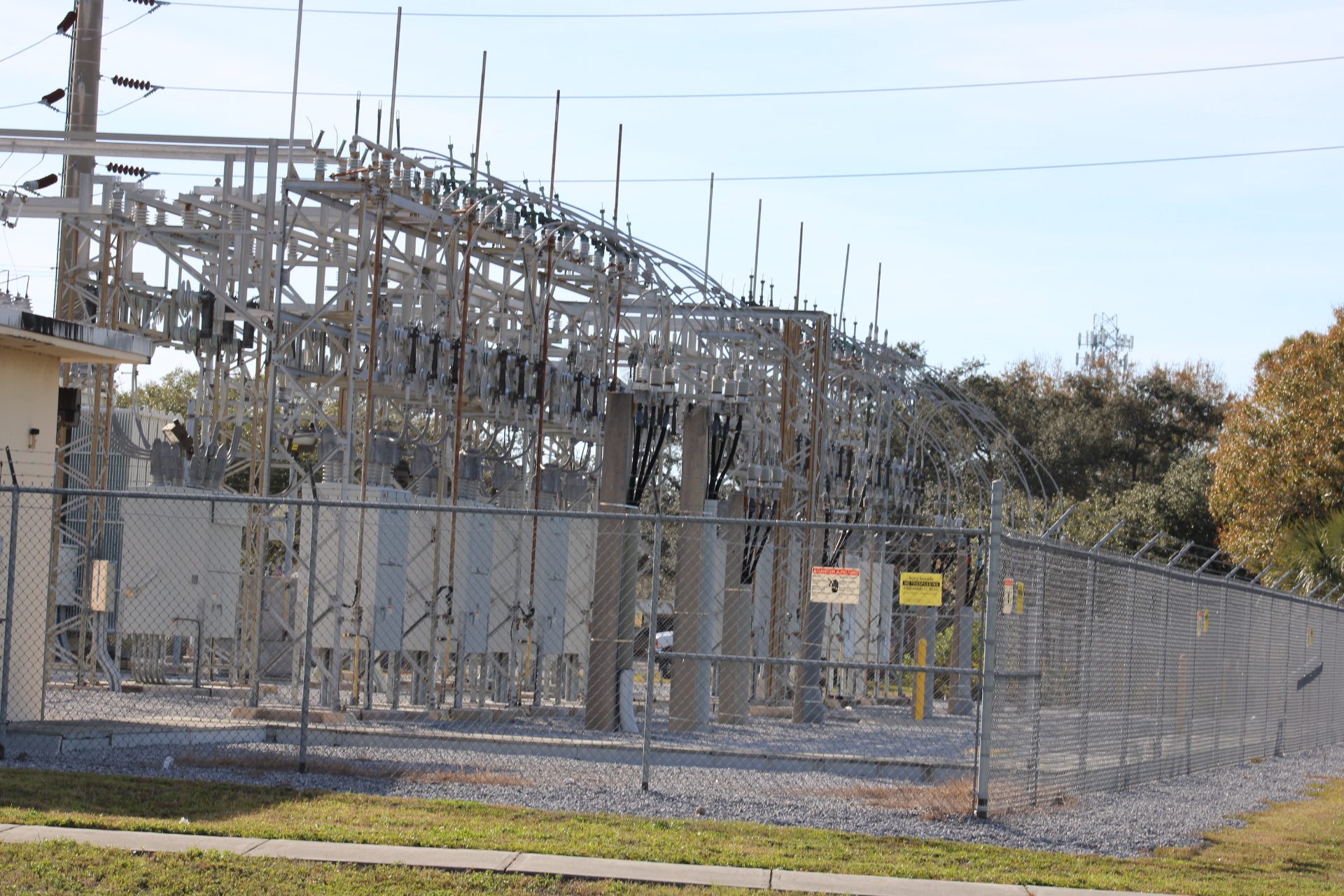
The Florida Public Service Commission on November 3, 2026 denied Duke Energy Florida's proposed large-load tariff as filed and told the utility to come back with a new one, in the first case decided under the state's law on customers of 50 MW or more. Voting without dissent, the commission adopted its staff's recommendation, as modified, on two grounds: the tariff covered only customers seeking firm service, while the statute defines a large-load customer by size alone, and Duke had not shown that its existing rates plus contract protections reasonably ensure each such customer bears its own full cost of service. Duke "must file tariff provisions for Commission approval covering all customers who meet the statutory definition and a proposed large load rate schedule with adequate cost support" (vote sheet).
The law is Section 366.043 of the Florida Statutes, created by Senate Bill 484, which the governor signed on May 7, 2026 and which took effect July 1. It says uniquely large loads at a single location impose "a disproportionate risk on the other ratepayers of this state," and requires tariffs that "reasonably ensure that each large load customer bears its own full cost of service and that such cost is not shifted to the general body of ratepayers." A large-load customer is one "with an anticipated monthly peak load of 50 megawatts (MW) or more," with no qualifier about the kind of service. Staff called Duke's docket, 20260064-EI, "a case of first impression" (staff recommendation).
Protections without a price
Duke's package had most of the parts the statute lists. Per the staff recommendation, a new customer of 50 MW or more of firm load would have signed up for a 20-year minimum term with early termination fees, a minimum demand of 75 to 85 percent of its annual contract capacity, financial guarantees, a non-refundable system impact fee, and 100 percent of the estimated cost of extending service paid in advance, refunded over up to five years. Staff counted six of the seven tools in the statute. The missing one, an incremental generation charge, was the core of the arguments from the Office of Public Counsel and Florida Rising.
What the package did not have was a rate. Large-load customers would have taken service under Duke's existing GSD-1 and GSDT-1 general service schedules until a new rate class arrived with the rate case Duke expects to file in 2027. Duke leaned on its 2024 rate settlement, which keeps base rates frozen through the end of 2027, plus a commitment that shareholders would absorb any unrecovered costs in that period. Staff agreed the freeze keeps large-load costs off other customers for now, but said it "only addresses half of the statute," and that shareholder absorption of a shortfall "does not itself demonstrate that the large load customer pays its full cost." Nor did the settlement stop Duke from proposing a large-load rate, staff found; deferring one was "DEF's chosen approach."
The firm-load limit fared no better. Duke argued that firm and interruptible customers carry different planning and investment risks; staff found "nothing in the statute supports any such distinction," and noted that a customer taking 100 MW of interruptible service would meet the statutory definition while falling outside every protection in Duke's tariff. Duke's own witness testified that he was not aware of a large-load request for non-firm load, at Duke or anywhere in the country. One of the two grounds for denial, in other words, concerns a kind of request Duke's own witness said he had not seen, at Duke or elsewhere.
Duke's next filing has to cover every customer that meets the statute's 50 MW definition, firm or not, and carry a proposed large-load rate schedule with adequate cost support, and it goes to the commissioners for approval. The recommendation staff filed in October said Duke "should be permitted to refile"; before the conference staff changed that to "must" file (staff's oral modification). The docket stays open, and the vote sheet marks moot both staff's line-by-line fixes, offered only if the commission found the tariff met the statute, and a path to refile within 10 business days for staff's administrative approval.
The queue, and the rest of Florida
The next filing would be Duke's third attempt. It first asked for a large-load tariff in September 2025, withdrew that petition on April 20, 2026 with SB 484 pending, and filed the current one two days later. The demand it is meant to govern is already waiting: Duke reported system impact study requests from 13 customers above the 50 MW threshold, the smallest of them 160 MW, and a Duke witness testified the utility can currently serve a single 55 MW large-load customer before its settlement expires at the end of 2027. The smallest request is nearly three times that, by our arithmetic, and staff concluded new generation would likely be required. The docket also drew more than 4,400 consumer comments by October 20, most objecting to rate increases at Duke and Florida Power & Light and encouraging clean, renewable energy.
Section 366.043 required every public utility to file a compliant tariff by October 1, 2026 (staff memo on FPL), so Duke's case was only the first through the door. At the same November 3 conference the commission suspended the large-load filings of Tampa Electric, Florida Public Utilities and Florida Power & Light so staff has time to review them; a suspension is a pause, not a ruling. FPL is taking a different route from Duke: it asks the commission to find that its existing Large Load Contract Service tariffs, approved in its 2025 rate settlement, already comply with the law as a matter of law, and proposes only minor revisions, on foreign entities.
The same cost question is being argued in other venues. Pennsylvania's consumer advocate wants a separate data center rate class at PPL Electric Utilities, a case Gov. Josh Shapiro moved to join in October, and federal regulators rejected PJM's plan to curtail new large loads in shortages while keeping its 50 MW registry. Florida's first answer under its own statute is that Duke's contract protections, six of the statute's seven tools, did not stand in for a rate with cost support behind it.
Sources
Primary
- Staff recommendation, Docket No. 20260064-EI, Petition for a limited proceeding to approve large load tariff, by Duke Energy Florida, LLC · Florida Public Service Commission staff
- Vote sheet, November 3, 2026 Commission Conference, Item 3, Docket No. 20260064-EI (Duke Energy Florida large load tariff) · Florida Public Service Commission
Supporting
- Staff recommendation, Docket No. 20260149-EI, FPL petition on large load contract service tariff under Section 366.043(8), F.S. · Florida Public Service Commission staff
- Oral modification to Item 3, November 3, 2026 Commission Conference, Docket No. 20260064-EI · Florida Public Service Commission staff
- Vote sheet, November 3, 2026 Commission Conference, Item 9, Docket No. 20260146-EI (Tampa Electric large load tariffs) · Florida Public Service Commission
- Vote sheet, November 3, 2026 Commission Conference, Item 10, Docket No. 20260148-EI (Florida Public Utilities large load tariff) · Florida Public Service Commission
- Vote sheet, November 3, 2026 Commission Conference, Item 11, Docket No. 20260149-EI (FPL large load contract service tariff) · Florida Public Service Commission
Copies of cited sources are retained where available. If a link no longer resolves, request a copy at contact@theduckcurve.com.