 The Duck Curve
61% of inspected Australian home battery installs rated substandard
The Clean Energy Regulator rated 0.95% unsafe, in line with solar PV, and the substandard share fell from 68.3% for August 2025 installs to 54.9% for April 2026 installs.
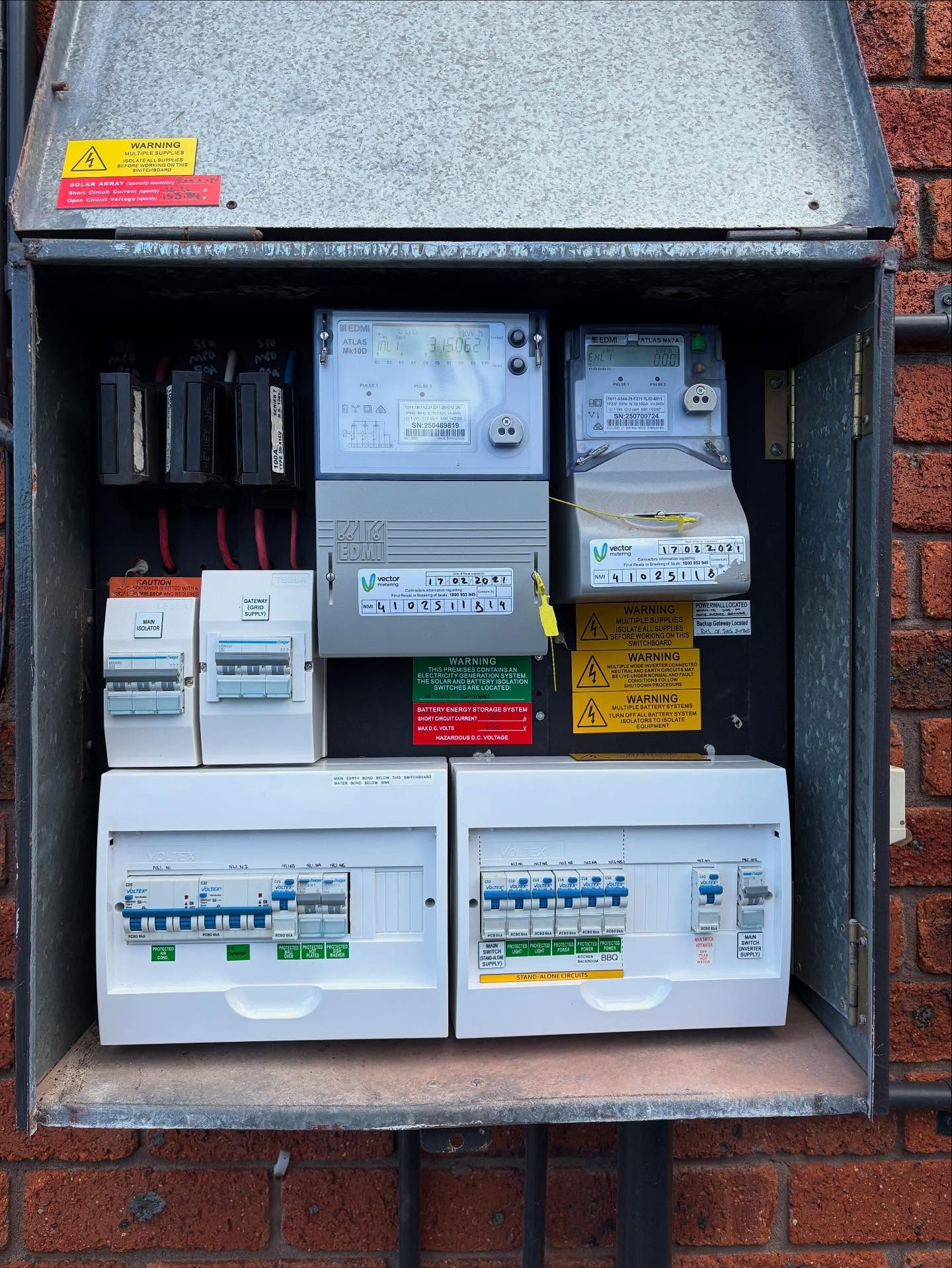
Of the home batteries installed in the first ten months of Australia's Cheaper Home Batteries Program, six in ten that the Clean Energy Regulator (CER) inspected at random were rated substandard. The CER's 2025–26 inspection report, published on November 13, 2026, puts 61.19% of 3,373 randomly selected battery installations in that category and 0.95% in the unsafe one. Solar PV systems inspected over the same year came in at 23.11% substandard and 0.93% unsafe.
Substandard is not the same as dangerous. The CER uses the rating for a battery that is safe to remain in operation but whose installation may not meet one or more clauses in the Australian standards; in most cases, its report highlights say, "it isn't an immediate cause for concern but could be an issue later." An unsafe system is shut down on the spot or otherwise made safe by the inspector. That happened to 32 batteries in the random sample: 23 for the installation work, eight for a product recall and one for a third-party incident. Either rating sends the installer back to fix the work when the installation is at fault, with proof of the repair going to Solar Accreditation Australia (SAA).
The year was the inspection program's busiest. The CER completed a record 6,554 inspections: 3,425 of batteries and 3,129 of solar systems. Batteries became eligible on July 1, 2025 under the Small-scale Renewable Energy Scheme (SRES), whose certificates deliver the program's upfront discount, and battery inspections began on July 15. The battery sample covers systems installed through April 30, 2026; the solar sample reaches back to July 1, 2024.
Labels first, then wiring
Labelling was the most common reason for a substandard battery rating: missing or incorrect critical warning labels, and backup circuits that were not clearly identified. Next came wiring (a residual current device missing or incorrectly configured on systems with an alternate supply), overcurrent protection rated too low, and cables or batteries without enough physical protection. None of the four is a fault in the battery itself; all are about how it was put in.
The CER answered the labelling problem with photo evidence. From March 1, 2026, certificate claims for batteries had to include photographs of the critical labels, carrying timestamp and geolocation metadata and checked with AI image identification. Labelling's share of quarterly rectification findings fell from 54.2% for batteries installed from October to December 2025, the last full quarter before the photo rule, to 39.5% for April 2026 installations, a quarter the CER marks as incomplete. Wiring's share rose from 13.2% to 35.4% over the same stretch. A photograph can prove a label is on the wall; it says little about the residual current device behind it.
The overall trend is down but slow. The substandard rate peaked at 68.3% for batteries installed in August 2025 and was 54.9% for April 2026 installations; the report sets the drop beside the measures the CER added. The unsafe share did not follow it: April's installs had the highest monthly unsafe rate in the regulator's data, 2.0%, against 0.3% to 1.7% in the other nine months. By our arithmetic that is about six systems among April's 304 inspections.
Location mattered more than the national figure suggests. Inspectors rated 541 of 703 Queensland batteries substandard, about 77% by our arithmetic, against 62 of 154 in the Australian Capital Territory, about 40%. New South Wales, the largest sample, came in at 520 of 917.
A sample from a boom
The inspections are a small window on a large market. By the end of the 2025–26 financial year the CER had received over 470,000 applications seeking certificates for battery systems, about 140 for every random battery inspection by our arithmetic. The program has since passed 600,000 batteries, Climate Change and Energy Minister Chris Bowen said on November 5, as The Duck Curve reported.
The incentive behind that volume changed the day after the last installations in the battery sample. Under the CER's battery rules, the certificate factor per kWh of usable capacity fell from 8.4 for January to April 2026 to 6.8 for May to December, and the factor now applies in full only to the first 14 kWh, at 60% from 14 to 28 kWh and at 15% from 28 to 50 kWh. Both changes took effect on May 1, and the CER read April's installations as households accelerating ahead of them, as we reported in September.
The rush month produced the second-lowest battery substandard rate of the ten. Solar tells a different story: the report rates 27.7% of inspected solar systems installed from January 1 to April 30, 2026 substandard, against 21.1% for 2025 installations and 22.3% for July to December 2024. The report notes the 2026 installations came in "a period of significant activity and growth in the rooftop solar and battery market," with the May 1 battery certificate change drawing installations forward, and says the sample is not yet representative of 2026 installations.
Enforcement so far runs on letters. Since July 1, 2025, the CER says, it has contacted over 830 installers about adverse inspection outcomes, sending 716 initial advisory letters and 121 warning letters, and has issued one notice of intent to suspend an installer from the scheme. Those counts include systems installed so far in the 2026–27 financial year; the report itself counts 183 installers contacted during the 2025–26 program. The CER can suspend an installer with three or more inspection reports with adverse findings, or three or more written statements containing false or misleading information. Its November 11 action against retailer Solar Power Nation was a different case: a suspension as a registered person, after the CER said it was no longer satisfied the company met the fit and proper person requirements.
For 2026–27 the regulator lists shorter gaps between installation and inspection among its priorities. Its monthly battery data ends with April's installations. The CER says the rest of the 2025–26 financial year will be captured in the 2026–27 inspection program, so the first installations under the new certificate settings belong to the 2026–27 findings. "Our message to installers is simple – do it once and do it well," the CER says.
Sources
Primary
- Small-scale Renewable Energy Scheme inspection program: 2025–26 inspection report · Clean Energy Regulator
Supporting
- Solar batteries (Cheaper Home Batteries program) · Clean Energy Regulator
- 2025–26 SRES inspection report highlights · Clean Energy Regulator
- Annual inspection report highlights trends in solar battery and solar PV installations · Clean Energy Regulator
- 2025–26 SRES inspection report: Solar battery inspection outcomes by installation month (CSV) · Clean Energy Regulator
- 2025–26 SRES inspection report: Solar battery rectification work required by category (CSV) · Clean Energy Regulator
Copies of cited sources are retained where available. If a link no longer resolves, request a copy at contact@theduckcurve.com.