 The Duck Curve
Australia added 276,011 batteries and 1,894 MW of rooftop solar in H1 2026
The Clean Energy Council counts 153 batteries per 100 solar installations and 12.9 GWh in the Cheaper Home Batteries Program's first year; held at the current rate, consumer storage would run 79 per cent above AEMO's 2029/30 projection.
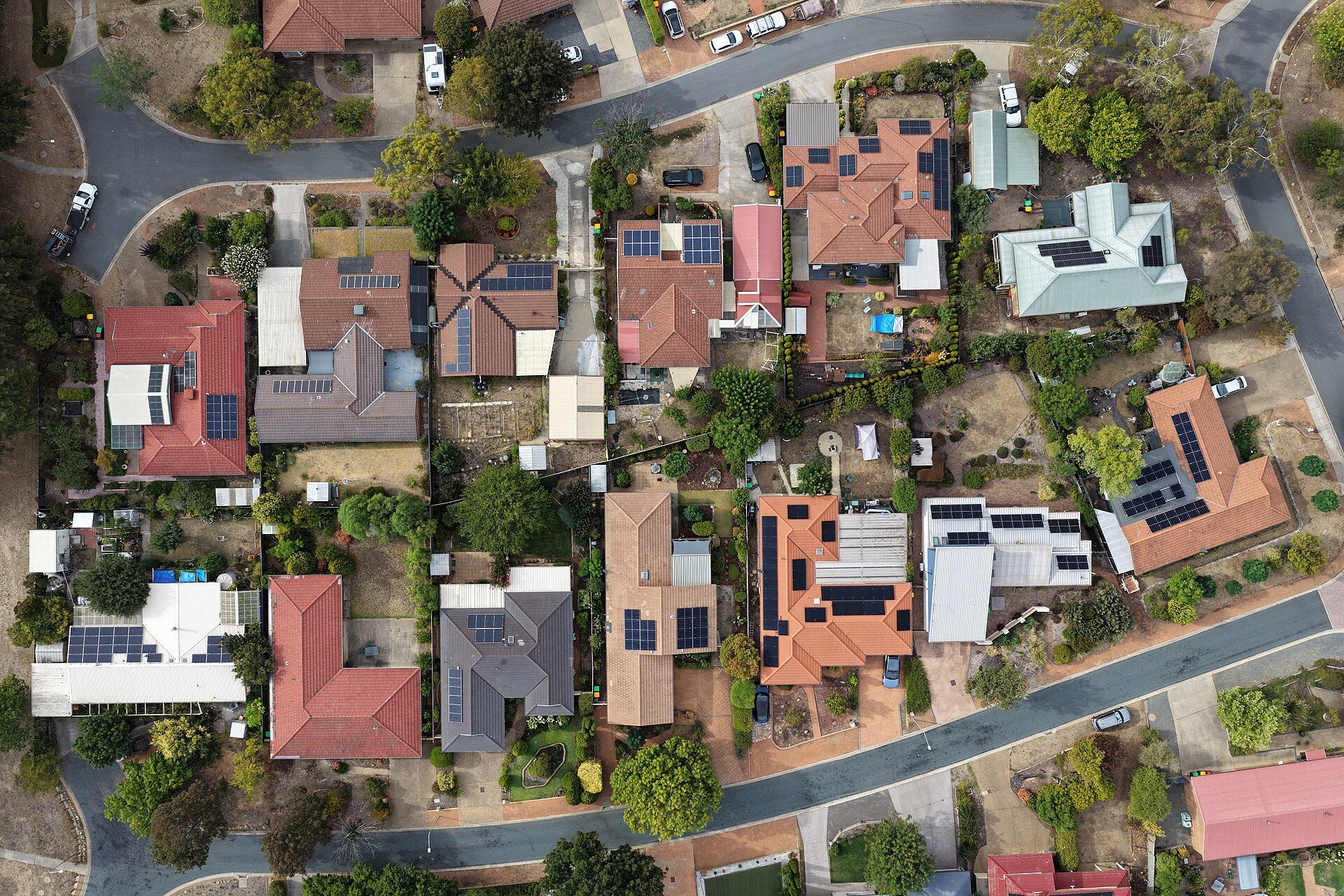
The Clean Energy Council said on September 29, 2026 that 180,878 rooftop solar systems and 276,011 batteries were installed in Australia in the first half of 2026, in its Rooftop Solar and Storage Report for January to June 2026. The report puts the solar count 35 per cent above the 134,013 systems of the first half of 2025 and calls it the strongest six months since 2021; it puts the systems' 1,894 MW of capacity 41 per cent above the 1,339 MW of a year earlier and calls that "the highest level for six months on record." Batteries ran 52 per cent above the preceding six months, and the report counts 153 batteries for every 100 rooftop solar installations, up from 130 per 100 in the second half of 2025.
The report dates the Cheaper Home Batteries Program's start to July 1, 2025 and puts its first twelve months at 457,439 batteries and 12.9 GWh of storage. Quarterly battery installations reached 154,140 in the June 2026 quarter, and the first half of 2026 added 8,691 MWh, more than double the 4,221 MWh of the second half of 2025, against the 52 per cent rise in unit numbers (see kW vs kWh).
The report says the installation and capacity figures in its battery and rooftop PV sections are applications submitted to the Clean Energy Regulator during the period, "including some still progressing through their standard compliance review process," and will vary slightly from the regulator's published data, which excludes applications that have not met requirements or been completed correctly; its product-list and Approved Seller figures are the CEC's own data. It switches data provider to Green Energy Markets from SunWiz for data from January 2019, except that its by-year charts and two battery charts still draw on prior editions' SunWiz data, which counted battery sales rather than installations before July 2025.
The CEC's media release of the same day and the report differ on the battery base. The report says 276,011 is 52 per cent more than the 181,428 installed in the preceding six months, which is, by our arithmetic, its 457,439 twelve-month total less the half-year figure; the release gives the prior six months as 183,245 and keeps the 52 per cent, which by the same arithmetic rounds to 51.
Battery sizes, the May 1 settings and the regulator's count
The average battery installed grew from 17.2 kWh in July 2025 to 35.3 kWh in April 2026, then eased to 26.6 kWh in June, with a 28.2 kWh average across the program's first twelve months, per the report. It does not say why sizes fell.
The Department of Climate Change, Energy, the Environment and Water's (DCCEEW) program page, last updated June 9, 2026, says amendments to the Renewable Energy (Electricity) Regulations 2001 finalised on February 5, 2026 brought two changes into effect on May 1, 2026, changes The Duck Curve described on September 21, 2026. The STC factor, which sets the small-scale technology certificates (STCs) a battery can create per kWh of usable capacity, went from 8.4 for January to April 2026 to 6.8 for May to December and now declines every six months and at a higher rate. Under the program, per the page, households, businesses and community organisations can get a discount of around 30 per cent on the upfront cost of battery systems of 5 kWh to 100 kWh connected to solar; since May 1 the page's tiers apply the factor at 100 per cent up to 14 kWh, at 60 per cent for every kWh above 14 and up to 28, and at 15 per cent for every kWh above 28 and up to 50, "with the aim of maintaining around 30% discount for a range of battery systems at each capacity level."
The regulator counts the same quarter on its approved-batteries basis. The Clean Energy Regulator's Quarterly Carbon Market Report for the June quarter calls Q2 2026 "a record quarter for battery installations under the Cheaper Home Batteries Program, with more than 111,000 approved batteries and 3.6 gigawatt-hours of storage capacity installed," against the CEC's 154,140 installations and 4,946 MWh for the same quarter on the applications basis. The CER says more than 80 per cent of small-scale solar installations in April were installed alongside a battery, "suggesting households accelerated combined solar and battery installations ahead of the 1 May changes," and that underlying demand remained strong after the changes took effect.
Ahead of AEMO's plan, and the CEC's case for coordination and protection
The report sets both fleets against AEMO's 2026 Integrated System Plan. At the rate of the twelve months to June 2026, rooftop solar in the National Electricity Market would reach 40.3 GW by 2029/30, 13 per cent above the ISP's Step Change projection of 35.8 GW, a trajectory the report says "should be read as an indication of current momentum rather than a forecast," with two qualifications that "work in opposite directions": the ISP category includes systems above the report's 100 kW threshold, so actual additions run higher, while the projection allows nothing for retirements. Consumer battery storage, on the same method, would reach 59.2 GWh by 2029/30, 79 per cent above the ISP's 33 GWh; that comparison, the report says, rests on twelve months of data from a market in its first year of subsidy and assumes no change in program settings, pricing or saturation.
Most household batteries, the report says, are operated simply to lift solar self-consumption. It points to virtual power plants, flexible tariffs and emerging flexibility markets as ways to reward households for supplying peak demand, absorbing excess solar and easing local network constraints (the two sides of the duck curve).
The number of battery models on the CEC's Approved Products list rose from 1,259 to 3,406; the report says that while the majority of these models were registered by one manufacturer, which it does not name, the increase still demonstrates growing product development and consumer choice. The first vehicle-to-grid capable chargers were approved, meeting AS/NZS 4777.2 grid connection requirements; Amber Electric's ARENA-backed V2G program added the BYD Sealion 7 on September 18, 2026.
The CEC investigated 567 complaints against Approved Sellers under the New Energy Tech Consumer Code, up from 317 in the previous six months, and took compliance action in 88 cases, up from 53. The report sets the 79 per cent rise in complaints against the 52 and 35 per cent rises in battery and solar installations, and says the proportion of resolved cases resulting in compliance action remained stable, 26 per cent against 24. It recorded 143 instances of non-compliance, concentrated, in its words, "at the points where consumers are most exposed": 34 per cent in sales documentation such as quotes and contracts, 11 per cent in installation and delivery and 10 per cent in grid connection.
Outlook
Next in DCCEEW's table, the STC factor falls to 5.7 for January to June 2027, so STCs per kWh fall again on January 1, 2027. Before that, the CER says, generation projects between 100 kW and 1 MW will be eligible for STCs from October 1, 2026, which it expects to further improve investment activity in that sector.
⚠ The Outlook restates the next step in DCCEEW's published STC factor table and the October 1, 2026 eligibility change as the CER's June quarter page describes it; it adds no forecast beyond those documents.
Sources
Primary
- Rooftop Solar and Storage Report, January to June 2026 · Clean Energy Council
Supporting
- Cheaper Home Batteries Program · Australian Department of Climate Change, Energy, the Environment and Water
- Quarterly Carbon Market Report, June quarter 2026 · Clean Energy Regulator (Australia)
- Australians backing rooftop solar, home batteries in record numbers · Clean Energy Council
Copies of every cited source are retained. If a link no longer resolves, request a copy at contact@theduckcurve.com.