 The Duck Curve
WattEV opens Port of Oakland truck charging depot with Tesla Semi fleet
WattEV says its new electric Semis cost less per mile in energy than diesel at current fuel prices; the Port of Oakland's release, citing WattEV, says their operating costs are half those of comparable diesels.
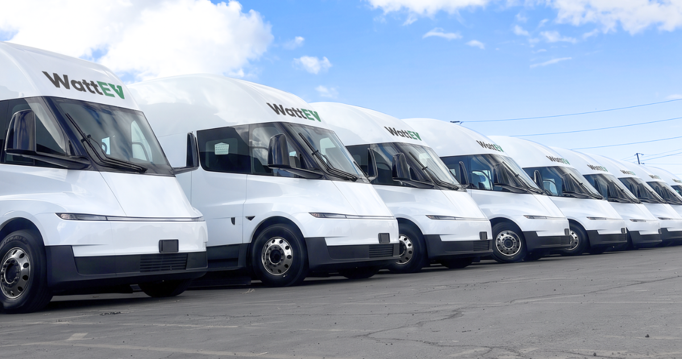
WattEV opened a heavy-duty electric truck charging depot at the Port of Oakland on November 23, 2026, the company said. It is WattEV's eighth depot in California and, by the company's account, Northern California's first public one. The site at 8407 Edgewater Drive can charge 25 medium- and heavy-duty trucks at once at up to 240 kW each, or seven trucks at 1.2 MW, and WattEV says megawatt charging cuts dwell times to 30 minutes or less, comparable to diesel refueling times.
The depot opened with trucks attached. WattEV introduced the first of what it calls "a large fleet of electric Tesla Semi trucks," which are to connect the port to freight destinations in the Bay Area and Northern California. The Port of Oakland's release, issued the same day, calls the site "the first of its kind in Northern California" and frames it as part of the Port's transition to 100% zero-emission operations.
Two releases, two accounts
The economics arrive in two versions, one per release. WattEV's headline promises "cost parity with diesel." Its body states the comparison this way: "the per-mile energy cost to fuel these new electric big rigs is less than that of comparable diesel trucks, given current diesel fuel prices." The Port's release attributes a different measure to WattEV: "According to WattEV, with current high diesel prices, the operating costs of these new electric big rigs are half that of comparable diesels."
One comparison is energy cost per mile; the other is operating costs. Apart from the Port's "half," neither release puts a figure on either comparison: no diesel price, no electricity rate and no cost per mile.
The truck numbers are worded differently as well. WattEV says "More than 300 electric Semis will establish a zero-emission freight corridor from the Bay Area to Sacramento, the Central Valley, Nevada and beyond." The Port says "Officials also announced the purchase of 300 electric Tesla semi-trucks that will serve the Port," and adds a schedule: "The first batch is due before the end of the year with the balance coming in 2027." WattEV's release gives no delivery schedule, and the Port's does not name the buyer.
Power under a flexible connection
The depot is sized for megawatts and connected under a program built to cap a site's draw when the local grid runs short. WattEV's release says PG&E supplies the power through its Flex Connect program. PG&E's pilot overview describes the deal: a customer with controllable load connects without waiting for a capacity upgrade, and PG&E's grid management system sends the site's energy management system an hourly power limit forecast a day in advance, which the chargers then follow automatically.
PG&E's worked example is an EV fast-charging customer who requested 2 MW and would otherwise have been held to 0.5 MW until upgrades were "completed over several years." Under the pilot, that customer gets "the full 2 MW of service right away, most of the time." One of the pilot's eligibility criteria is that PG&E has indicated capacity upgrades will take longer than 12 months.
"With Flex Connect, we're connecting WattEV to the grid faster by using smart technology to make the most of the grid we already have, instead of waiting years for upgrades," Madeline Silva, head of PG&E's Bay Area Region, said in WattEV's release.
A northern outpost for a southern network
WattEV's other seven depots are at the Port of Long Beach, Bakersfield, San Bernardino, Gardena, Vernon, Oxnard and Fresno. "Until now," CEO Salim Youssefzadeh said, "most truck charging infrastructure has been concentrated in Southern California." "We're thrilled to enable zero-emission freight transport from key ports like Oakland and Stockton into Sacramento, Central California and Nevada," he said in WattEV's release.
Oakland is drawing other truck chargers too. Forum Mobility, which opened two megawatt chargers at its Port of Long Beach depot on November 5, says it is building more charging at four new depots, two of them in Oakland (Forum's Long Beach opening). WattEV was among the customers Tesla named at its September 24 Semi production launch, as The Verge reported it (Tesla Semi launch event).
Officials from the Port, the City of Oakland, the Bay Area Air District, the California Energy Commission and PG&E joined WattEV at the opening, with guests from the California Air Resources Board, according to WattEV. "We're seeing real progress in transforming how our industry moves goods to and from the Oakland Seaport," said Port of Oakland Executive Director Kristi McKenney.
Sources
Primary
- Port of Oakland Opens First Heavy-Duty Electric Truck Charging Depot · Port of Oakland
- WattEV's Port of Oakland charging depot and new electric trucks bring cost parity with diesel to fleets · WattEV, Inc. (GlobeNewswire)
Supporting
- PG&E Flex Connect Pilot (program overview) · Pacific Gas and Electric Company
Copies of cited sources are retained where available. If a link no longer resolves, request a copy at contact@theduckcurve.com.