 The Duck Curve
PJM board approves $5.1B Valley Link estimate and later in-service dates
Valley Link's three proposals were priced at about $3.0 billion in 2024 dollars with a June 1, 2029 in-service date; the new estimate is in 2026 dollars and the dates run from January 2030 to May 2031.
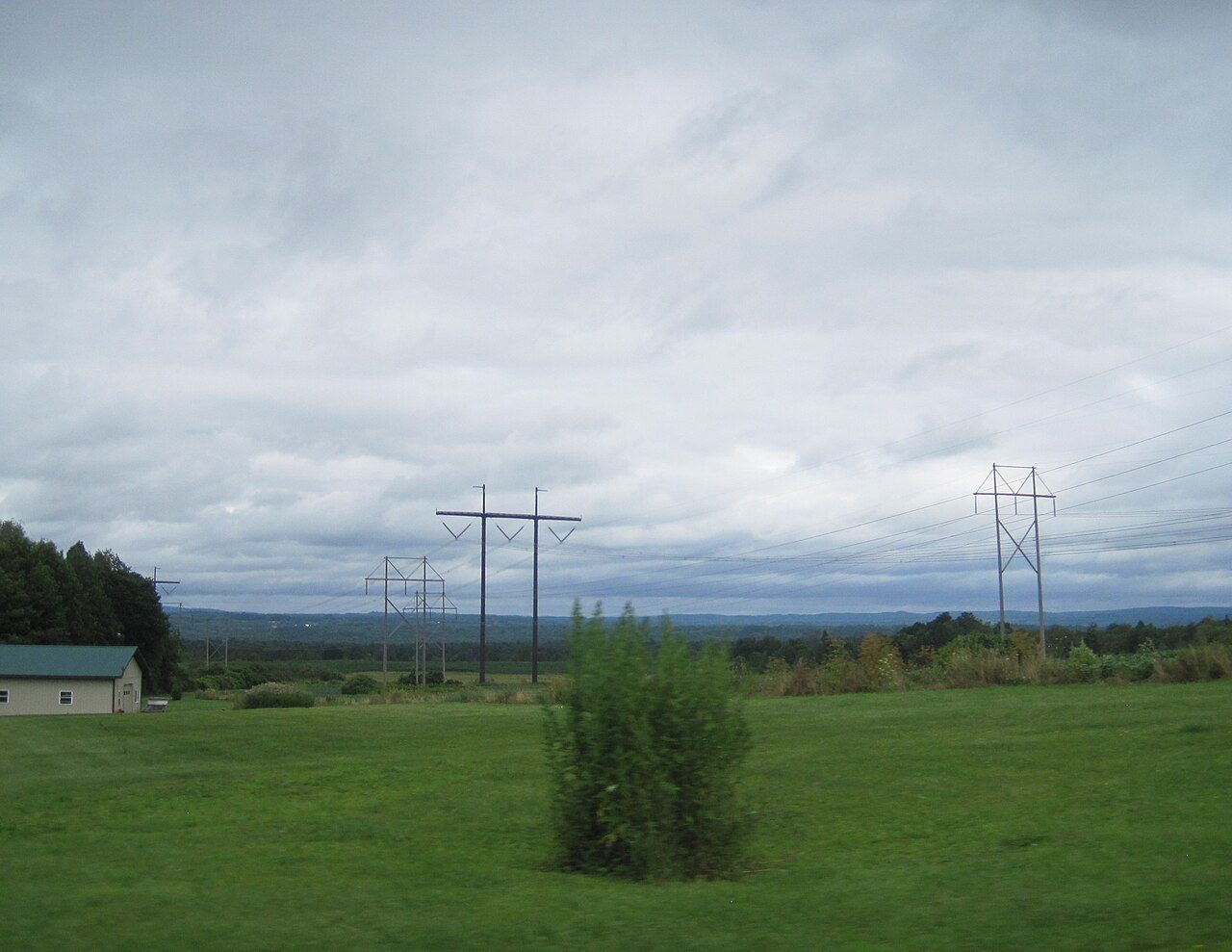
PJM Interconnection's Board of Managers on November 17, 2026 approved changes that raise the cost estimate for Valley Link, the 765 kV lines and substations, plus related 500 kV work, planned across West Virginia, Virginia and Maryland, to $5.115 billion in 2026 dollars, and move their in-service dates from June 1, 2029 to between January 2030 and May 2031. The original estimate was roughly $3 billion, in 2024 dollars, so the two numbers are not quite the same currency.
The change started with the developer: Valley Link Transmission notified PJM on October 22 of anticipated changes to the in-service dates and cost estimates of its three proposals from PJM's 2024 Window 1 competition, a 500 kV loop and two 765 kV lines, one from Joshua Falls to Yeat in Virginia and one from Amos through Welton Spring to Rocky Point. PJM recorded the board's approval in its November 2026 white paper of planning recommendations and announced it on its Inside Lines news site on November 18. PJM describes Valley Link as a consortium of Transource, Dominion Energy and FirstEnergy. PJM is not the only grid operator buying 765 kV: MISO named the builders of the last two competitive projects in its 765 kV Tranche 2.1 portfolio, both in Iowa, on October 21, 2026, as we reported.
Which 2024 number
Even the starting price moves around, depending on which PJM document you read. Inside Lines says "approximately $3.0 billion (2024 dollars)." The November 3 planning committee slides give $2,995 million for the original proposals, which included one project since reassigned to Dominion ($5.00 million) and one since cancelled ($45.60 million); the table of the 14 remaining projects totals $2,944.03 million. The white paper the board approved puts it at "approximately $2.732 billion in 2024 dollars."
None of those figures is restated in 2026 dollars, so the headline jump of about 71% (by our arithmetic, against the $2,995 million figure) folds two years of general price change in with the labor, land and material cost increases PJM cites, and none of the three PJM documents separates the two.
PJM's slides list three main drivers: construction labor and outside services, "reflecting significant national infrastructure investment that is driving competition for highly skilled construction resources"; right-of-way and land costs, "which continue to increase at unprecedented multiples"; and material and equipment costs that rose from the original bid assumptions.
Where the money and the months went
Most of the new money is in the wires. By our arithmetic from the rows of PJM's table, the three lines account for about $1.72 billion of the roughly $2.17 billion increase across the 14 remaining projects. The 175-mile Amos to Welton Spring line went from $875 million to $1,634.07 million and the 86-mile Welton Spring to Rocky Point line from $430 million to $975.50 million. The 115-mile Joshua Falls to Yeat line went from $768 million to $1,188.32 million, with almost all of it now in the Dominion section. The new Rocky Point substation rose from $254.70 million to $316.32 million.
The new dates come in three steps. The Thornburg 500/230 kV substation in Virginia is now due January 18, 2030; the Joshua Falls to Yeat line and the Yeat substation, January 17, 2031; and every other component, May 31, 2031. The white paper gives a single revised date, May 31, 2031. PJM attributes the slip to "more detailed routing analysis, expanded stakeholder and regulatory engagement" and further work on permits.
The routing is not finished. Valley Link says it is working toward a preferred route in early 2027 for its Valley North project, about 260 miles of 765 kV line from Putnam County, West Virginia, to Frederick County, Maryland. Its Joshua Falls to Yeat page had not caught up as of November 19: the schedule there still shows construction from the fourth quarter of 2028 through the second quarter of 2029.
Why PJM kept going
PJM's case for proceeding is that the problem has not moved. Per Inside Lines, "The underlying reliability needs have not changed, the timeline for addressing them is increasingly acute, and in some cases, original project in-service dates have slipped by nearly two years." Staff recommended going ahead because of the solutions' effectiveness, the urgency of the need, and the industrywide cost pressures that would apply to similar solutions.
Those pressures show up elsewhere in the same approval. Inside Lines says projects awarded to Exelon and its subsidiaries, much of it upgrades needed before the Brandon Shores and Wagner units in Maryland can retire, rose by $783 million to $1.69 billion. The white paper puts the net increase from all the scope and cost changes to previously approved projects in the approval, Valley Link's included, at $3,512.39 million.
PJM's rulebook has a provision for projects that fall behind. Under its Operating Agreement, Schedule 6, section 1.5.8(k), if a Designated Entity "fails to meet a milestone in the development schedule set forth in the Designated Entity Agreement that causes a delay of the project's in-service date," PJM "shall re-evaluate the need" for the project and may keep it, remove it, or include an alternative solution. Researcher Tommy N. Turner raised that rule in a November 6 Cardinal News op-ed before the board acted.
Whether it applies turns on the milestones in Valley Link's agreement with PJM. None of the white paper, the planning slides or PJM's announcement discusses those milestones or mentions the rule, so we read the approval as keeping the project without saying whether a re-evaluation was owed.
Outlook
Who pays is the next document. The white paper says PJM calculates cost allocations under Schedule 12 of its tariff and will file them at FERC no later than 30 days after board approval, which by our count points to a filing by December 17, 2026. Valley Link's figure may not hold still either: the white paper says "These project costs will continue to be updated as the project matures." If Valley Link settles the Valley North route on its early-2027 timetable, the permitting and approvals PJM cites for the new dates would at least have a fixed line to work from.
⚠ The Outlook restates PJM's white paper commitment to file cost allocations at FERC within 30 days of the November 17, 2026 approval (our date arithmetic) and its statement that Valley Link's costs will keep being updated, and extrapolates from Valley Link's stated early-2027 timetable for a Valley North preferred route and PJM's attribution of the new dates to permitting and approvals.
Sources
Primary
- Transmission Expansion Advisory Committee (TEAC) Recommendations to the PJM Board: PJM Staff White Paper, November 2026 · PJM Interconnection
Supporting
- Reliability Analysis Update (TEAC, November 3, 2026), slides 13-14: RTEP 2024 Window 1 projects ISD and cost changes, Valley Link Transmission · PJM Interconnection
- Researcher: Valley Link is now $5.1 billion and 2031. PJM's own rules give the counties a question to ask. · Cardinal News
- PJM Board Approves Transmission Project Changes to Support Grid Reliability · PJM Inside Lines
- PJM Operating Agreement, Schedule 6, section 1.5: Procedure for Development of the Regional Transmission Expansion Plan · PJM Interconnection
- Valley North Project · Valley Link Transmission
- Joshua Falls to Yeat Transmission Line Project · Valley Link Transmission
Copies of cited sources are retained where available. If a link no longer resolves, request a copy at contact@theduckcurve.com.